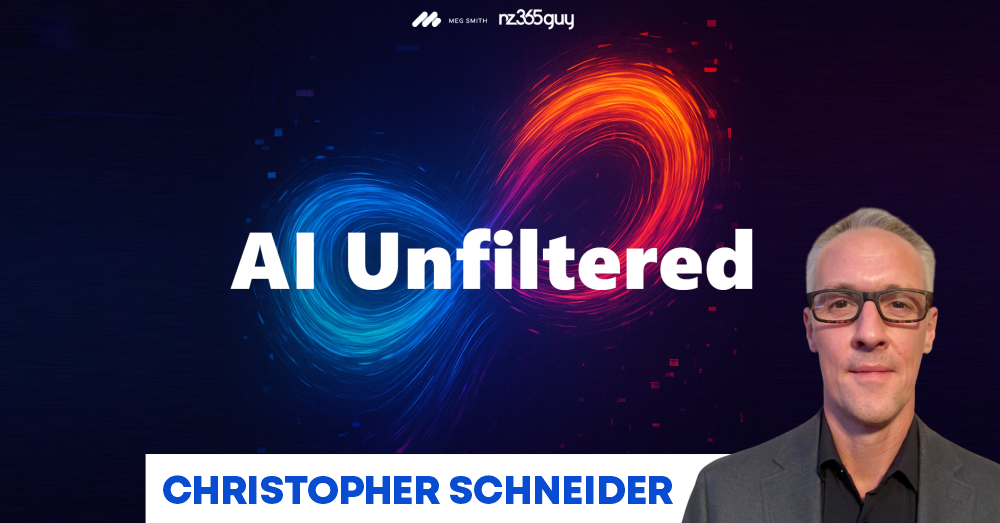
AI as Your Operating System for Work and Life
Christopher Schneider







AI as Your Operating System for Work and Life
Get featured on the show by leaving us a Voice Mail: https://bit.ly/MIPVM
AI is shifting from a tool to an operating system, enabling individuals to move faster, build bespoke solutions, and dramatically increase productivity. The biggest advantage now comes from curiosity, not technical depth. Those who experiment, learn a few tools deeply, and treat AI as a collaborator can compress hours into minutes and unlock new business models. Meanwhile, large organisations risk falling behind due to governance, inertia, and slow decision-making.
👉 Full Show Notes
https://www.microsoftinnovationpodcast.com/835
🎙️ What you’ll learn
- Use AI as an operating system to replace and create software
- Move from idea to working solution in minutes, not hours
- Build capability by mastering a few tools, not chasing every new model
- Apply curiosity-driven workflows to unlock better AI outcomes
- Avoid common enterprise pitfalls around governance and tool sprawl
✅ Highlights
- "This software rewards the patient and the curious."
- "Learn two or three of these tools really well."
- "Are you using these tools to improve your quality of life or aren’t you?"
- "This is the last software that I’ll ever train."
- "We can create bespoke applications through any of these tools."
- "It’s eating other software."
- "People who choose to be left behind."
- "From idea to iteration in 30 minutes."
- "I feel like I’m becoming a bionic person."
- "The barriers to entry are just gone."
🧰 Mentioned
- ChatGPT – https://chatgpt.com/
- Bing (Copilot Search) – https://www.microsoft.com/en-us/bing/copilot-search
- Google – https://www.google.com
- Gemini – https://gemini.google.com/
- Claude – https://claude.ai/
- Copilot – https://copilot.microsoft.com/
- Perplexity – https://www.perplexity.ai/
- Stability AI (Stable Diffusion) – https://stability.ai/
- Ethan Mollick (Wharton profile) – https://mgmt.wharton.upenn.edu/profile/emollick/
- Co-Intelligence (book) – https://www.penguinrandomhouse.com/books/741805/co-intelligence-by-ethan-mollick/
- Suno (AI music generator) – https://suno.com/
✅Keywords
ai tools, generative ai, chatgpt, ai productivity, solopreneur ai, ai governance, llm workflows, ai operating system, automation, business ai, ai adoption, digital transformation
Microsoft 365 Copilot Adoption is a Microsoft Press book for leaders and consultants. It shows how to identify high-value use cases, set guardrails, enable champions, and measure impact, so Copilot sticks. Practical frameworks, checklists, and metrics you can use this month. Get the book: https://bit.ly/CopilotAdoption
I’m Mark Smith - nz365guy - Helping people reach their full potential
I have been a Microsoft Business Applications MVP for over 14 years. I am passionate about helping people reach their full potential, through training, coaching and mentorship.
Accelerate your Microsoft career with the 90 Day Mentoring Challenge (https://www.90daymc.com/)
Support the show
If you want to get in touch with me, you can message me here on LinkedIn (https://www.linkedin.com/in/nz365guy).
Thanks for listening 🚀 - Mark Smith
00:00 - Why AI rewards curiosity, not expertise
03:40 - From sceptic to AI coach in months
07:30 - The moment AI became a business builder
10:45 - Who gets left behind and why it matters
16:34 - Main Street vs Wall Street in the AI shift
21:49 - From idea to output in 30 minutes
27:14 - AI as your operating system for work
00:00:07 Mark Smith
Welcome to AI Unfiltered, the show that cuts through the hype and brings you the authentic side of artificial intelligence. I'm your host, Mark Smith, and in each episode, I sit down one-on-one with AI innovators and industry leaders from around the world. Together, we explore real-world AI applications, share practical insights, and discuss how businesses are implementing responsible, ethical, and trustworthy AI. Let's dive into the conversation and see how AI can transform your business today. Welcome back to the AI Unfiltered show. Today I'm joined by Christopher from Denver, Colorado in the United States. Christopher, welcome to the show.
00:00:52 Christopher Schneider
Thank you very much for having me. I'm a good man. I appreciate it and look forward to it.
00:00:57 Mark Smith
I'm looking forward to having us chat with you because I think there's a lot of synergies to the way I'm thinking and to what you're doing, which is quite exciting. I always like to start with food, family, and fun. What do they mean to you and your slice of the world?
00:01:12 Christopher Schneider
Food, family, and fun. Food. I cannot keep kids' cereal in the house. Let's just get that out of the way. Mostly BBQ. There's great BBQ in Denver, but I grill out, grill out as much as I possibly can. If I'm out camping, which is as much as I possibly can. There's all kinds of stuff going on the grill. Otherwise, it's Thai food and That's about it. Family, never married, no kids. I do have a sister who is a brilliant lawyer based out of Chicago. She's an older sister of mine.Father's past, he was a judge, so they followed in each other's footsteps. My mother lives in Minneapolis and she was a tech mainframe manual writer for Control Data and then moved on to Unisys. So I'm the big nerd that followed in her footsteps. But mostly my family has turned into all of my friends. I'm from North Dakota originally, so a lot of the Dakota kids end up having friends for life. So most of my best friends I've still known since I was in second grade. All my college friends have become my brothers and all of my boyhood friends have become good friends with my college friends. So there's just this one big C I love that. It's a lot of fun. Yeah, we're really lucky to have that. And fun, I got to remind myself to unplug. These things are so much fun.That's all I can say. These things are so much fun. It's part of my story that I'm sure we'll get into. But when I first discovered these tools, I had always wanted to be an artist. I'd always, but my stick figures had broken legs before ChatGPT showed up. And now you're seeing some of the art that's behind me, because you and I are doing this on camera. And I've been able to make music with Suno. I broke a wrist playing, I broke a wrist in a sports injury, played guitar for eight years. I miss my guitar. Forget my guitar. I make cool songs now. Like watching the, I'm just having so much fun with these tools. And I think those who want to have fun with these tools, it is the time to be curious and it is the time for the solopreneur. And don't forget to have fun with these tools.
00:03:27 Mark Smith
I love that. I love that and couldn't agree more with you. Tell me, what is your story? Particularly, the highlights in the last three years as generative AI has become really mainstream for us.And then as part of that, can you tell us what you do? What do you do for a day job?
00:03:42 Christopher Schneider
Certainly. So I just rebranded. My company is PriorityTech.AI. I am an executive AI coach. and put a pin in that and we'll get back to that very, very quickly. But I also move companies onto AI governance. It is not sexy. Nobody wants to do AI governance, but it's a heavy lift and they better because in Colorado, there is a law moving forward on June 30th that is going to drop heavy hands on people who are in a particular industries that don't have a governance platform. So I am here to kind of rush in and fill that gap. And there's this screaming need for it. But my passion is to coach. My passion is to teach. My original story was watching a podcast and prior to teaching AI for, let's see, I opened my ChatGPT account on January 3rd, 2023. And how do I know that? I asked it and had said, this is my born on date. And right around that time, prior to that, I was a software trainer for a big company here in the States. Prior to that, I was working for the feds. I was doing the Google to Microsoft 365 migration and doing all the Microsoft 365 training. So I've just been a trainer, IT guy, and so on for a while. And I ran into a situation where I was able to fix a problem, write the knowledge base, and bust out tier one level help support documents in 10 minutes that would have taken me. We can't guess at the metrics that we don't have with the time that we're saving, right? But I remember getting done fixing this problem in 10 minutes at this company that took 4 1/2 hours to solve the day before. And I remember just thinking, and this was just Bing. This was Bing when it was in the top corner on a Microsoft Edge browser. It was garbage compared to what we're using right now, right?
00:05:38 Mark Smith
Exactly.
00:05:39 Christopher Schneider
It was garbage, but that's when I discovered Ethan Mullock. If you're not familiar with Ethan Mullock's work, I highly recommend your users to check out his book, Co-Intelligence. Ethan Mullock. Ethan Mullock is a brilliant associate professor, and you're nodding, right, based out of Wharton School. And his caveats is the way that he pulls the mystique out of what these toys, these tools, these accelerators, these whatever we want to call them are, it just really resonated with me. I have a background in English. I'm supposed to be coaching men's volleyball and teaching Shakespeare and Mark Twain to 11th graders. Like that's my background. But I was noticing the people that were willing to dive into these things and have curious conversational tones with it. I just got the dialect. I just figured it out. And then to close that up, relatively shortly after that day that I just fixed problems in relatively no time, the gentleman who created Stability Diffusion, Emud Mostak, he was on a podcast and he stunned his guest. He was a friend of his, and his friend isn't normally stunned. His name is Raul Pal of the Real Vision podcast. And those twos were mates, those twos were buds. And Imad blew him away. Raul put his face in his hands and he said, okay, I got it. Everything's different. What do we do?And Imad said something that changed my life. He said, learn two or three of these tools really well and build businesses with them and then turn around and teach everybody that is a solopreneur or who is stuck in W2 hell sorry if I can't swear, but stuck in W2L, to get out and build businesses with them. Basically, he said, are you using these tools to improve the quality of your life and the quality of your work or aren't you? And it just detonated in my head. And I pretty much put in my two weeks after that and I've just been driven to coach people on how to use these tools.
00:07:36 Mark Smith
Yeah, amazing, amazing. All those names that you mentioned, just phenomenal people in the industry. Imad, I could just, at some point, I could never get enough of watching every video on YouTube that he was talking about. And this is back when he was still employed at Stability. And then, and just the, you know, the first model that I downloaded to my computer, about 10 gigs, was a stability model. And, you know, started imaging up locally using my, Nvidia graphics card and stuff, crazy, what was possible. And the space is just accelerating A phenomenal rate of knots. And as you said, the opportunity for solopreneurs have never, ever, ever been so large. And so it's kind of like you got to limit what you can potentially do because there's so much choice. And I love the excitement there. You're so, right. And I suppose the word that's really stuck out on what you've said is this curious or curiosity and the need for curiosity in the way you interact with this tech.
00:08:43 Christopher Schneider
Yes, absolutely. This software rewards the patient and the curious. And coming from a help desk background, I was help desk. This is Chris starting in 2007, 2010, I started my own IT as a service company as well. But unless you were curious, you weren't working in that industry. You always had to be on top of things. You just always had to be on top of things. But not everyone's built to be curious. It's just not a thing. And I'm trying to get away from the idea that when I teach people, we just say, try not to talk to this thing like Google, but we didn't really have anything else to compare it to, right? We just didn't have anything else to compare it to. I like to joke when I teach my classes to say if I could go back on January 3rd of 2023, the first prompt I wished I would have asked ChatGPT was, teach me how to not use you like Google. Yeah, That would have saved me months.
00:09:37 Mark Smith
Yeah, I've taught similar things around the need. And I would put a screenshot of the interfaces of both. And so they're very similar. And you've got confused that you think you just ask a question and get an answer. And either you're going to have one of two responses, this thing's amazing, or this thing is **** based on that answer. And the difference is it's a conversation. Going beyond prompt engineering to context engineering, and now more and more into outcomes engineering, and how you work.
00:10:08 Christopher Schneider
Intent engineering, yes, absolutely.
00:10:11 Mark Smith
Yeah, it's just iterated so much. Who's going to be left behind from your perspective that if they were listening to this right now and go, shoot, where I'm standing, I'm going to left behind. What do I need to do so that I don't miss out on probably this biggest shift that we've ever seen in our careers? And in both your and my case, I assume it's over 30 years in our careers. There's going to be, there's this massive shift happening. And I definitely don't want to be a horse and cart driver in the shift. I'm worried about my horses not being used anymore.
00:10:48 Christopher Schneider
Right. You know what? I'm going to play off of that. I think what you brought up is important because I use something similar to that when I train, because I think we did ourselves a disservice by naming these things AI. I think we did ourselves a disservice. They're neural nets. They're large language model. They're software that answers questions. I'm 52. I grew up having culture poured into me what we thought AI was going to be. It was going to be Rosie on the Jetsons. It was going to be HAL. It was going to be Terminator. It was going to be all of these things.And it's just not the case. But we didn't really have anything else to call it, like your horse and carriage. We're calling the torque and the power produced by a combustion engine horsepower? We don't have the vernacular. We do not have the vernacular to talk to and to understand what these things are. But who's going to be left behind? People who choose to be left behind. People who choose to be left behind. Everyone knows this stuff is out there. These are even things you could Google. How do I get started with AI? This is before Google started doing all of its wonderful Gemini items and the summaries as well. But the people left behind, I believe, and I've seen this so many times firsthand, are the people that are directly threatened. And so I went out of my way to create a course. I ran it for a couple of quarters and I was teaching the retired at a adult community, adult community center, because I figured these guys aren't threatened. They don't have anything to lose, but I want to teach their kids and I want to teach their grandkids. And the thing that I constantly ran into was the FUD and the fear regurgitated by the hype cycle of people who need their squeaky voices heard about why they should or shouldn't use it and the water and the energy. And it's like complaining about the fact that the atom is splittable. We can either use these tools or we can get clean energy and we can vaporize cities. Like there's, I see it as a very binary path that we're gonna go down. But those that have chosen to walk away, That was my situation. I was almost left behind. I showed up to these tools with pure contempt prior to investigation. No question. The first prompt I asked, I was almost a left behind person. The first thing that I asked it was a question that I was hearing that chat was getting wrong. And this was back like early January, 2023, right? So it was like 03, whatever it was, the model. And the first question I asked it was a question I was hearing it was getting wrong. And I asked it that question and it got it wrong. I totally hedged my bets and I went, see, these things are crap. I patted myself on the back and I walked away.
00:13:19 Mark Smith
Yeah, crazy, right? Yeah.
00:13:21 Christopher Schneider
Three months later, my buddy reached out to me and said, no, you of all people need to get on top of this. And I went back to that same thread, that same ask. Now as a software guy, this blew me away. I had that same thread there and I asked it in that same thread, are you sure? That should be a ringing endorsement for human in the loop. We still have to be subject matter expertise. We still have to check what these things are doing. And the fact that I got to ask it a question, are you sure? There was a model upgrade over that time and it owned it. owned it. said, no, that's the wrong answer. Here's why I got it wrong. And I apologize. I've never seen anything like that. Coming from a software realm and help desk, this is Chris from, and it was owning it. Immediately. So the speed at which the progress happened just in those months of time, that's when I knew I was on the right path.This is, we're driven to have to... Imagine if Richard Feynman and Carl Sagan were around right now and they'd be screaming, they'd be grabbing people in the streets and shaking them like you shouldn't shake a baby saying, have you seen what these things can do? Yeah, Who's going to be left behind? The people who aren't curious.
00:14:30 Mark Smith
And that's crazy. The crazy thing. I talk with people and I'm like, Sometimes I just like, literally have to shut my mouth because I'm going to sound like a weirdo because I know, they're like, yeah, we haven't really seen anything come out that's good. You know, what is it? What has AI ever done? And I'm just like, I've rewritten software in the last month. I've taken 10,000 of subscription costs out of my company in the last two months because of what I can write. I've had employed software developer teams for me in the past. And now I have a full DevOps agent team that does full handoff, full lifecycle management of software development that I've never been a software developer. I've just managed the people that have been software developers. So I know enough about the space. But what I can do, I just, I keep saying to my wife, I feel like I'm becoming a bionic person in my capabilities. And I've stopped trying to 10x myself. I'm now focused squarely on 100 x myself and go what, because I've always found that to go to next levels in your career or in your financial position in life or whatever, if you're only going to look at incremental, you're only going to make tiny changes. But if you're going to look for, no, let's step like, let's forget 10x and go to 100x, what you do and how you interact needs to be at a totally different playable level of game, because incremental changes are not going to do it here. And that's why I'm challenging.
00:16:00 Christopher Schneider
It's a paradigm shift.
00:16:02 Mark Smith
Yeah, it's exactly.
00:16:03 Christopher Schneider
It's a total paradigm shift.
00:16:04 Mark Smith
Yeah, yeah.
00:16:05 Christopher Schneider
And then there's no way to measure the metric. The way that we want to measure stuff is blown out the door. How do you measure the time that I've saved? You can't.
00:16:13 Mark Smith
Yeah, it's, well, you know, one of the things that we talked about earlier on is, and this phrase is stuck with the Main Street, not Wall Street. Tell me how you talk about this.
00:16:23 Christopher Schneider
Right on. So The company that I was at was a huge company, publicly traded. And when I first managed that tool, it was just the little bing, right? It was nothing. This is even back when Google, when Gemini was still barred. And I came to the project manager and I said, look what this thing did. And they said, wow, that's amazing. Thank you for letting us know. Don't come near it. You're going to break it. Now, to be fair, I used to be a CIS ad. Like, I totally get it. I talked to some friends of mine that still work at CIS ads when all of this stuff came out and to a person, they were just pulling their hair out because it was an absolute governance nightmare. Right? It's going to be, it's already a, your data was a nightmare already, but if you don't have data sovereignty, this thing will tear you apart. Have fun with agents if that's the case. Right? So, but that's when I realized that top baby companies are not going to be dynamic enough and move fast enough, and they're way too risk averse. And like that, and then there was the E-Mod bomb drop. Let's go help some solopreneurs. Let's go be self-supporting through our own contributions and figure out how we can use these tools to help myself and then turn around and help others. And if for no other reason, I'm in a better place mentally because I've got all this bandwidth back in my life. That is an individual. skill set given back to me to be a better human with these tools. And to be fair, again, a lot of the people at some of these top-heavy companies, it's a standing joke among a friend of mine, friends of mine, the people that are running these companies that are looking at this stuff, they're from the 1900s, literally. They're from the 1900s, and they don't have the mindset to make that pivot. But The thing that made me solidify this was I was talking to, I went to, there's a bunch of meetups in Denver. Denver is an absolutely amazing place to be in AI. The Denver Tech Center, we're the massive tech hub in the nation anyway, right? Maybe outside of Silicon Valley for all I know. But I was at a meetup and there was a gentleman there and we were, it was a marketing meetup, a friend of mine brought me there. And I was talking to a CEO of a behavioral health company. And he liked what I said and he came up to me afterwards and he just said, A company needs AI. And I said, all right, right on. Which model are you using? Which AI are you using? And he just, he kind of got dumbfounded and he just said, our company needs AI. He hasn't asked, these poor people are going to have all kinds of snake oil AI vendors coming out and giving them, right? They're going to just give them, sell them terrible stuff. And the top heavy companies are going to insist that they're going to have someone else, someone else is going to figure this out. They're going to delegate it to somebody else and they're going to refuse to put their fingers on the keyboards. And as a systems migration specialist, my entire IT career, I've only seen that end in tears, just tears. And I thought, This is frankly what this is probably going to do to our economy and what it's already doing on a basis that we don't have really the ability to measure. There's so much more time to empower the individual with ideas when they're getting let go from their W-2 or they need to just try something else. And things are crazy right now. And when people got nothing to lose, let's throw everything we've got at this thing. There's no overhead, there's no employees, there's no nothing. Like the barriers to entry are just gone. They're just gone. So the top heavy companies, the ones that are going to hopefully move forward faster are the ones that are going to be regulated quicker.And they're going to be forced to do it at some point because the fines and the legalities will catch up with them. And it'll be reactionary and big companies are reactionary. Smaller companies and solopreneurs are dynamic. So that's why I coach Main Street, not Wall Street. We're just, these tools are better suited for them, right? What if these tools weren't built for that space? What if they were built for us?
00:20:21 Mark Smith
Yeah, exactly, And I just think that a small business has the same tooling that any of these large corporates have, but they have the agility.
00:20:32 Christopher Schneider
Yeah, and they can. And they get to act 1st and ask permission later. Who are they asking permission to? They just build stuff. One of my best friends who I'm, we are on AI, island together. We just disappeared into this stuff. And he talks about when I onboarded him. I just call it onboarding because it's an IT term and it just makes sense. Because I view these things as new operating systems, frankly. And he, when he realized what these things could do, he went, he goes from idea to iteration in 30 minutes and someone would still be thinking about sending an e-mail to talk about a meeting to maybe have an idea. I just, it's just gone. It's just gone, man. It's time to build. To quote Marc Andreessen of A16Z, it's time to build.
00:21:19 Mark Smith
Yes. My favorite podcast out there is the Abundance Podcast, which he was on recently, and Ahmad's off on that podcast with Peter.
00:21:28 Christopher Schneider
Moonshots is good too.
00:21:30 Mark Smith
Yeah, Moonshots.
00:21:31 Christopher Schneider
We probably listen to a lot of the same people.
00:21:33 Mark Smith
Yeah, So amazing. And one of the things I've noticed, particularly in the first three months, four months of this year, is that there was the big pivot away from OpenAI, ChatGPT, and everyone was Clauds it, Clauds everything. And I noticed in the business folks that I was talking to, even in talking around Microsoft and their tool sets, particularly with Copilot, is that, you know, the information worker type of experience, that it wasn't performing at the same level as, let's say, a ChatGPT or a Claude experience. And I noticed people would start changing AI platforms, almost like changing underwear, right? And they'd be off to that one, now off to that one, now this is the flavor. And I'm seeing this massive, these companies are dumping all their datas into all these systems that are developing at such a speed, they haven't had rigorous testing from an enterprise perspective because they are literally releasing features that based on my experience, obviously haven't had the test cycles, et cetera. And I noticed that it's all becoming like, what's your flavor at the moment? And this need to work at a different layer in how we think of it. Because although anthropic might have been the flavor of the month already in the last four months, we've now seen, you know, OpenAI released their 5.5 models and all of a sudden the coding standards are in this leapfrogging. And I think there's a need to kind of stand back from being committed or all in on one provider or platform.
00:23:12 Christopher Schneider
Yeah. Okay, someone releases something on a Wednesday and it's the best and I'm supposed to migrate. Wait till Tuesday and their competition rolls out the next model. I've never seen competition like I've seen in this space. It's insane. But what I committed to is just learning. I committed to learning ChatGPT to the best of my ability because its memory feature is so insanely robust. And in the time that I've been in this space and watching all of these other really good models, I mean, as opposed to the quote AI that we had six years ago, they're all amazing.
00:23:48 Mark Smith
Yeah.
00:23:49 Christopher Schneider
Like they're all amazing. Why don't we use all of them? Why don't we use two or three really well, like Imad said. And the reason I use Chat as my focal point, it's the one that I orbit, it's the one that I call AI as OS, is because I've also watched all these others emulate and copy all of these base layer organic features that OpenAI built into Chat from the ground up. The others try, and it's like putting the wings on the plane as it's taking off. And as a guy who has done migrations his entire career, People would reach out to me, hey, I'm moving to cloud now. Hey, how do I do this? How do I do that? You don't want to migrate. First of all, why? Just why? What's your motivation? Why? Because I'm talking head is screaming that this is the latest, greatest thing, and he sold you a batch of 100 prompts for 80 bucks. Like, check the motive. Just check the motive. Or, and this is what I do, and it's powerful. I teach people how to use chat, and I teach it how to use it really well. And I've baked in a compensatory ecosystem that effectively gets in front of some of the problems that it has by its very nature. And then I teach, I'm a teacher trying to teach you how to teach chat, how to teach you how to use everything you want.
00:25:02 Mark Smith
Yes.
00:25:03 Christopher Schneider
As a software trainer, when I saw what Bing could do, and I saw what Bard could do, and I saw what Chat could do, I realize this is the last software that I'll ever train because I can train myself how to use any software through by this means. By this means. Chat, chat, you, I noticed that you're struggling on this one. Does Claude or Copilot or Gemini or Perplexity or whatever, which ones of these do this better than you? What are the open source models to do this better than you? This one does that better, that one does that better. Good. Writing instructions on how to ask that. And I just leapfrog from one to the other to the other. I call it cross-platform mirroring. And we don't have to isolate. And frankly, that's a single point of failure. You don't want to do that. As an IT guy, you cringe when you see that happening, right? And some of these models... So one of the nice part about chat was you can export the data. You can export the data. right? All the way back from your start. And I've seen people lose access to their Google account that they signed up with. And did you realize that your chat is gone? Well, who's clicking under the hood to go find out all this stuff? Well, my God, I've lost my all my threads. I've lost all my history. Well, there's the export button. Now we're back to who's going to fall behind. People who aren't curious. Go click stuff. Hey, chat, here's what I just found. I've noticed this in your system. What does this do? I can't imagine because I've never flown these things before. It'll just tell you. But they'll all do that now, right? So we've never had software that's told us how to use it, but by bouncing from one to the other to the other, you'll go crazy. You'll just go nuts.
00:26:39 Mark Smith
Tell me about, you mentioned operating system. You think of it as an operating system. What do you mean by that?
00:26:44 Christopher Schneider
The first idea I had about that was because being an IT guy for as long as I have been, I've watched that computers have basically just been housing for Google Chrome browser and I go make the world happen through a single browser. If a computer isn't on the internet, it's different now because we can do local models, right? But if the computer wasn't on the internet, if the computer can't get online, what are you going to do with that computer? And then Chrome eventually started taking a life of its own. Look at all the applets and all the extensions that you can plug into it. It's got cloud storage. It's got everything. It's not even a Gmail account. It's your Google account. And look at the app suite that you've got baked in Google. So I just kind of went with that flow. So it was all just effectively web-based. But being able to manage memory as well as I do, being able to manage, like tell it to go download a file that you just created as a.PDF. When I train, I intentionally don't even have Office Suite installed on the computer or Adobe just to prove the point. Like, what is this thing doing to software? It's eating other software. We can create bespoke applications through any of these tools if we just ask it to teach us how to do it, or you know what? Actually, you do it.If I can ask you well then.So I'm watching it as a migration specialist. I'm just watching it as a migration specialist and it just rhymed. It just rhymed with how that worked and how that happened. But I've noticed that if people go in and they want to use these tools the way that I train them, I train them on effectively, these are the features, these are the left click tools. that you better know and they're right in front of your face. But your right-click tools are things that people like you and I that have been using these early adopting tools since inception, we just, we know the dialect. We know different ways that we can do it. And I venture a guess that your stuff's, that you've customized the bejesus out of yours like you have mine. So taking an operating system out-of-the-box, making image after image after image as an IT guy, I send that out to a dev, and I send that out to a VP, and I send that out to an HR person. And those operating systems are fundamentally different three months later. That's just the way that I looked at it. just made sense to me as a migration tech.
00:28:57 Mark Smith
Yeah. You're right about it's eating other software, as in I have had a subscription for maybe three years to a piece of software called Speechify. And it reads web pages to me. If I get a a contract PDF, I'll just chuck it into it, reads it to me. And the subscription came up for renewal, and I know Speechify was built pre this world that we live in now. So I just started a chat session and I said, hey, I use Speechify. And like any software, there's probably 80% of the features I never use and never need. I've just fundamentally needed to read the screen.I'm dyslexic, and so therefore I hear stuff that I wouldn't pick up through my eyes. AndI said, let's just write a Chrome extension for it. And 20 minutes later, I had a full Chrome extension with, I could use different voices, it read the page smoothly, it highlighted the text as it went through, the key features that I need, and I could tune it up to 2x speed. And I'm not going to sell this to anybody. This is just me. And now I've eliminated, I don't know, it might have been a $600 a year cost, subscription, and I've never thought about, oh man, I miss Speechify, because now I've got a thing that does exactly what I need it to do. I don't need any other bells and whistles. It just needs to do what I need it to do.
00:30:23 Christopher Schneider
I love that's been your experience too. I love that's been your experience too, all the people that are on AI Island. And we're trying to populate the island, but the people that are on AI island with us, they just realized that they can just replace these things. The capability to create bespoke tooling for the stuff that I do. There are also governance issues when it comes to how are you using these and what industries you are using these in. And you have to abide by certain regulations. And when I'm walking through my governance platforms, when I'm saying this is what we could potentially do, I have to remove any verbiage that says develop or deploy because you will have different standards held against you. And suddenly I'm realizing I don't need to sell software because I We still need developers. We still need that human in the loop. We still need that last mile.
00:31:13 Mark Smith
Yes.
00:31:14 Christopher Schneider
The IT guy that I, that I was still the IT guy asking the questions three years ago to Bard and to Bing. Nobody else at that contract could have done that. I just knew how to ask it. So we still, and that's what Ethan talks about, right? We still need that human in the loop. We still need that person that needs to be able to make that quality ask. I can make a website, but I'm not a marketer. I'm terrible at that stuff. But I can hire a marketer a client and say, here are the tools that I use. What do you think? What does this stuff mean? I think it's going to bring professional solarpreneurs together like never before if they know what they're doing.
00:31:48 Mark Smith
Totally, totally. I've wiped out three websites and over $2,000 worth of CMS subscriptions. I'm like, who needs a CMS anymore? Why do you need a content management system these days? Because it comes with a whole bunch of overhead because they're all designed to suit every single scenario rather than just my fight scenario and being able to plug everything from Google Analytics, et cetera, into a single skill that every week monitors my SEO based on best practices as of this week that has changed around the world. And have that trigger every Monday morning. It's a different world.
00:32:29 Christopher Schneider
How are the big enterprise softwares going to keep up? They're tanking for a reason. But there are those lateral softwares that are really fantastic that are built on these engines, right? Notion, Obsidian, and that's what you watch, I think.Like we're watching other Manus, like we're watching all these other softwares just start to build on this framework kind of in the same way. I'll give you a quick history as to why I believe this. So before I turned into the AI guy, my friends and I, the ones that I was speaking about previously over lockdown, We all got together on Mondays every night and had a video call because we didn't want to just be fat and out of network subscription after lockdown. We wanted to learn something. My friends are curious. And we sat down and we just shut up and we learned everything about the digital asset space. We learned about Bitcoin. Yes, And I created that focus group. And four years later, it had 110 people on it and about 25,000 hours of archive research on it. Right. And what I noticed, the rhymes in this space and the echoes in this space to that prior space, which isn't going anywhere. And by the way, what do you think these agents are going to use? Not yet. Yeah, We can get there if you want. But the premise is that they were just technologies that were building on the shoulders of giants that were building on the shoulders of giants. And we just take these ideas and let's build other tools out of them. Here's a really good example as to how I use this. Suno, I love Suno. If you guys are interested, my music channel is at Suno. I'm Ishmael 001. Ishmael 001, I-S-M-A-E-L 001.And I only make Instrumental music because I want that last 10%. I want a human in the loop. I want a human singer. I'm bridging the gap.I'm bridging the gap. But I've never talked to Suno. I just told chat, hey, I found this cool toy. You are, I told, I assigned a role, right? You are the Suno developer. You are a brilliant Suno prompt engineer. I want you to create me. I created a custom GPT to create. prompts for me. I've never once gone into Suno and assumed and imagined I knew how to use this tool, this tool that is built on top of this layer. It's just a stack, right? It's built on top of the layer and it just crushes it. makes songs that I've cried to.
00:34:54 Mark Smith
Yeah, I believe.
00:34:54 Christopher Schneider
I used to play guitar for eight years and I broke my wrist and I had to put my guitar down. Forget guitar, I make old songs now. My buddy Dave was playing his gorgeous Joe Satriani Chrome Ibanez over the top of my songs when we used to play together.
00:35:09 Mark Smith
Wow, amazing.
00:35:11 Christopher Schneider
So, I mean, it just re-empowers us. It's like someone, a paraplegic walking up to a Tesla dealership and someone calls up a Tesla with their phone and it pulls up in front of this person who can drive now. We just need to find a creative way to implement these things, and if we can use one tool to teach us how to use any other tool, we're right there, and because there's such real time, I love that you designed that that's real time, because I have to design governance policy that's real time, yes, in the same way, yeah, right? You and I are cut from the same cloth, and we use these tools very similarly. This is a lot of fun.
00:35:46 Mark Smith
Only born a year apart, so that Gen. X timeframe, right? It's interesting. I feel like it's our time at the moment. Because we've got the business experience, which a lot of newcomers don't have. We've got the war wounds, and we've learned a lot, and then we can apply it over this massive tool that allows us to do anything we want.
00:36:08 Christopher Schneider
And we also want the infrastructure of these tools to be built on top of. We were around when the internet got started.
00:36:14 Mark Smith
Yes, 100%. I was just writing a piece yesterday, and then I talked about Wolfenstein, my first game that came on three floppy disks. You know, when I was learning as a, back then, it would have been, I would have been 18, 19 years old, and the internet was just coming out. And Miles, bulletin boards actually at that point. And these three floppy disks was sent by my brother who was living in Denmark at the time and had been banned in Germany the game, you know.
00:36:46 Christopher Schneider
Talked about, right?
00:36:47 Mark Smith
Yeah, because you're just running around shooting Germans the whole time in it, right, with your, just, it's, it's just like, it made me pause and go, **** how far have we come? How far have we come?
00:36:58 Christopher Schneider
How far have we come? The kids that are clicking the save icon, they need to have that icon describe what it is.
00:37:04 Mark Smith
Yeah, it's amazing.
00:37:05 Christopher Schneider
They're anachronistic terms like horsepower for cars. We didn't know what to call these things. That's why I think we're doing ourselves a disservice calling them AI.
00:37:12 Mark Smith
Yeah, Thank you, sir. It's been a pleasure talking to you. We'll make sure we put your details and stuff in the show notes. Thanks for coming on.
00:37:20 Christopher Schneider
Thank you so much. Great to be here. Thank you.
00:37:24 Mark Smith
You've been listening to AI Unfiltered with me, Mark Smith. If you enjoyed this episode and want to share a little kindness, please leave a review. To learn more or connect with today's guest, check out the show notes. Thank you for tuning in. I'll see you next time, where we'll continue to uncover AI's true potential one conversation at a time.
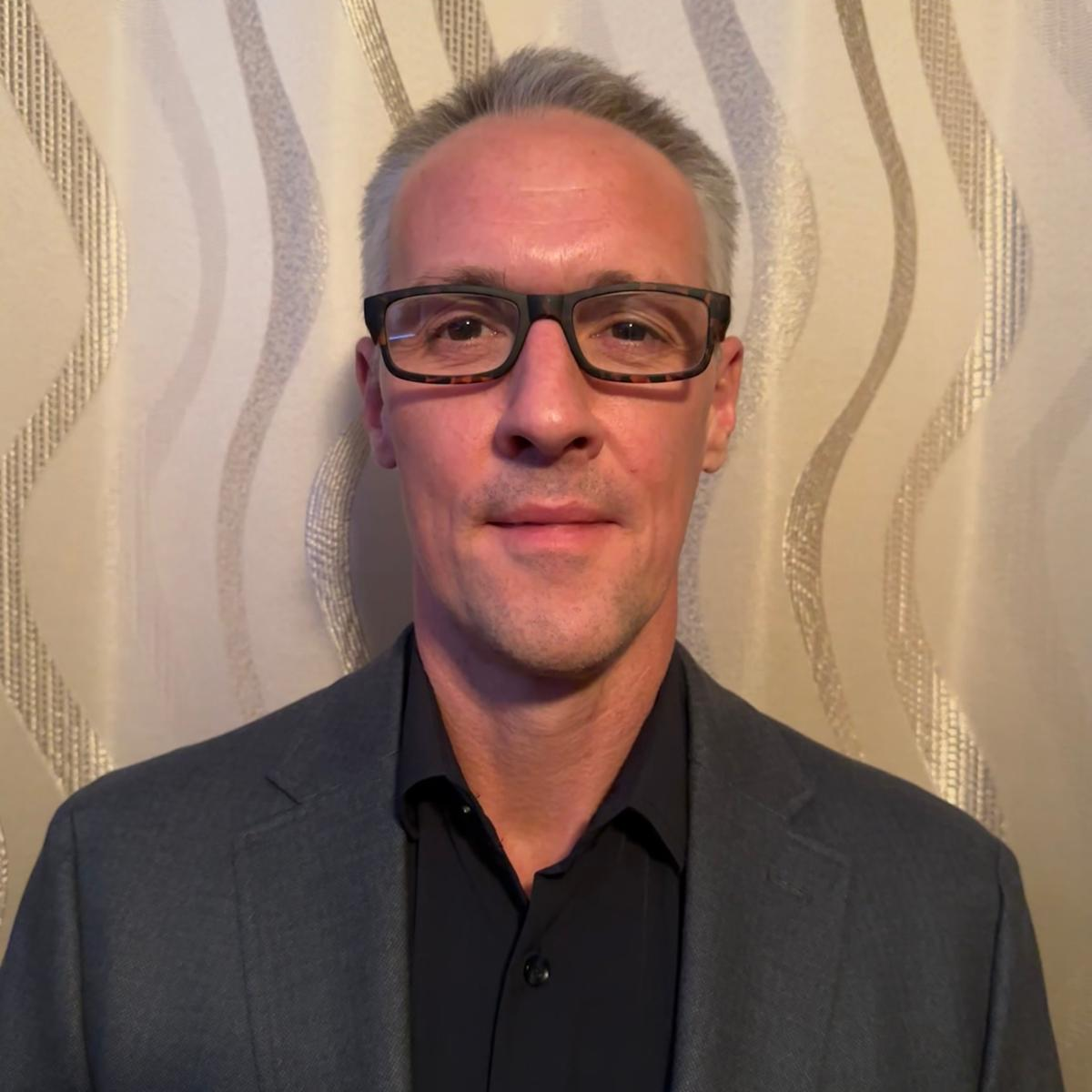
At https://PriorityTech.AI, Christopher Schneider helps teams, professionals, and individuals move from AI curiosity to real, intentional productivity through an AI Literacy philosophy. With 20+ years of enterprise and private technology deployment experience and 15+ years of coaching and teaching experience before that, he designs practical AI workflows, governance structures, and repeatable systems that integrate into how people actually work.
Christopher's approach is grounded in real-world implementation. As a self-taught IT professional, he understands the friction that prevents technology adoption and how to creatively eliminate it through structured systems and tailored delivery. He works for Main Street, not Wall Street. He uses consumer-facing platforms including ChatGPT, Claude, Gemini, Perplexity, SUNO, and more to empower solopreneur clients to move beyond experimentation into consistent, reliable, human-in-the-loop results.
He serves his clients the same way AI serves him: it's not about learning tools; it's about developing an AI dialect through mentorship and building a system where AI becomes a trusted, human-in-the-loop partner for thinking, execution, and decision-making.
These tools reward the patient and the curious. Those willing to tinker will be rewarded, so don't forget to have fun! Christopher's creative AI journey lives at https://linktr.ee/feistyjackball.