AI Adoption: From “No Thanks” to Power Users
Molly Rupert-Sullivan
Microsoft MVP







AI Adoption: From “No Thanks” to Power Users
Get featured on the show by leaving us a Voice Mail: https://bit.ly/MIPVM
AI enablement is a change problem, not a tech problem. In this episode, Molly Rupert-Sullivan breaks down how to support three groups at once: people who do not get AI yet, people who want to opt out, and champions who want more. You will hear practical ways to set expectations, avoid over‑teaching “all AI”, and build momentum by giving champions the right access, platforms, and repeatable wins that can scale across an organisation.
👉️ Full Show Notes
https://www.microsoftinnovationpodcast.com/801
🎙️ What you’ll learn
- Map AI adoption into segments and tailor support levels to each group.
- Respond to “no thanks” with clear expectations and a path to re-engage.
- Build champions by focusing on domain expertise, not technical depth.
- Scale internal wins by giving champions access to enterprise tools and visibility.
- Decide when to use personal AI tools versus enterprise copilots for data separation.
🔴Highlights
- “My entire role is about AI enablement.”
- “There’s such a spectrum of where people are.”
- “I think that there will be a place for some people to opt out.”
- “It will become very difficult for people not to use it because they will fall behind.”
- “We don’t all need to be AI experts.”
- “You’re already an expert in whatever your domain is.”
- “Access is, a big one.”
- “Showcasing those wins and successes, giving them platforms.”
- “I use Pi on my phone a lot.”
- “I don’t want answers tied to my corporate data.”
🧰 Mentioned
- Pi - https://pi.ai/
- ChatGPT: https://chatgpt.com/
- Change management: https://en.wikipedia.org/wiki/Change_management
- MVP Summit:https://mvp.microsoft.com/en-US/Summit [mvp.microsoft.com]
- Microsoft MVP YouTube Series - How to Become a Microsoft MVP - https://www.youtube.com/playlist?list=PLzf0yupPbVkqdRJDPVE4PtTlm6quDhiu7
✅Keywords
ai enablement, ai adoption, change management, champions, resistance, opt out, productivity, enterprise access, copilot, chatgpt, professional services, agents
Microsoft 365 Copilot Adoption is a Microsoft Press book for leaders and consultants. It shows how to identify high-value use cases, set guardrails, enable champions, and measure impact, so Copilot sticks. Practical frameworks, checklists, and metrics you can use this month. Get the book: https://bit.ly/CopilotAdoption
I’m Mark Smith - nz365guy - Helping people reach their full potential I have been a Microsoft Business Applications MVP for over 14 years.
I am passionate about helping people reach their full potential, through training, coaching and mentorship.
Accelerate your Microsoft career with the 90 Day Mentoring Challenge (https://www.90daymc.com/)
Support the show (https://www.buymeacoffee.com/nz365guy)
If you want to get in touch with me, you can message me here on LinkedIn (https://www.linkedin.com/in/nz365guy).
Thanks for listening 🚀 - Mark Smith
03:25 - AI enablement is a change problem
04:55 - The three AI adoption groups you must support
05:00 - When “I don’t want AI” becomes a performance risk
07:58 - AI is already embedded, whether you opt in or not
12:27 - Champions are not always technologists
16:15 - Teaching AI by role, not by hype
17:36 - Scaling AI adoption through access and visibility
00:00:06 Mark Smith
Welcome to the MVP show. My intention is that you listen to the stories of these MVP guests and are inspired to become an MVP and bring value to the world through your skills. If you have not checked it out already, I do a YouTube series called How to Become an MVP. The link is in the show notes. With that, Let's get on with the show. Welcome back to the MVP show. Molly, today's guest, is from Philadelphia in the United States. She's an AI and data change leader at Guidehouse. So you're a newly minted MVP, is that right?
00:00:50 Molly Rupert-Sullivan
Yeah, this is year one.
00:00:54 Mark Smith
Awesome, awesome. Good to have you in the program. Tell us about food, family, and fun. What do they mean for you in Philly?
00:01:03 Molly Rupert-Sullivan
Food means a lot of things in Philly. We're a big food city, but it's also just a few days past Thanksgiving here in the US. So food, family, and fun's kind of the theme of that. So coming off that high, spent a lot of time with family past few days. Variety of different foods, obviously highly focused on the turkey. We're also, we're a game-playing family, so we spent a lot of time with a variety of different, board games, card games, you name.
00:01:33 Mark Smith
It. That's awesome. It's one of the things I've been wondering with my kids and my, I've got a five-year-old and a three-year-old, is at what age to start bringing games into the mix with them, you know, board games, so that they, you know, holiday season, they really feel like they've got a range of ways of, you know, interacting with the family, so.
00:01:55 Molly Rupert-Sullivan
Yeah, yeah, I have a nearly nine-year-old and a five-year-old, and the older one is just getting to the point where she can kind of participate with the adults of the crew and get into some of the games, some of which she, you know, can't follow quite as well. Honestly, the ability to be kind of a competitive persona in gameplay between my nearly nine-year-old and my mother, it's fairly similar.
00:02:33 Mark Smith
I can be very competitive and being a parent now is teaching me to make it possible for them to win more than me taking the pleasure of winning all the time when we have, you know, been in gameplay. So.
00:02:50 Molly Rupert-Sullivan
Yeah, I got I got beat in a couple of strategy games.
00:02:54 Mark Smith
Wow. Wow. And also teaching to lose with dignity, right?
00:03:02 Molly Rupert-Sullivan
Sure.
00:03:02 Mark Smith
That's an interesting concept.
00:03:03 Molly Rupert-Sullivan
Yeah, it's a good lesson.
00:03:06 Mark Smith
Yeah. The young ones definitely don't seem to have it on board from the get-go. They want to win no matter what. So I might have competitive kids, I don't know. Tell me about what you do, as in what's top of mind for you when it comes to work these days?
00:03:25 Molly Rupert-Sullivan
My entire role is about AI enablement. And so part of it is honestly defining what that is. We've just conducted a firm wide survey on AI use and adoption and how people are perceiving and seeing value. So going through that right now, and that's given a kind of a lot of food for thought. But there's AI is still for many people so new that there's such a spectrum of where people are. There's people who are saying, I still don't get it. There's people who are saying, I get it and I don't want it. There are people who are saying, I'm past the point where the things that you're telling me and giving me to support me are helping. I need more. So we kind of have to be all things to all people right now in order to keep progressing. But that's really, that's my focus is on how do we provide the right direction, the right level of hand-holding, because again, some people need a lot and some people want less than they're already getting. That's always the challenge in the adoption world and change management. We've had to toe the line forever on all things about, you know, no matter what level of communication you're doing, somebody wants less of it and somebody wants more of it. And that's not any less true now on the topic of AI.
00:04:55 Mark Smith
How do you handle people that say, no, thank you, it's not for me. I don't want the AI. It.
00:05:00 Molly Rupert-Sullivan
Is a great and important question. It's also a challenging question, and I don't feel like I have the answer to it yet. Definitely something that we're working through actively. I think that there will be a place for some people to opt out. And kind of the how and the why and the who, I think, remains to be answered a little bit. Certainly, we're seeing some people who are saying, you know, environmental impacts, societal impacts, they're selectively not using AI. It's not a lack of interest necessarily, nor is it necessarily a lack of understanding. It's a conscientious decision that I don't wanted to be part of that. And I think because we aren't in a place right now, and I don't think want to get to a place where we are tracking individual use, whether you are not using or how you are using or the frequency, et cetera, there will be ways in which people can abstain, essentially. But if it's working, right, if we kind of continue in the progress curve we're on right now and we kind of get over this hurdle right now of, it's working to some degree, it's working in some places, et cetera. I think that it will become very difficult for people not to use it because they will fall behind. And so I think the best we can do right now to combat that sort of, it's not for me, resistance is to say basically, okay, that that's a choice that you can make. Our expectation is that that's going to become a problem for you. And when it becomes a problem for you, you know, performance wise, productivity wise, it's going to be a problem for the rest of us as well. And that'll make it a bigger problem for you. You know, we'd encourage you not to let that happen. We'd encourage you to figure out how to fit it for you right now, you know, early and allow yourself the space to kind of adapt, which is not to say everyone needs to use it, you know, full stop, no questions asked. You have to. But I think that the the direction that we are collectively headed is that that'll raise the floor of efficiency, productivity, quality, all of the above. And you're going to be in competition if you're not leveraging it.
00:07:58 Mark Smith
And I assume that the type of AI we're talking about here is more the desktop experience of AI as a local copilot, rather than AI will ultimately probably be built into every business automation process. and people won't even know AI is in the mix. So for example, when I hit stop on this recording, within 20 minutes, it would have suggested to me a title for this podcast. It would have suggested show notes that should be accompanying based on their conversation. And it will suggest, sorry, it will output the transcript of our discussion, right? So three artifacts without us, choosing as into whether, as in there's no switch, if you like, with the piece of technology to switch that on or off. It's inherently built into the product that we're using. Or are you meaning where people have Copilot on their desktop as an example, and they choose to, let's say, even in a Microsoft Teams call to go, I don't want to have the transcript function on, or I don't want to have the... the copilot switched on in this conversation. That makes sense that people could opt out at that point.
00:09:16 Molly Rupert-Sullivan
Both to some degree. Certainly like what I was talking about in the terms of, you know, I don't want to, and I'm going to selectively opt out of using that is more like an AI assistive kind of thing. So co-pilots, ChatGPTs, all of that, agents, et cetera. I think What what you're raising is an important other lens to apply to, though, because part of the argument, if you will, for people kind of combating this resistance is AI is not as new as you think it is. And we're having all these discussions, right, about generative AI explicitly. And we're talking about even within generative AI, we're talking about you know, AI assistance and copilot and the like. But that's not all of it. And if it's kind of, you know, if you if you want to take a stance and and say, I don't want to use AI at all, we really need to look further than, you know, I'm not going to use ChatGPT. That's that's the latest in a long line of things. And I don't know, you know, frankly, I don't know how convincing an argument that is, right? Of like, you don't like it, but you're already doing it anyway. It's it doesn't really move the needle. But I do think the education is important in that this this is the latest evolution. This isn't brand new. You know, a few years ago when we started talking about ChatGPT, it was just it was the most recent and it now is no longer the most recent, right? We have a thousand more things to talk about.
00:11:00 Mark Smith
And I assume within five years it'll be superseded, maybe even less time than that, right? Oh, definitely less time. Yeah. You know, in how we use it. On the flip side then, how do you empower and enable the folks that say, This is not enough. I want more. I've got ideas. And generally they've been innovative, right? They're going, Hey, I have ideas, I want to try them out, and I need the tooling to do it. Someone organizations would call these folks champions. They're generally already probably using it in their personal life, right, extensively, and feel that they can identify ways that, as an organization, you could potentially use it better and more. But how do those people bubble up to you and the work that you do?
00:11:53 Molly Rupert-Sullivan
Yeah, champions are my favorite. I think that always within an adoption effort. super important role and specifically the grassroots kind of champions, the people who are just, I'm excited about this and I'm going to invest my time, right? This is something I'm going to, I'm going to do because I want to, because I'm interested. Those are also people with whom others connect best. So super powerful within, within any change effort. The I'm going to kind of take an aside on that question because I think that the more interesting direction that that we ought to be heading and it can help others get on board is we we don't all need to be AI experts and we don't all need to become technology focused any more than we already are, right? I think some people, some people who are champions within the organizations have become AI champions as technologists, and others have become AI champions not as technologists, which is great and good. I also think that some of the, maybe not active resistance, but some of the laggards of adoption are still thinking that AI, first of all, you know, way too general a term, right? Like that means nothing to anyone anymore. But are thinking that that is tech stuff. And in order to be a champion, I would have to know all this techie stuff. And that's not me. And the the better direction that I think we ought to be heading is to say, you're already an expert. in whatever your domain is, what we're really after, what we're really asking is that you continue to be an expert in that space or spaces, and that that includes understanding how AI is going to change those spaces. You know, coming from a professional services world, you know, how how do we help clients apply AI views, AI lenses, whatever, to X, Y, and Z. And we can't really effectively do that from just an AI view, from just a technology first kind of view. We have to do that from within the domain, from within the industry, from within the function, whatever is applicable. So I think this sort of fostering of just keep doing what you're doing. learn the AI things that are relevant to that space, to that work, not the entire ocean of AI and all of its snooks and crannies and permutations. First of all, obviously it becomes a lot more manageable, but I think also to your question about champions, it allows alternate champions to emerge, allows us to kind of have people who aren't technologists and to understand how work can change because of AI, which is really what we're all after anyway.
00:15:32 Mark Smith
So in your role, are you a consultant now or are you working for an organization dedicated?
00:15:41 Molly Rupert-Sullivan
So my role currently is internally focused within a professional services environment. So I am personally, historically client facing and more so now focused on ourselves and how do we improve? And I mean, I think in professional services, you have to walk the walk, right? And so we need to be the best at walking. This analogy's failing me now, but we need to do everything that we could do to transform with AI to be able to say, yes, this is possible, it's practical, it's valuable, all of those things.
00:16:25 Mark Smith
So from your years of experience with a consulting firm like Accenture, how do you apply, particularly now your internal focus, how do you identify, No, my question is, how do you turbocharge the, and when I say turbocharge, how do you equip and enable, empower, and if you're setting them free, the champions then inside your organization? How do you resource them? How do you equip them? How do you, you know, make sure that they feel they've got the momentum and support from you leading that function?
00:17:02 Molly Rupert-Sullivan
Great question. Access is, A big one. And by access, I mean to even tools, right? Technical access to multiple things in a internal way, right? Everyone has access to a ton of things externally. That doesn't necessarily help you do your job. You need to have enterprise versions. So we are actively identifying what those things are that we want to have and make available and subsequently then to whom. Right. And so there's there's a bit of a chicken egg kind of back and forth that we'll need to do of champions need access and also who do we want to sheep into champions such that we need to grant them access. So it's kind of we need to go both directions with it. And then it's also a question of showcasing those wins and successes, giving them platforms and the ability to say, I was able to do this and look how cool it is and everybody is now able to do that. I think that's the value add internally and externally with champions in that if you have been able to kind of unlock something I want to reward you and recognize you for being able to do that and also kind of get you to share that, right? I want you to processize all the things that you have done and learned and make others like you. So we're finding those people in those pockets of real ingenious AI application and figuring out how to level it up and shared across the whole enterprise.
00:19:00 Mark Smith
Just as we wrap, tell me about the AI tools that you use that are not the stock standard, in other words, not the ChatGPTs or the Anthropics or the co-pilots, but are there any kind of edge AI tools that you personally use that you're pretty buzzed about?
00:19:20 Molly Rupert-Sullivan
I'm not very edgy, Mark. I use Pi on my phone a lot. That's probably my bonus app. It's...
00:19:31 Mark Smith
Why? Why Pi? What do you like about it?
00:19:34 Molly Rupert-Sullivan
It's a little simpler. It's therefore, I think, easier kind of dialogue.
00:19:43 Mark Smith
It's multi-model, right? As in like, you can pick whatever tool behind the scenes to run, yeah.
00:19:49 Molly Rupert-Sullivan
It feels just like if I want something quick, you know, it's what I'm using in my personal life. So if I just need a quick thing, I'll go there. And I, for better and for worse, I use it for some medical guidance. But yeah, I, you know, I find it's less academic, if you will, than ChatGPT. And I don't want answers tied to my corporate data. So I'm not using Copilot.
00:20:25 Mark Smith
Correct. Correct. Yeah. Interesting. Interesting. I'm planning on building a couple of personal agents for that type of thing. Like, I want to have my personal health data agent, which I am contemplating even making it a non-prem. So I run my own probably small language model locally. I've done it a bit with imaging software and stuff that can run on my Nvidia GPUs and things like that. So you're not, you know, time is not of the essence. It's like more constraining my personal data. I don't want to hand it up to a hyperscaler or anybody in that respect. So health finance is another one that I want to do, you know, so that it would personally understand all my finances. and therefore start to look at strategies, optimization, improvement, and things like that. And then I have a garden, so I want to manage all my seed harvesting, times of the year, seasons, all that kind of stuff, totally tailored for my situation. And I've got a heap of gardening books that I want to kind of give it those data sets to work with. but not me having to go to a bookshelf and find out of 15 books, which one's got the bit I'm wanting to focus on right now in gardening. I like it. Yeah, yeah. Very cool, Molly. It's been awesome talking to you and great. I'm so pleased you're in the program and maybe we get to see you at MVP Summit at some point.
00:21:56 Molly Rupert-Sullivan
Yeah, looking forward to it. Thanks for having me, Mark.
00:22:03 Mark Smith
Hey, thanks for listening. I'm your host, Business Application MVP, Mark Smith, otherwise known as the nz365guy. If you like the show and want to be a supporter, check out buymeacoffee.com forward slash nz365guy. Thanks again and see you next time.
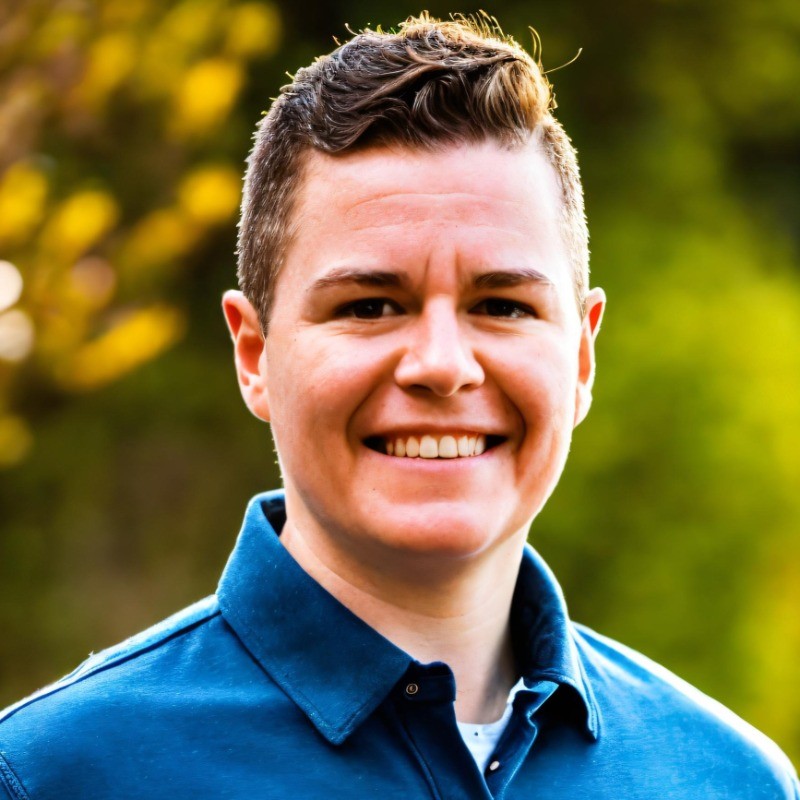
Molly Rupert-Sullivan led one of the earliest and largest Microsoft Copilot deployments, starting with early access and growing to more than 100,000 people around the world. She now leads AI Adoption and Transformation for Guidehouse, enabling the professional services firm to be increasingly AI-enabled and power internal and client innovation.