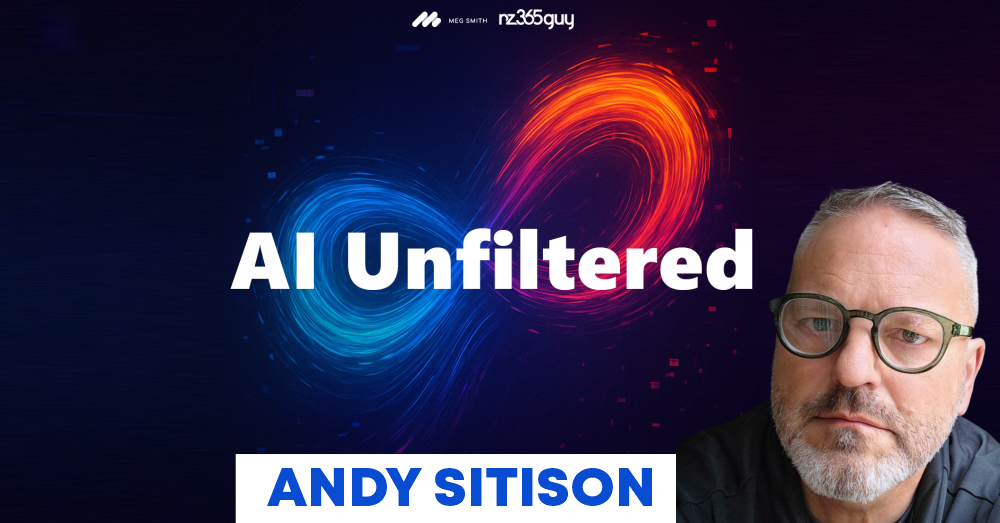
AI Storytelling That Builds Trust at Scale
Andy Sitison


AI Storytelling That Builds Trust at Scale
Get featured on the show by leaving us a Voice Mail: https://bit.ly/MIPVM
Explore how Andy Sitison uses AI-powered storytelling to uncover hidden patterns, build trust, and drive meaningful engagement. Learn why human connection, agility, and intent are essential for businesses navigating rapid technological change. Gain practical insights from Andy on leveraging AI as a creative tool and fostering a culture of trust and adaptability.
👉 Full Show Notes
https://www.microsoftinnovationpodcast.com/789
🎙️ What you’ll learn
- Identify actionable ways to use AI for analysing customer stories
- Build trust and engagement through authentic storytelling
- Apply agility and intent to stay ahead in tech-driven markets
- Develop internal AI skills and centres of excellence
- Move beyond traditional advertising to foster genuine community connection
✅ Highlights
- “We explore real-world AI applications, share practical insights, and discuss how businesses are implementing responsible, ethical, and trustworthy AI.”
- “We help them find the signal in the noise… AI allows us to find those unique patterns.”
- “Giving them the voice itself is important.”
- “Stories are more primitive… there’s a natural imprinting on us that does that.”
- “Telling a human, bringing a story to the table is going to naturally connect with humans.”
- “Tech is one of those things we need to ride like a surfboard.”
- “Companies should consider… planet, society, economy.”
- “Trust is a heck of a sales tool. If you can find a way to help people trust you and your brand, genuinely trust it, it’s gold.”
- “First thing for companies to do to tell a better story of their customers is look internal with these technologies to make their team better.”
- “People are tired of ads. Your ads don’t work.”
🧰 Mentioned
- Machine learning - https://learn.microsoft.com/en-us/training/paths/create-machine-learn-models/
- Generative AI - https://learn.microsoft.com/en-us/ai/playbook/technology-guidance/generative-ai/
- Center of excellence model - https://learn.microsoft.com/en-us/power-platform/guidance/coe/overview
- Andi's GitHub: https://github.com/asitison
✅Keywords
ai, storytelling, business, technology, trust, agility, customer engagement, centre of excellence, community, human connection, brand, creative tool
Microsoft 365 Copilot Adoption is a Microsoft Press book for leaders and consultants. It shows how to identify high-value use cases, set guardrails, enable champions, and measure impact, so Copilot sticks. Practical frameworks, checklists, and metrics you can use this month. Get the book: https://bit.ly/CopilotAdoption
I’m Mark Smith - nz365guy - Helping people reach their full potential.
I have been a Microsoft Applications MVP for over 14 years. I am passionate about helping people reach their full potential, through training, coaching and mentorship.
Accelerate your Microsoft career with the 90 Day Mentoring Challenge (https://www.90daymc.com/)
Support the show (https://www.buymeacoffee.com/nz365guy)
If you want to get in touch with me, you can message me here on LinkedIn (https://www.linkedin.com/in/nz365guy).
Thanks for listening 🚀 - Mark Smith
00:07 - From Rock Star Dreams to Tech Visionary
06:29 - The Power of Storytelling in Business Transformation
09:12 - Giving Communities a Voice: Beyond Surveys
14:30 - Human Connection as the Ultimate Differentiator
17:59 - he Great Disconnect: Rediscovering Human Agency
25:32 - Intent, Agility, and the Future of Work
29:42 - AI-Powered Storytelling: Building Trust and Belonging
00:00:07 Mark Smith
Welcome to AI Unfiltered, the show that cuts through the hype and brings you the authentic side of artificial intelligence. I'm your host, Mark Smith, and in each episode, I sit down one-on-one with AI innovators and industry leaders from around the world. Together, we explore real-world AI applications, share practical insights, and discuss how businesses are implementing responsible, ethical, and trustworthy AI. Let's dive into the conversation and see how AI can transform your business today. Welcome back to AI Unfiltered. Today's guest is from Richmond, Virginia, and he's the CTO of Share More Stories. Check out the show notes for links to anything we discuss. Andy, welcome to the show.
00:00:56 Andy Sitison
Man, I've been looking forward to it all week.
00:00:58 Mark Smith
I'm looking forward to it because the subject is something dear to my heart, which is, you know, well, AI is dear to my heart. My world's become wrapped around that. But also, I'm always trying to lean into what are the things that we need to do as humans and do better, perhaps, than what we've been doing as the age of all knowledge AI is upon us. So I'm excited to talk about this with you today. But before we start, food, family, and fun, what do they mean to you?
00:01:33 Andy Sitison
Yeah, well, you know, I like all healthy doses of all those things. I, food, I love me some, anything different. if you take me somewhere, be adventurous with food. I love spicy. I love exotic. I love something I've never eaten before. And frankly, you can look at me and tell I like it in general, right? So food's good. And family is brilliant. I've made it through most of the stressful times, I hope, knock on wood, but I'm into the grandkid phase now. So I've got some younger kids running around and we're building boats and enjoying stuff like that and playing in the river. And so, and fun is for me is I'm an avid kayaker 50 years. I estimate about 9,000 miles kayaking and I just build out boats now. And so we have a place close to the Chesapeake Bay over here in Virginia and I work on the shorelines and have some non-profit projects and I just busy myself at the water.
00:02:34 Mark Smith
I love it.
00:02:35 Andy Sitison
Pretty much find me in that mode one way or the other.
00:02:38 Mark Smith
Excellent. Tell us about this point in your career. How did you get here? What's your focus at the moment? You know, we've seen AI take off in the last three years, and it seems that anybody that's forward thinking is doing something in the space. Tell us about your story to this point.
00:02:57 Andy Sitison
Yeah, very good. I actually wanted to be a rock star and I spent about five years realizing that wasn't going to happen. Not playing in music, but changing my careers over the time. I owned a restaurant for a little bit and then ended up in the technology space because I like to create. And so I found that, whether it's a guitar back here like that or writing code, they're creative outlets for me. And ultimately, I grew up in a period of time where there was just a massive growth of technology. I've always been an emerging technology person. I've always wanted to be at the cutting edge of tech as it's coming out. I get bored about the time people start making money with that stuff. So it's still working, you know, I kept giving up on the stuff as everybody started to get rich. But it's been a fun ride. And you know, I also, it's funny, we were talking about generational differences between tech just today, I think, and it's like, how I grew up in woodshedded was, I'd be dropped off at a manufacturing plant at 3 A.m. in the morning, knowing that I had to get that database working so that the whole manufacturing plant could come online by 8 A.m. And, you know, it was moments where I look back, I'm more fearful now because I know how serious it was. But, you know, you were a single point of failure a lot back then. And I learned how important getting it right was. And so I spent 20 plus years doing all sorts of that kind of stuff and high tech. And I was actually helping like Fortune 100 companies convert to their biggest apps to the cloud for about a year and a half, two years, their business app. And I took a sabbatical. I had an opportunity where a couple of companies were merging and it was a good time to get out. And I looked at myself, I was like, I got a great resume. A lot of people would love to have this resume. I don't want to be this guy anymore. And part of what was bothering me was one, you know, people were deciding how I put my time towards the mission. They were, I was flying all over the world. And another thing was I could tell we were going away from caring about humans. You know, I like to joke, it's like, we all have seen the Jetsons and Terminator, and we all kind of hope it turns out like the Jetsons, right? Like, I could start to see, hey, I don't think I'm getting to the Jetsons. I don't think the average human's getting to the Jetsons. I don't think we're using technology as an enabler, but often as a cultural or, you know, hammer against others as a competitive wedge. And that's okay. But I decided I wanted to work on what I call the veil, the digital veil. I wanted to help humans stay real. And I wanted to help humans in the intersection of technology and digital world to, find a better version of what we could all do. And I felt like that was a little more bespoke than me being in a big IT company. So I Started looking at what I was going to be and the startups I would be doing it with. And I'll finish with, I just, at the end of that sabbatical, I took another four months and taught myself the math and code of machine learning and AI. Data guy forever, right? But, you know, I wanted to get into that space and frankly, painful, right? Like it was brilliantly fun and painful. And, you know, 10 years later, the rest is history, right? It seems to have been a good call.
00:06:25 Mark Smith
Yeah. So how does that link in to share more stories?
00:06:29 Andy Sitison
Yeah, so this red thing behind my head, for those that are on video, is actually a stage prop from a TEDx, a local TEDx that I was part of. And we organized a couple of us organizers. One of the guys there was starting a company around storytelling and using stories to help brands engage with their population, their constituencies, their communities. And I'm like, Well, that's interesting, because long-form text would be kind of a fun thing to analyze, right? And so we started playing with that, and kind of the rest is history. We started, he had already started to share more stories at the time and started playing with a couple analytical tools, and I came in and just, went crazy in there. And, 8, 10 years later, we have a, web-scale We process 60, of our own emotive scores or attitudinal scores, scores of, things like anxiety, neuroticism, to activity level, to, self-transcendence, also altruism. And what we do is look for evidence in the content we process. And in this case, mostly as stories. So we go out to communities that our customers want to better understand and we collect stories and then we help them find the signal and the noise because, and we can get it more later if we want, but if you think about it, if we collect 500 stories or 1000 stories, you could be a great researcher. But if you read 500 stories, you're going to forget way more than you remember, right? And so what AI allows us to do is find those unique patterns to be able to keep that collected in the cache and say, oh, here's some interesting stuff. Here's some, you know, the sediment inside, the data sediment inside this data package is really interesting in these ways. So we, you know, we use it to help us find the magic inside the community.
00:08:28 Mark Smith
Nice and powerful. I've done some similar stuff on a lot of the When somebody does a testimonial for the work I do, like when you've got 150 plus testimonials, where's the pattern?
00:08:43 Mark Smith
What's the story? Why, you know, you're right, I can't remember it, but running AI across it is very interesting in what it pulls out. We talked about emotional resonance last time we chatted in stories. Tell me what you're doing in that space to help companies then, I suppose, tell their stories that are going to connect with the people that they're wanting to engage with.
00:09:12 Andy Sitison
Yeah, it's fractal almost. It plays upon itself and in a few ways. So let me see if I can Summary, I'm from the States, but I'm from the South, in North Carolina. So I'd like to talk around the bush instead of getting right to the answer. Let's just like that, right? So let me try to put a bow on that. First off, you know, if you survey people, you can get answers to the questions you're asking. And surveying is a very valuable tool in its mature product. What we do is help you understand the questions you should ask, or even more importantly, help you understand what that community needs from you and needs you to focus on. And that is a dollar tool in a way, because we're kind of opening up the space to allow the community to have a voice. And that's really important because giving them the voice itself is important. So let's imagine you sell a soda. and that soda, is starting to get a bad reputation for whatever reason. And you reach out and say, hey, we care about how you feel about our soda. Can you tell us about, not about the soda, but tell us about something that's interrelated to why you think you're having issues with your soda. And they'll tell us that story. Through that process, most people go, wow, I didn't know I needed to tell you that, but I'm glad to get that out. I'm glad to be able to get a voice and to share it. So it's a win, a therapy win for the person that actually authored the story. And the brand gets the win in their column for asking for their voice, right? And all of a sudden the person feels more needed and wanted from that process. And stories are, if you're going to do an Amazon review or a Google review or something, you can be a little snarky. You can keep up with all that. You can put your game down. You can do whatever you want. If you're writing a three-page story about something like long-term care of your uncle that you did for two years, you're not going to be snarky. You're going to go inside yourself, find that story and share. And it might not be exactly accurate. It might, it's your memory of that, but it's what you feel, right? And that's what's that's resonant to you. And then finally, so all these things kind of work together. They're good, rich content to work with, but also stories are more primitive. You know, we're in this world where we have a digital signal on, I mean, the noise around us all the time, every moment, our personal lives, our work lives. And The challenge is sometimes we don't feel foundationally connected or grounded in that process. And frankly, there's a lot of fake stuff out there. You spend an infinite amount of time trying to source what you're reading until you're fatigued to the point where you're like, well, I just won't look at that anymore, right? So when you turn around and say, ask, tell me a story, it takes you back to the campfire, right? It's the caveman, right? You're going back to a place where it isn't now. we've done enough of this work. When you sit in a group of people and you have people share stories, people show so much more respect for the people that are sharing that story. They have so much more empathy. There's just this natural imprinting on us that does that. And so the group will automatically come together. There's just this magic that's already built in and we call it shared wisdom that you can almost feel it in the room sometimes when people come together. Like we've done it for new hires and You take the new hire who is afraid of the new job, and you take the senior exec who's the VP and been there for 20 years, and they both share a similar story. And they say, hey, you know what? 20 years ago, I was you. I was scared to death, right? That new hire is going to be a better new hire, taking off the burden of fear so they can get started working good, right? And so there's magic in this process that we've kind of We kind of planned it, but we tripped over some of the goodness of it, right? And so that's just starting to look at that cocktail a little bit.
00:13:06 Mark Smith
In listening to you, like I get a sense that it's very human-centric what you're talking about. And I wonder in what we hear and the speed that AI is going at, that is there a risk that we lose our humanness? Is there a risk that all products just become homogenized in that There's no differentiator in the product because ultimately AI and intelligent machines, et cetera, will potentially be able to produce at the same standard as each other. How then a brand's going to really differentiate into why this brand, why the Tesla of the BYD from China, you know, when it comes to cars, will it come down ultimately to their storytelling?
00:13:56 Andy Sitison
Yeah, it's a good, interesting, it's an interesting point. And you were taking me one way, and my mind was going somewhere, which was this idea of who's a human in the AI future, right? And that's also a very interesting conversation, but how does human connection through a narrative of a corporation or a brand matter? And I think we all can answer that. You know, I have the four Gs, like gluttony, gloom, and you know, there's all these things going on right now. We just feel this kind of heavy, it's like, August here in the States where it's just really heavy and muggy. Like the world feels a little heavy to us right now. And I think everyone, you can see it. Everyone wants to go camping. They want to get out and meet people. They want to do things that are analog. records come back, everything is, there's a nostalgia for that. And I think you can play upon that. It's just a human need, a human want. You get little of that and too much of the other. And so telling a human, bringing a story to the table is going to naturally, I just mentioned it, it's going to naturally connect with humans. When you start to say, you know, I don't, you don't, let me just play with this out, right? Like, Mind my thing, mind my thing. What do you think of this? Well, wouldn't you look great with this on, right? You know, all that. Or you say, let me tell you a little bit of something. You know, when I was 12, I went, all of a sudden your mind, I didn't have to share more than that crazy garble. And you can feel your mind switching, right? Like we're getting punched with ads or we're being asked to listen. And I think just being that function of being asked to listen can really have an effect on saying, I'm a little different. I care. I'm engaging with you. And all those things are just righteous in this moment for brands to consider.
00:15:39 Mark Smith
It's interesting. I've got a 20-year-old son who's in a second year law degree. And in the conversation had, you know, recently where because he's away at university is that him and his peers are getting off apps. They're putting their phones down like they are, he called it, it's the great disconnect that we've had enough of that. And yeah, wanting to spend more in-person time doing in-person outdoor things. It definitely seems, and I mean, he's what, he's a Gen. Z in this case.And there's that, there's definitely a move coming. I recently had a guy on the podcast that had got a bit of fame and notoriety out of San Francisco for building what was called the cheating app with AI. He went and did interviews with Amazon, and he aced them, got hired, and he had used a tool that he invented. He's only 20 years old, and it allowed him to provide all the absolute correct answers because he had AI running over the conversation. And I said to him, what happens, you know, in his perspective, what happens to the world when AI is, doing 90% of all the jobs and roles and sector of the world. And what shocked me, he said, we will be able to sit around the campfire and tell stories and do crafts. And I'm like, there's somebody highly intellectual, like probably ahead of his generation from what he's already done from the number of companies he's already start up running in San Fran and stuff. And yet that desire to go back for very human type activities and connections was what he saw. that what he's doing is going to be able to create that.
00:17:25 Andy Sitison
Yeah, I think it's, I'm of the same ilk as that. I believe, this is back to that Justin comment, right?Like I believe technology, you know, I think Gandhi said there's enough of the world to satisfy all man, but not all man's greed, right? And so We have to realize that. I mentioned right before we started the call, this idea of human agency, like we were talking about that. I love this idea that we need to really think about what is the agency of humans in this age, because it could be utopian, right? If we have technology, you know, none of us are going, hey, let's go work in that Victorian factory in London, in the London fog. Nobody wants to go back and do that. Probably looking back at what we did in 1980, kids will be like, no, I don't want to go do that either, right? Like it was a lot of, I'm telling you, 3 A.m. I'm over there in a plant trying to get something working, wishing the vending machine still was turned on, right? And whatever. You know, I think there's this great opportunity for us to humanize in that process to find what is that next human and what is valuable. Like what we value is labor right now, and then we value intelligence, and then we sort of value creativity. But those are all contemporary perspectives on that, right? So I think humans can stay above this, and maybe we're not the top of the food chain. maybe we don't need to be. I mean, you live over there in the area where humans aren't always top of the food chain, right? Like you get out in the woods over there, something could kill you real easy. And so that's okay. That's brilliant. You know, people love to go out camping in the outback and worry about those kinds of issues and brilliant countryside. So I think it's all okay. And it's just massive transformation. So I've hooked on it a little bit, but netted out, I think it's about, where, it's about design. And then you look at right now our world, we're not choosing to design it, we're choosing to let the greed define it. Like I just looked at a red code out of one of our big AI companies, you know, Code Red, we burn the Victorian stoves at three times. And we got to put it anywhere, stick it anywhere, even if they don't want it there, put some AI right there. I mean, those are horrible decisions, right? And this is an immature part of our process. So let us humans vote with our dollars, vote with our minds, make decisions so we don't end up at the worst first version of that world. I'll stop for a little bit.
00:20:08 Mark Smith
No, this is good. This is good.And I watched the video that you're just referring to as well yesterday. What do you see the skills, like folks who are listening to this and they were thinking about the deeply human skills they need to lean into that's perhaps not been prevalent in the workforce, it's not been prevalent in their tech careers, that is going to probably allow them to differentiate as we go into an ever more AI-enabled world? And you could answer that from the point of view of a company. How is a company going to lean into its core connection with their customer base that is not going to be able to be replaced with AI? Yeah, it's, let me work to the company side of that equation, because, you know, for me, it's kind of like, Let me give you an analogy that's close to home, like a floating dock versus one that's stuck into the dirt with pilings, right? Like we had a flood a couple a month back and it got a little too close to the top of that pier, right? If it's floating, it just floats relative to the water coming in. And I think it's a lot about, I've always thought for the last 20 years of my career that Tech is one of those things we need to ride like a surfboard. And people talk about eating their own dog food. I always say riding our own wave, right? Let's ride our wave. And that means we're on top of it. And technology, and to keep technology below us, it's a human function, right? It's a corporate function. It's a decision. And so for me, all these kind of philosophical and potentially existential, say, the implications we're making, it's an intent. It's a function of intent to me, like the company. I think it's easier to make money now than it's ever been, right? Like we're not pouring hot molten lead into a crucible at the same percentage as maybe we were in the past. So if it's easier to make money, make it in better ways. And we can tell it's easier to make money because some people are getting ridiculously off the charts, right? Like the money going to the top is just crazy right now. I don't want to be political about that, but it's just observable, right? And so if that's the case, why not balance that a little more? Why not companies take this and say, you know, my mission is not only just to make profit, that seems easy, but also consider sustainability, resiliency of the resources and the, you know, five generations ago. You know, and a lot of people like to fight me on this stat, but like, And the numbers might not be right, but let's say known oil reserves, say, we burned through about half of those in 4 1/2 generations, and it took about 130,000 human generations to make it, right? We didn't make it, but something was making it. And so if you just look at that imbalance, you start going, well, is our consumerism, just like stupid, we're outpacing what we could potentially use here. So I think all these things matter. Ron Guerin, an astronaut, said, we got to flip it. It's about planet, society, economy. And I think that's another pretty valid structural thing for us, a cognitive structure to hang on, is that maybe our company's job isn't just to make profit anymore on a core rudimentary version of capitalism, but to think, hey, we got to interlive with the humans the planet and we want to be, we want to leave something for the great-great-grandkids. And if that's the case, and maybe you think that's too leftist or whatever, I don't care. I'm just throwing some concepts at this. Companies should consider that. What's their intent? What's their mission? And I think if you do make that mission choice, like you said earlier, the Gen. Zers are going analog. They're already seeing it. It's a more acute case for them. They go, I don't want, I'm packing the bags. I don't want anything to do with this, right?And it could be, the next two generations could be even more of that, right? And so I think companies are going to have to stay with that trend. They're going to have to float like the dock. As technology advances past us, how do you stay agile to respond? For me, like programming ends vibe coding, you know, it's like,Do I write assembler anymore? No, I had to keep moving forward. And how do I hire people?How deep do I learn the next piece of technology? Or do I stay above it and let someone else write it? Do I try to build my own database or am I going to use one off the cloud now? Because it's an agility play and what's my lily pad step? And I think companies have to be in that game. Agile's going to be a really important aspect of this. And I think intent's another one. I might have beat that up a little bit too much, but that's my version tonight.
00:24:58 Mark Smith
No, it totally resonates with me. And the one kind of sticking point I have with it, I think Henry Ford lost the court case where he tried to distribute the equity or the success of his business and the shareholders took him to court and said, no, it's in our interest. I wonder if it's impossible almost for a company to do anything where the shareholders ultimately rule any company. If we look at all the tech layoffs that have happened in the last 12 months, they are all shareholder driven.I heard of an internal survey at Google, for example, and this was a group of ex-Googlers surveyed why they thought it happened. As in, was an AI taking their roles? No, none of them believe any of that. It was. The shareholders demanded cost be cut and so they could make more profits. And I think that it's very hard these days for companies to have a mission and a direction that is not fundamentally what we be our current worldview of capitalism, driving and sucking every dollar out of any everything rather than, and this is what I'm concerned about, that imbalance of are we running at such a speed that we're destroying the humanity part of ourselves in the quest for more money?
00:26:14 Andy Sitison
Yeah, I'm a design guy. I'm not even a great designer, but I love design, right? Like I've designed some things okay, but I love the concept of design. And I hate when someone doesn't design something, you know, like half the user interfaces that show up on your phone right now. I just want to strangle somebody, right?
00:26:32 Mark Smith
Yeah, totally.
00:26:33 Andy Sitison
I get you. But with that said, For decades, I've realized the worst thing about business, and I'm a proponent of capitalism. I totally get it. I'm a survivor and a thriver and slightly a victim of American capitalism, right, my whole life. And so I've had all the goods of it. But the worst thing about for companies is that quarterly returns meeting, right? Like it's when you have to grow, even when it's not logical, Most of the stupid that we deal with every day is associated with it. And like the AI growth I talked about earlier today, there's billions of dollars that are going to go in this. There's a lot of lives messed up associated with this. And it's going to provide, when you start talking about productivity, GDP, and value, it's not going to provide those. What they did is they put too much money in last year, and now they're having to cover their butts for this year, right? And so And I'm not sure anything, Ari doesn't understand. I think the point is, and back to Ron Guerin's statement, planet, society, economy.
00:27:43 Mark Smith
Yeah.
00:27:43 Andy Sitison
We're human agency. We have to stop allowing that to be okay. And that sounds like a hard thing, but we all have to do our one thing or two things to start to change the perspective of that. Because the world hasn't run like that. You know, most of that stuff kicked off around Reagan's time, right? And so since the 80s, we've seen more and more of it. And now we're to a kind of a Bob Villian silliness level of this. And by the way, there was another time it looked a lot like this, 1927, and when a lot of bad things happened here in the States, right? So, we got to stop it. I hope it stops before depression happens, but we are all responsible for that. We all have to start to vote with our dollars, vote with our, how we live our lives and how we share our voices. I feel like I'm applying for a local Senate job here in town. But I think these are important things. I mean, humans need to step up. This is a time to get active. Abigail Adams was a patriot's wife here in the States, and she said, this is a great time for heroes, right? I think she's right. This is a great time for heroes.
00:28:53 Mark Smith
I like that. My final question, to you is how can businesses leverage AI-powered storytelling to create an experience that is deeply human with their customer base?
00:29:08 Andy Sitison
I think a couple things. AI is first a creative tool. The more creative you are, the more you get from it. And for example, I will, we have customized generative AI. We do all sorts of AI, but generative AI, and we just feed our stories and our scores, our demographics, and then we're locked down on that. And so we can, you know, let's say we have 1000 stories in there on a project, and we can start out, what's themes, what's, you know, what impacts, better improvements, you know, all these standard things you'd ask. And it'll generate a 80, 90% report that, okay, great, researchers go validate all this. Is this true? Can you find it in the data? They'll give us quotes from the stories and all that, so we can, We've got a rich starting place. But what I love to do after doing that work is to say, okay, I asked you all these questions. What do you see in the data that I didn't ask about, but seems to be important to the people that wrote these stories? And then it'll come back to five or six things and I'll be like, wow, this was brilliant. I didn't see it, wouldn't have seen it. And so it's a great tool for finding aha, that you didn't see in the first place. And for example, what's interesting, we locked this thing down, and then I like playing with feature analysis, which I'll go and say, Give me the variance. What do you see between the variance of females or males or geographics or whatever? And it knows what variance is. I used to have to do all this calculation to get that work. Now I just ask for it. It feeds it back to me. And I'm like, Oh, okay, here's some interesting variant. high points that were found, or covariance, which is even harder to calculate. It'll throw that back to me. And so I will play off my machine learning algorithms and say, give me some ideas. And two or three might be dead, and two or three will be brilliant. So creative thinking and how do you engage it? Another is, I call it cellular. We used to deploy stacks. And this is more like timeshare on a mainframe, but really, When we deploy it, it's cellular. And what I mean by that is I might use the same tech, but I'm going to give it a different set of prompts and instructions if I'm asking it to be an executive advisor tool. So if it's going to help them work on learning roadmaps or strategic roadmap strategies, I'm going to have it as its own thing. And then if I'm over here helping project managers plant manage their projects and find the golden thread or their critical path or whatever, it's going to be a different set of data. And so you have to kind of get these things working together or working specifically to the job. And that's the third major point. And that is don't assume just because somebody's smart that they're going to know how to use this tool. It's just you walked into your company and you handed everybody a pack of 10 magic markers and said, make art.
00:31:54 Mark Smith
Yeah.
00:31:55 Andy Sitison
You're going to get a little art. You're going to get a lot of crap. You might get some graffiti. Who knows? You know the bathroom's all marked up now. There's a joke about Mark in there now. But you have to be ready to kind of the center of excellence model, like how do you help make everybody good at this? And so you start to build these skill sets. And so first thing for companies to do to tell a better story of their customers is look internal with these technologies to make their team better. And then engage that customer community in a more interactive way to have them participate in how you engage them. That is what we've learned. That's the wisdom of this is people are tired of ads. Your ads don't work. Matter of fact, I was watching a 10-second video on how to pronounce a word in Argentina, and I had a 40-second commercial before I got my 10-second pronounce, right? So I didn't finish. I never, I don't know how to pronounce it because I quit. Right, I actually did. But anyway, that's my point. Ads are, we're coming to the age where that's not going to work anymore. And so finding new ways to engage your population and put your money towards well-being, you know, to belonging, to kind of fighting some of the stupid. And we all know what's stupid. Like, you know, you can do a survey on stupid and everybody lay out the boot for it pretty well. So start to fight that, not only for us, but do it for profit. I think it's gonna be more and more profitable the more the companies that go after this. I think last thing, and I know I'm going too long, trust. I think trust is a heck of a sales tool. If you can find a way to help people trust you and your brand, genuinely trust it, it's gold. Yeah.
00:33:44 Mark Smith
That's so true. Andy, this has been an interesting conversation. If people want to reach out and connect with you, how do they do it?
00:33:50 Andy Sitison
Yeah, my last name's Citizen. You'll see it on the page here. You know, there's not many of us, right? So if you find that name, it's probably me or somebody I know. And you can find me on LinkedIn and, you know, Share More Stories has got a website and we're out on social. So, you know, hey, if there's something we want to work on together, you think is a good idea to reach out or you just want to connect, that's great. We're always looking for friends.
00:34:13 Mark Smith
You've been listening to AI Unfiltered with me, Mark Smith. If you enjoyed this episode and want to share a little kindness, please leave a review. To learn more or connect with today's guest, check out the show notes. Thank you for tuning in. I'll see you next time, where we'll continue to uncover AI's true potential one conversation at a time.
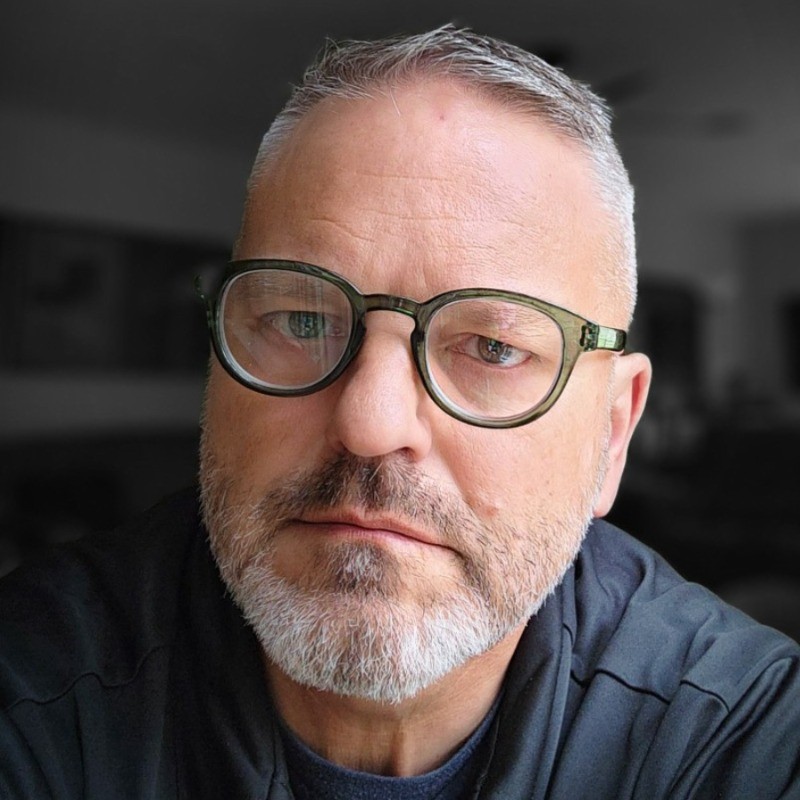
Andy Sitison is a strategic creative - an accomplished engineer, artist, and serial entrepreneur with over 30 years of high-tech experience - who is now dedicated to pioneering Empathetic AI.
A practical AI expert, Andy guides global companies through digital transformation, focusing on augmenting the human experience rather than just the technology. For nearly a decade, he has designed and deployed sophisticated AI models, specializing in Natural Language Processing (NLP). His work with the SEEQ platform utilizes custom Large Language Models (LLMs) to perform deep story analysis, generating emotional scores and emotive personas to help communities truly understand themselves while safeguarding individual privacy.
Holding degrees in business, data management, and psychology, Andy uses his analytical and human-centric background to ensure data products genuinely represent the individual in the digital age.
Beyond his career, he is a dedicated environmentalist and community leader, serving as VP of NAPS, where he co-founded a successful Ghost Pot Retrieval project in the Chesapeake Bay. He also helps students learn STEM through boat building, and a is constantly in the water cleaning up the shorelines, or just having fun.
Andy is a problem-solver who rides the wave of emerging technology - from assembler to augmented reality - always transforming systems to elevate human potential.