Bias‑Free Hiring at Scale Powered by AI
Fletcher Wimbush


Bias‑Free Hiring at Scale Powered by AI
Get featured on the show by leaving us a Voice Mail: https://bit.ly/MIPVM
This episode explores how AI is transforming hiring, reducing bias, and helping businesses reliably identify A players. Fletcher Wimbush shares practical steps for using AI to streamline job analysis, screening, assessments, and onboarding, giving small and mid sized businesses access to talent strategies once reserved for large enterprises.
👉 Full Show Notes
https://www.microsoftinnovationpodcast.com/786
🎙️ What you’ll learn
- How AI accelerates fact driven hiring
- How CEOs can attract top talent through direct outreach
- How to design effective screener questions with AI
- How assessments surface high potential candidates
- How AI enabled systems cut time to offer
✅ Highlights
- "It starts with having a great team."
- "AI came along and we were able to take that entire process and accelerate the timeframe."
- "A lot of hiring can be done almost completely on automatic using AI."
- "AI is way less biased than the human."
- "Ask some really well worded multiple choice questions that AI created for us."
- "It eliminated 90 percent of those applicants right off the bat because they've self selected."
- "Assessments do a phenomenal job of bringing the people with the right integrity and behavioural makeup to the surface."
- "I almost never hire anybody with direct experience."
- "We built the system from an AI lens."
- "We onboard folks and get them up and running almost instantly."
- "Hiring is mostly going to be automated in the next five years."
- "The people who really embrace that are going to be the architects driving results."
🧰 Mentioned
- The FACT Driven Hiring System eLearning Course - https://discovered.ai/hiring-academy/
- Discovered - https://www.discovered.ai
- Y Combinator - https://www.ycombinator.com
- Hiring Expert GPT - https://chatgpt.com/g/g-ves0BxHrx-hiring-expert
✅Keywords
ai hiring, recruitment, assessments, a players, smb hiring, job analysis, screening, onboarding, bias reduction, automation, talent strategy, ceo outreach
Microsoft 365 Copilot Adoption is a Microsoft Press book for leaders and consultants. It shows how to identify high-value use cases, set guardrails, enable champions, and measure impact, so Copilot sticks. Practical frameworks, checklists, and metrics you can use this month. Get the book: https://bit.ly/CopilotAdoption
I’m Mark Smith - nz365guy - Helping people reach their full potential.
I have been a Microsoft Applications MVP for over 14 years. I am passionate about helping people reach their full potential, through training, coaching and mentorship.
Accelerate your Microsoft career with the 90 Day Mentoring Challenge (https://www.90daymc.com/)
Support the show (https://www.buymeacoffee.com/nz365guy)
If you want to get in touch with me, you can message me here on LinkedIn (https://www.linkedin.com/in/nz365guy).
Thanks for listening 🚀 - Mark Smith
00:07 - Why Hiring A Players Matters More Than Ever
06:11 - AI accelerates fact driven hiring across the lifecycle
08:43 - CEO led outreach wins elite candidates
14:29 - Objective shortlists and offers in five days
20:44 - Escape inbox chaos with automated hiring
24:07 - Built from an AI lens for faster onboarding
27:29 - Prepare for fully automated hiring in five years
00:00:07 Mark Smith
Welcome to AI Unfiltered, the show that cuts through the hype and brings you the authentic side of artificial intelligence. I'm your host, Mark Smith, and in each episode, I sit down one-on-one with AI innovators and industry leaders from around the world. Together, we explore real-world AI applications, share practical insights, and discuss how businesses are implementing responsible, ethical, and trustworthy AI. Let's dive into the conversation and see how AI can transform your business today. Welcome back to AI Unfiltered. Today's guest is from Los Angeles. He's the owner of Discovered. Remember, links are in the show notes. Fletcher, welcome to the show.
00:00:54 Fletcher Wimbush
Awesome. Thanks for having me, Mark.
00:00:55 Mark Smith
Good to have you on the show. I'm really interested in this topic because it seems to be a lot of talk around AI and recruitment. I've been privy to a mega project around using AI in recruitment. We're talking about recruiting 40,000 people. So big, big kind of global infrastructure work. And so I'm really interested to hear your perspective on what you're doing in this space. But before we start, tell us a bit about you, what you get up to when you're not working. Food, family, and fun, what do they mean?
00:01:33 Fletcher Wimbush
I live on the beach. So, I kind of like that lifestyle. That's not a pretty good way to embody. I'm wearing a rip curl, you know, polo shirt. So I love, I surf on a standup paddleboard for the most part. Sometimes on a surfboard, but I do that just right out over here, just maybe a few feet from where we're talking right now. And I have two little girls, 4 1/2 and two years old, and we spend a lot of time running around out there and having fun. But I'm a, any kind of action sport, snowboarding, golf's not that action-packed, but I like golf. I'm a retired golfer now that I have two young girls. Sport fishing, the boat's just in the harbor right over there. We take that out to Catalina and, you know, go hunting for a bass or, if we're lucky, any bluefin or some Dorado. But yeah, so I don't know, travel, you know, anything that gets a little bit of adventure going.
00:02:34 Mark Smith
Nice. I love it. So many similarities. I mean, what the audience won't be able to see here is you've got a flash haircut like mine. And if I go out the front of my property and I wave, I'm on the other side of the Pacific Ocean to you. If there wasn't a curve on the earth, perhaps you'd see me. And I've got 8 beaches around me, one harbor, ocean all around me. And I'm just doing the same thing on the other side of the world. I've got a five-year-old girl and a three-year-old boy, so even similar age children.
00:03:09 Fletcher Wimbush
Nice. So you get out in the water and paddle around much or you guys get good surf there.
00:03:15 Mark Smith
You know what? I've done paddle boarding and I just said to my wife, because we've got a nice flat harbor area, because we're just inside the harbor mouth on one of my lot of beaches. I've got, I look out over the ocean on the other side of me, but I was just saying we should get into paddle boarding because It's so close for us and we've got the kind of like the right conditions for doing paddle boarding.
00:03:38 Fletcher Wimbush
Yeah. And I think it's pretty good exercise too. you're working like the whole body. Yeah, really. And if you paddle hard, you know, you'll start breathing hard too. Yeah.
00:03:50 Mark Smith
I love it. I love it. Have you done any bungee jumping?
00:03:53 Fletcher Wimbush
I think I've done it like once somewhere off some bridge, but that's a long time ago. But not a lot of great bungee jumping places here. But I hear there in New Zealand's pretty famous for that. You guys got like a big one, don't you?
00:04:08 Mark Smith
Yeah, we've got, I've done two in New Zealand as in one is one of the largest in the world. But I think someone's just saying recently, like Colorado's always had the largest in the world, but I understand China's just come out with a longer free full time.
00:04:23 Fletcher Wimbush
Well, if I'm ever in the area and there's bungee jumping, I'll make sure to put that on my agenda for the trip. That would be something I would do.
00:04:33 Mark Smith
It's an epic experience. And I've also got a son quite a bit older. And when he was 18, we took him to a place called Queenstown, which is our kind of Alpine playground. And he wanted to bungee jump. And of course, I was Never, no hesitation. For me, it's like walk up jump. Like there's going to be no, humming and harring. And so then he had to follow suit. But just epic fun. And that one, you can dip your head in the river below so they can set it. So you go down, head in the water, then up in the air, and then a boat comes out and lowers you onto a boat.
00:05:07 Fletcher Wimbush
Actually get a splash in the river.
00:05:10 Mark Smith
Yeah.
00:05:11 Fletcher Wimbush
That's crazy. That's kind of crazy. I mean, think, you know, when you're going that fast.
00:05:17 Mark Smith
Yeah. But it's a rushing river. So it's like the, it's all broken water. It's not, it's not like, you know, flat. Yeah. That would hurt, I would expect.
00:05:28 Fletcher Wimbush
Because I've done that like cliff diving like off of lakes. Lake Havasu is pretty famous here in, you know, the southwest here in the United States. And I mean, those, some of those jumps, I mean, I don't know how high there, but they might be. 100 feet or more, and even a pretty, what I would think is a pretty good jump. I'm not an expert in cliff diving by any stretch, but I've done it a bunch of times, and you just hit the water just slightly wrong, and it is unpleasant.
00:06:00 Mark Smith
Yeah, exactly, Hey, so let's talk about what you do. What's your company about? What's the industry sector you're in? And yeah, what does your day look like?
00:06:11 Fletcher Wimbush
Yeah, I've spent my whole life thinking about how to solve hiring and the importance of getting the right people on teams and how important that is for driving business results. And that's important for the people inside of an organization. winning organizations, people like being there, right? Usually the culture is fun or it's engaging for the people that are there and whatever kind of culture that is, it's a, you know, the people are coalescing. and they're having success. And that means they're having success professionally and often personally because of that. There's usually financial reward. And then obviously the customers are winning because they're spending money. They like the product, they like the service, right? I mean, a good company is just winning on all fronts. And it starts with having a great team. And in this AI era, I mean, you can't punctuate that any greater when you look at things like what Mark Zuckerberg is doing or did here recently and writing $100 million checks to sign machine learning. Well, they're automating the world, but yet they're paying the highest salary. I mean, even professional athletes don't get paid this much to do their job, right? You know, it's just, that just underscores how important having high performing, talented team players is. So I've just gravitated to that my entire life. Well, that's been 27 years that I've been thinking about practicing and helping organizations solve that problem in various capacities. And so we developed a fact-driven hiring system. And before AI, I mean, that was a, it was kind of a laborious, time-consuming, tedious, process in order to really truly implement into an organization. And to get it right, it's just, It's hard at the end of the day. As an organization, if you care deeply about this, it takes time, it takes effort, it takes iteration, it takes some failures, some tweaking, some improvements. And when AI came along, we were able to take that entire process and just accelerate the timeframe. And then on top of that, use technology to help assist the humans in executing what are scientifically best practices in making better hiring decisions. And across really the whole spectrum of the hiring process, from doing your initial job analysis to your training and onboarding. Training and onboarding is, hint, hint, part of the hiring process, by the way, most people forget.
00:08:43 Mark Smith
Yeah. On your LinkedIn profile, you say start hiring A players on repeat. And a lot say that Elon Musk's success has been that he has the ability to get A players. And, whatever project he's undertaking, he gets the A-players in there. And that's a lot of his success is because he's really good at identifying that. And I suppose a lot of companies, particularly in the, let's say, non-enterprise space, might not even thinking about A-players, they're just thinking about hiring. And I think you've you see these massively successful companies and a lot of it is because they do get A players. And sometimes it's a mindset shift that needs to happen from just filling a role to actually getting somebody that could really help excel your company or move forward. How do you think about that and how do you help companies? And I suppose, are you only dealing in the enterprise into town or are you talking midmark or to SMB? How do you, because I know you've got more than just think about hiring. You've got some tools right in this space.
00:09:49 Fletcher Wimbush
Yeah, I mean, that's what we, when AI came out, we were like, hey, we took what were, you know, sort of traditional SaaS type of products that we were building and we really infused those with AI and continue to do so every day. And, you know, at some point in the relatively near future, a lot of hiring can be done almost completely on automatic using AI. or at least the large, huge portions of the hiring process will be done. But we're predominantly working with SMB. And so, yeah, it is a unique challenge that SMB has. A lot of times it's, you know, I can't afford that talent. I can't write a $100 million check. And it's interesting that you bring up Elon Musk, because he embodies really the best practices that leaders need to, all leaders at all company sizes need to embody. He is the chief recruiter for all of his organizations, right? Yeah. He takes that pretty darn seriously. He knows, I mean, I've watched interview after interview with Elon Musk. He's one of my favorite people from a business perspective, just in many ways, despite some of the controversies that you might have to hear about him. And so not only does he take that so seriously, and he takes an instrumental role in the recruiting process, he does it partly because he leverages his status to get people engaged. So if Elon Musk called me tomorrow and be like, hey, I think I could use your talents, Fletcher, I'd be like, I'm going to close my company and come work for you, right? Like, I probably would at least entertain that very seriously, right? because of his status in the world and his ability to get things done and make big things happen, like that's going to be a pretty exciting phone call or LinkedIn message to get from Elon Musk. Well, even at the small business level, we overlook that oftentimes, like to reach out to a salesperson or a developer or an admin, an integrator, I don't know, pick the role that you might be like struggling to find the very, very best people from. Instead of sending posting a job ad and just waiting for some nonsense to come in and try to sift through all that, which there's lots of tools that we will give organizations to help them with that problem. But again, if I'm really going after truly, truly the best and I have kind of maybe a niche talent that I need to find, and we do this a lot with public accounting firms, engineering firms, In other niche, like high-level hires, we're coaching organizations on this and giving them some tools to help them with it to top it off. But we're asking the CEOs to get involved. Now you can bring in an admin to maybe help and the admin can maybe go make the connection requests on LinkedIn for you, Mark. And they can probably deliver sort of a decent like script of a message that you hopefully pre-crafted for them and gave them some parameters on like, this is what you say. And then maybe use a little AI to make that even more personalized. But as soon as that A player responds back to that message, it's time for you, the CEO, to step into that role and pick up that conversation and invest the time to take that person to coffee or lunch or jump on a virtual Zoom call with them. Because you are going to be the best person to sell the vision and the mission and the value of your organization and to inspire that person to want to come join you. Because that's what Elon Musk is doing. That's exactly his playbook, right?
00:13:27 Mark Smith
So let's take the perspective from the A player now. And they potentially are getting hit up by a bunch of folks, due to, I assume they have reputation already. There's a fear in the market and folks I've talked about where they are afraid that if AI has been used in the recruiting process, that There's a disconnect with that, the human connection part of it, that there, in many cases, some of the AI tools being used out there in recruitment, they're not even getting past the, they're not even getting interviewed, let alone shortlisted or anything else, right? Their CV or their LinkedIn profile is discounting them straight away. And they fear that AI is just going to accelerate this in the years ahead of their irrelevance and that I could just not choose them for unbeknown reasons. How do you answer it?
00:14:29 Fletcher Wimbush
Well, I don't know. I don't know about that. I mean, still to this day, this still happens the vast majority of times. Somebody applies, resume goes into some sort of collection device, applicant tracking system maybe, or oftentimes worse, especially in the SMB space. It just goes into some, goes into this collection bin inside of Indeed, it goes into somebody's inbox. who they're just trying to like sift through haphazardly. And they could have a gold mine. They could have the best player sitting in their inbox and they haven't even bothered to open it and look at it, let alone like discriminate against it in any way.
00:15:07 Mark Smith
You're describing me. I've done this in my career. I've had 100 applications and I'm like, I've got no time for this. So how do I choose out of all those e-mail applications and CVs?
00:15:18 Fletcher Wimbush
Five clicks to open each one and open the CV and look at it like you don't know. I don't have time for that. I mean, I just posted a job. I got 300 applicants. Well, first of all, the AI is way less biased than the human. And bias only in the good ways. It's going to look at it in a CV in the most objective way, humanly possible. If you write a good job description, it's going to look at that candidate's resume and they're going to say, yeah, this person's a great fit for these reasons and they're not a great fit for these reasons. And it's going to be very objective. It doesn't care about the color of your skin, your name, where you live. It doesn't care about any of that stuff. It cares about like matching your skill, your proven, your demonstrated skills that you put on your CV. Oh, look, if you write a terrible CV, well, I'm sorry. I can't help. If you don't tell me why you're great, then a human can't discern that any better than an AI can, right? So, you know, that's kind of the problem #1. Number 2, historically, we've asked candidates to go through typically an assessment process very early in the process. So we're doing that through either, like usually nowadays, it's a kind of a multi-step assessment. So it's screener questions. that are well crafted and AI has made that so much easier and faster. I used to tell people, don't use screen questions. And one of the main reasons why is because none of us are smart enough to craft like 5 really cleverly crafted and not clever to like, you know, trick questions. It's not clever like that. Clever is to be able to elicit a truthful response from the person. That's what clever is. Now, because when you ask a leading question, you're just demanding that person lie to you. And that doesn't put either party in a good situation, right? Because now once I figure out you're lying to me, I think you're a liar. But I sort of asked you to lie, so it's actually really my fault, but I'm never going to take ownership of that, right? Yeah. So, okay, so AI can help me craft some really clever questions. We're doing this with a service delivery manager for an MSP right now. And this is kind of a great example. We really need somebody who has experience leading and driving metrics within another MSP environment. Being an IT manager at a large company is just a completely different animal, right? There are lots of qualified people in the sense like, yeah, they understand the skills and this, that. But man, there are 300 applicants in one week and we have a right to demand that they have that experience for that role. And by asking some pretty, like three really well-worded multiple choice questions that AI created for us, and use a little human in the loop to be like, that made sense. Hey, can you massage that question to make it more aligned with what we're trying to accomplish? I mean, it's eliminated 90% of those applicants right off the bat because they've self-selected why they're not a fit for the role. And then the AI looks at the CV because there's been a thorough job analysis. It doesn't like a 99% perfect job of saying this CV is a fantastic match or not, or it's an okay match or it's a terrible match. So look, everybody just saved a ton of time here, right, off the bat. And then those people, those remaining people are then asked to complete behavioral assessments, kind of core EQ, integrity assessments. leadership assessments. So then all of those folks get whittled through. And then the finalists are going to go to like almost final round interviews with the CEO and then to the next level of executive team. And they're going to have an offer within like, I mean, maybe as fast as five days from the point that they put in their application, right? And then the system is going to send out the rejection notes so that look, it sucks. People don't like it. They don't want to be rejected. But it's a hell of a lot better than being ghosted because on the other side, candidates complain about, well, nobody's even looking at my stuff. I'm not getting any response whatsoever. They don't have zero chance to engage in this conversation. Like, okay, all of this is done. And it's sort of, once it's set up, it's done almost automatically. I mean, there's a human in the loop to sort of monitoring and making sure that everything's kind of going well. overriding some of the automations if necessary. So they're looking for those high potential people. So I think it's going to give the people who deserve a look at the job the best potential. And in roles where the skill set is a little more ambiguous, then assessments do a phenomenal job of bringing the people with the right integrity, behavioral makeup, and core aptitudes to the surface. to give those people a chance. And I mean, that's how I personally hire. I almost never hire anybody with direct experience. It's like, I'm looking for these raw, fundamental attributes, and then I'm going to look at experience.
00:20:10 Mark Smith
The typical customer that comes to you, would they typically be using recruiting companies, or would they typically be doing this old manually and just got too burdensome for them? What's the kind of profile of the type of companies that come to you to say, hey, we need help recruiting A players? You know, what's their burning bridge? What's their challenge? What's their problem that they want to get in touch with you?
00:20:38 Fletcher Wimbush
Yeah, I think they've done all of those things, or one or many of those things. So, I mean, I don't know how many clients that I've worked with that haven't used a recruiter or a staffing agency at some point. And I don't know any of them that have had a good experience with it. So in other words, they've spent a lot of money and they got a hire and that person didn't work out and they regret their decision to do that and work with the recruiting agency. Many of them are maybe at that growth stage where, yeah, they're outgrowing the inbox. I think they're just like, I cannot do this anymore. There's got to be a better way, right? So there's definitely, that's probably the larger chunk of clients. But there's definitely another chunk of those clients who are using a competing applicant tracking system. And Discovered is a relatively new product. It's only been out for the last two years out of beta. And like the last year, we're just taking out all of the competitors, the Jazz HRs, the Greenhouses, Workables, ICIMs, I mean, you name it. Like those people are leaving those competitors for Discovered.ai because it's a modern product that fits the kind of modern, unique needs of how do you source and evaluate candidates all in one platform and kind of 1 ecosystem. And it's just sort of automatic. You just turn it on. We turn it on for customers and it just works, right? There's no heavy lifting of setup and this or that nonsense, right? And AI is the catalyst that allows us to move this quickly and to do it at a fraction of the cost of all these other competitors, top it off.
00:22:10 Mark Smith
Yeah, I see. You've said a couple of things here that really resonate. One is the product's been built in the last two years. I see so many companies that have been around 10 plus years and they're all of a sudden AI companies now, right? And they've just tagged AI into their marketing message.They might have used an API, you know, into a large language model, but they haven't engineered or their solution with AI existent. They've bolted AI on the side. And so I really like what you've said there is that, hang on, we built the system from an AI lens and said, okay, how can that help? Which I think is super important in any kind of where companies are selling AI solutions, I think in the market, I want to see that they are a company that yes, has the domain knowledge, but then they have built a solution from the ground up with AI. Now, just in the way you've talked, I assume you also have a whole bunch of best practice that you bundle with your software so that folks don't need to go, okay, I've got a piece of software, but how do I use it? You're providing a lot of support, are you, in how they actually, you know, run that recruitment process and identify those A players and then land them and as you say, go into the onboarding process as well?
00:23:33 Fletcher Wimbush
Yeah, I've been listening to a lot of all-in podcasts and Y Combinator podcasts lately, and the last couple of years really, but and I was listening, I had just spent like twenty-four hours in Chicago. I live in Southern California, spent like 18 hours in airports and planes after Thanksgiving, big holiday here in the U.S., right? Worst possible time. And they're talking about this concept of a forward-deployed engineer. And We sort of done that on accident because hiring is tricky, guys. Like, look, there's a factor-driven hiring system that stands for four pillars of the hiring process. There's probably like 5 or 6 sub-pillars to that. It is not a simple thing to pull off. And there are lots of variables and not every organization is exactly the same. They all fit into those four buckets. Like their process does hit all of those, but there are little nuances to that. And that is, I think, one of the tricks with AI is AI has not gotten to this total like out-of-the-box, like it's just going to fit your organization, it's just going to work. There is this kind of like customizing it component to it where it takes a deep discovery into your current systems, processes, organizations, and then this subject matter expertise, which for 27 years I've spent thinking about practicing, deploying old school ways doing it the hard way inside of organizations or with organizations. And so we've kind of put that all into a nice little package where it's so much easier to deploy, but that is part of the process. We onboard folks, but the reason why we can do this, and we don't charge for onboarding, the reason why we can get them up and running, if you want to sign up today for our services, I will be delivering candidates and automations and moving, automating your hiring process tomorrow. But we can't do that without AI. Otherwise, I'd have to charge you an arm and a leg, right? We use it internally to onboard you. Our platform has got all the tools that we need in order to get you set up, like almost instantly following these traditional best practices that we are just ultimately infusing with AI, these 100 years of best practices around hiring. The best practices around hiring have not changed much. Just technology has made it a little bit easier to execute some of these things.
00:25:57 Mark Smith
I like it. I like it. Now, we'll provide links in the show notes to you and your resources that you have there.Tell me about the future of work. Do, as in, you know, you've seen a lot over your career, but Now that, we're seeing all the frontier firms around, with frontier models talking about, it's going to decimate the workforce. AI is going to take over everybody's role. And then, Elon's best product ever is not even in market yet that he's going to release with his Optimus robots. And therefore, even, you know, physical labor is potentially going to be able to be handled with these devices. Do you think this is coming in a short window in your observations and in your life experience? Or do you think it's quite a bit further out than what some of the projections are that it's, you know, going to be well in effect before 2030?
00:26:55 Fletcher Wimbush
Well, I'm 43. I'm a, you know, xennial or millennial or whatever you're going to call it. I mean, I remember dial-up and AOL chat rooms when I was a teenager. And that was pretty cool to meet girls, but you know, and other weird people. But But I remember I like set up a date with another 14 year old girl to go to the ice rink, and that was pretty cool. Me, it was a double date with me and my buddy and her and her friend. Like that was pretty cool. Like through an AOL chat room back then, that was. Now that'd be kind of creepy, I guess. But, so I guess, I mean, I have lived through a time, and you have as well, but in my life experience has been this fast acceleration to, from Nokia block phones to, high-powered computers in my hand. So, look, I am not, ask Elon that question. He'll probably have the best answer for you. I don't honestly know. I think it's going to happen really, really fast. I mean, that's just my personal take on it. I think hiring is mostly going to be automated in the next five years. I know that's true because those are the types of things we're going to be deploying in the next year or two, where it's going to be like really, truly, like the full thing is going to be done by hire, you know, through AI or almost completely done. Like, I mean, in theory, you just be able to look at all the data that was collected in that process and just be like, yeah, tell that person to show up or not even, I just trust you with AI. And I'll just get an alert that, you know, Fletcher's showing up on Monday his first day, and all his new hire paperwork will be done and everything, and all I got to do is start onboarding him. I think that's going to be a real world experience for many people that choose to go down that path. In terms of the future work, I mean, I don't hire anybody internally. I spend a lot of time encouraging and training our existing teams on using AI tools. I create space for them to use them. So I tell them, look, You've designed a project. This is the project that you're going to build and execute. There was kind of the way we used to do that. And I tell him, just throw all that out the window and just use Quad Cut, please. And you know what? I don't care if it takes you three times as long to do it. Because there's a learning curve, right? I don't care about that. I'd rather take you three times along and you make it happen with cloud code than do it the other way that you know how to do and that you can get it done faster. And I think the people who really embrace that, right, are going to be the architects and the ones that are really driving results with inside businesses. And then I'm just going to be, as an entrepreneur, I'm going to be forever optimistic that like every other technology, we've found something to do as human beings that was productive. We didn't know when the light bulb was invented and we didn't know when the car was invented, what new jobs are going to come, but something showed up, right?
00:29:53 Mark Smith
Yeah. Hey, Fletcher, this has been such an interesting conversation with you. It'd be interesting to have you back on in like 2 years' time and see how much the dial has shifted. which I believe it will have massively. But thank you so much for coming on and sharing.
00:30:08 Fletcher Wimbush
Yeah, thanks for letting me share. It's a fun topic. I can't, I literally talk about it in my sleep.
00:30:15 Mark Smith
You've been listening to AI Unfiltered with me, Mark Smith. If you enjoyed this episode and want to share a little kindness, please leave a review. To learn more or connect with today's guest, check out the show notes. Thanks for tuning in. I'll see you next time, where we'll continue to uncover AI's true potential, one conversation at a time.
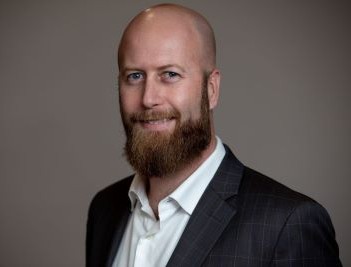
Fletcher Wimbush, the transformative CEO of Discovered Performance Hiring Software has dedicated a decade to tackling hiring's hardest problems.
A thought-leader in his field, he’s published extensively on reference checking, aptitude assessments, and AI's role in candidate selection.
His FACT Driven Hiring System drives million-dollar results, proving his role as a game-changer in the hiring field. Fletcher's reach extends beyond organizations to individuals, facilitating thousands of successful careers.
As an ethical AI proponent, he's pioneering AI-powered initiatives for talent selection. Fletcher's transformative approach to hiring is not just rewriting the rules; it's setting a whole new standard.