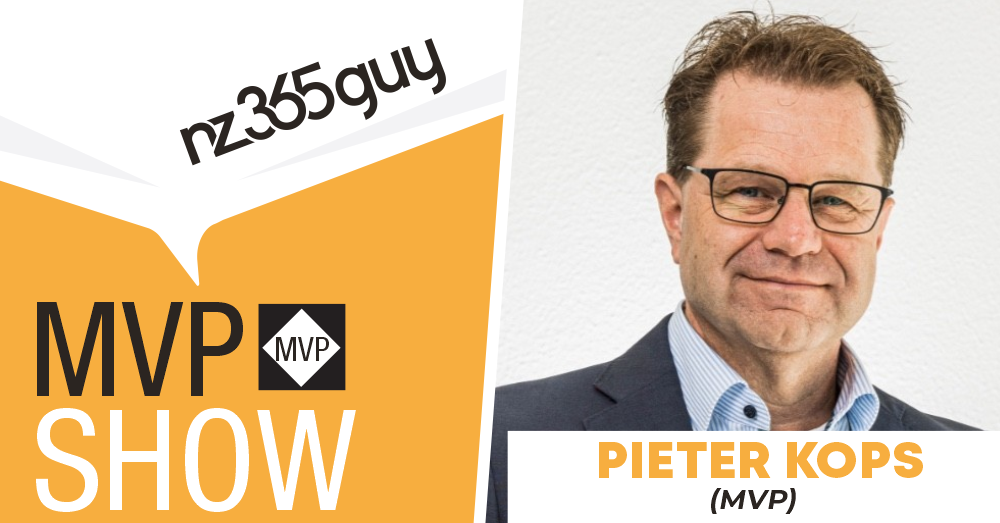
Don't Turn on Copilot Yet: Prep Your Data First
Pieter Kops
Microsoft MVP







Don't Turn on Copilot Yet: Prep Your Data First
Get featured on the show by leaving us a Voice Mail: https://bit.ly/MIPVM
Pieter Kops shares practical lessons from the front lines of Copilot adoption. He explains why organisations must fix security and data quality before switching AI on, how oversharing and duplication damage AI outcomes, and where Copilot delivers real value beyond basic automation. The conversation focuses on SharePoint, metadata, governance, and helping people move from search and automation towards research and higher value AI use.
🎙 Full Show Notes
https://www.microsoftinnovationpodcast.com/819
👉 What you’ll learn
- How to prepare your data estate before enabling Copilot
- Why oversharing creates real security and quality risks for AI
- Practical approaches to cleaning up SharePoint and file sprawl
- How metadata improves findability and Copilot results
- Where Copilot adoption stalls and how to push past basic automation
✅ Highlights
- “Don’t switch it on yet. Do stuff first.”
- “If your security is not in place, then God knows what information you’re surfacing.”
- “Rubbish in, rubbish out.”
- “Human error is littered through the landscape of corporate data.”
- “Stop sharing.”
- “Deduplication is a tough process to do.”
- “People tend to have the folder structure on top of mind.”
- “That’s why we need Copilot.”
- “Most people just use Copilot as the new search agent.”
- “More than 90% of the ideas were just automation.”
🧰 Mentioned
- SharePoint: https://www.microsoft.com/microsoft-365/sharepoint/collaboration
- Microsoft Copilot: https://www.copilot.com/
- Microsoft Graph API: https://learn.microsoft.com/graph/
- Microsoft MVP YouTube Series - How to Become a Microsoft MVP - https://www.youtube.com/playlist?list=PLzf0yupPbVkqdRJDPVE4PtTlm6quDhiu7
✅ Keywords
copilot adoption, sharepoint governance, data quality, oversharing, metadata, ai readiness, security, automation, microsoft copilot, document management, information architecture, enterprise ai, Microsoft Graph API, Copilot
Microsoft 365 Copilot Adoption is a Microsoft Press book for leaders and consultants. It shows how to identify high-value use cases, set guardrails, enable champions, and measure impact, so Copilot sticks. Practical frameworks, checklists, and metrics you can use this month. Get the book: https://bit.ly/CopilotAdoption
I’m Mark Smith - nz365guy - Helping people reach their full potential
I have been a Microsoft Business Applications MVP for over 14 years. I am passionate about helping people reach their full potential, through training, coaching and mentorship.
Accelerate your Microsoft career with the 90 Day Mentoring Challenge (https://www.90daymc.com/)
Support the show
If you want to get in touch with me, you can message me here on LinkedIn (https://www.linkedin.com/in/nz365guy).
Thanks for listening 🚀 - Mark Smith
02:30 - Copilot Doesn’t Fail Your Data Does
03:59 - “Don’t Switch It On Yet” The Two Pillars That Decide Success
05:10 - Oversharing Is the Silent AI Risk No One Sees Coming
07:00 - Garbage In, Garbage Out: How Human Error Trains AI to Be Wrong
08:46 - Why Cleaning Up Data Is So Hard and Still Essential
12:55 - Metadata Beats Folder Structures And Copilot Makes It Possible
15:25 - Most People Use Copilot as Search A Few Use It as Leverage
00:00:06 Mark Smith
Welcome to the MVP show. My intention is that you listen to the stories of these MVP guests and are inspired to become an MVP and bring value to the world through your skills. If you have not checked it out already, I do a YouTube series called How to Become an MVP. The link is in the show notes. With that, Let's get on with the show. Welcome back to the MVP show. Today, I'm joined by Peter from Belgium. Peter, welcome to the show.
00:00:42 Pieter Kops
Thanks. Thanks for having me.
00:00:44 Mark Smith
Good to have you on. I always like to start with food, family, and fun. What do they mean for you?
00:00:49 Pieter Kops
Well, I like the-- I love the good things in life. I love good food, visit restaurants with friends, et cetera. There are some good restaurants in Belgium. Living in Belgium means I love the, I have a soft spot for the Belgian triples, of course, the beer. They're good. Yes, and my family, I have four kids, one daughter, three sons, ranging from 25 to 32. And I'm also a granddad of two small boys. So I'm Dutch. I'm Dutch and I moved into Belgium 15 years ago. where I met my wife. I'm living just across the border. I mean, if I'm standing in my garden, I look up north, I see the Netherlands where I came from. So never get homesick.
00:01:36 Mark Smith
Yeah, so very close, very close. I once did a trip from London via train. So we went through Belgium and then up into the Netherlands as part of that trip. So yeah, I think I've been to Belgium a few times. And it seems there's a lot of people in the tech community from Belgium.
00:01:53 Pieter Kops
There are some great ones, yeah.
00:01:56 Mark Smith
Yeah, like I've met a bunch of people in Microsoft that are all from Belgium. One of the senior leaders in the Power Platform space, he's from Belgium. He lives in Seattle now. And then, yeah, a bunch of people inside the enterprise sales and delivery team from Belgium as well, so.
00:02:18 Pieter Kops
Yeah. Sort of good things coming from Belgium. Yeah, That's why I moved.
00:02:24 Mark Smith
Tell me a bit about your focus for the last 12 months. What have you been focused on?
00:02:30 Pieter Kops
So actually since 2007, I'm focusing on SharePoint, everything. SharePoint's my life. I love it. And of course, the last couple of years, Copilot joined. And then last year, I became an MVP. And Well, it didn't shift my focus, but it got more focus. So, yeah, so it got more focus and what I love what AI can do in general. So using Copilot, it's great stuff. I think it gives SharePoint a spark. It lights it up, makes it do great stuff. So, yeah, basically doing implementations, doing scans and interviews with people who want to enable their company with Copilot and warning them about stuff. Don't switch it on yet. Do stuff first. But we'll dive into that next, I guess. So, yeah, that's basically my focus, guiding companies doing their preparation for using Copilot. Yeah.
00:03:44 Mark Smith
That's interesting. And Even your statement, let's not switch it on first, but let's do some preparation work. What does that preparation work look like? How do you set companies up to be as successful as possible with Copilot adoption?
00:03:59 Pieter Kops
So there's a couple of things. There is security and there is quality. So if you switch it on and your security is not in place, then God knows what information you're surfacing. So that's very important. And the next step is if you don't clean up your shop and there's rubbish, old data inside your SharePoint, inside your Teams and stuff, then the quality of Copilot will also suffer from that. So clean up, do some good cleaning of your data, archive stuff away or classify it so that it's not used by Copilot. and scan for oversharing, scan for leaks. Yeah. Otherwise, the quality will be bad as well.
00:04:54 Mark Smith
So let's take the security pillar first off. What are you typically doing to secure environments? Like what tools are you using? How do you think about it? When you're wanting to get the security piece right, what do you start with?
00:05:10 Pieter Kops
So we created our own scanning tool using PowerShell, Graph, API, and REST API, and scan for leaks, scan for permissions that are too wide, sharing with everyone except external users. And we oftentimes use reporting by ShareGate. They have some good reports as well. So it's a mixed bag. And that's where, in the reports that are generated, that's where we look for leaks, for issues, present them to the company and talk about, is it okay that this is exposed to a number of people? And oftentimes, people, they are scared what they see. Has this been open for how long? I'm not sure. A couple of years, man. I always remember back in the day when Delve was new. I mean, when Delve was switched on in SharePoint, people called us, this Delve stuff is not working. It's showing everything to our people. No, you've never protected it. So it's all repeating again.
00:06:26 Mark Smith
Wow. Interesting.
00:06:27 Pieter Kops
Yeah.
00:06:28 Mark Smith
Now, you talked about cleaning up and garbage. And one of the things I like to talk about with companies is if you take something simple, like let's say a project manager at the end of the week has an Excel spreadsheet that emails out to 10 members in the team and says, Hey, can you update the sheet? Now that sheet, you've got 11 copies of that Excel spreadsheet, right? 'Cause you sent it to, if you didn't share it, you might've sent it as an attachment. And then they send it back. And so what, we're up to what, 22, 23 copies of the spreadsheet now with edits. And then we give that to AI and says, AI's hallucinating or AI gets the answer wrong. And in that spreadsheet, let's say four or five formulas were wrong on day one. And now you're training your AI to go, Hey, here's the correct formula that we say is correct, but it's actually fundamentally wrong. And we go, the AI's getting it wrong. And so I talk about human error is littered through the landscape of corporate data. Word documents, legal documents, spreadsheets.
00:07:37 Pieter Kops
And you've lost it.
00:07:38 Mark Smith
Yeah.
00:07:40 Pieter Kops
You've lost it. You don't know where, where's this error coming from? And it's funny because the thing you say in a project manager, you send off this document, that's exactly the case that I present, last week I presented at a high school. for IT students. And I presented the same case. I'm a project lead. I have a project brief. And I would like three of my colleagues to co-write it. So I put it in my e-mail, send it off to three people. So I have three copies in my outbox. They have one copy each in their inbox. They store it on their desktop. They edit it. added to an e-mail, et cetera, 25, 26 versions easily. And if I ask the question, how many versions do you think we have? So if you lose one, no problem. You can just find one back in your inbox or in your send, but that's not the latest version. So stop sharing.
00:08:40 Mark Smith
How do you clean up that massive estate of human error, duplications? What do you do?
00:08:46 Pieter Kops
Yeah. Well, that's a tough one. Deduplication is a tough process to do. I've really been struggling with that.I mean, writing scripts that calculate hash tags for documents and then comparing them. It's a tedious process. And I think people working with that data can also help here. So it's a combination. But I think if you really want to dedupe, that takes a lot of time. That a process could easily take a couple of weeks to run, to generate all the reports.
00:09:34 Mark Smith
I think I saw somewhere a stat that said, A small business, 10 staff, would generally have around 10 million artifacts in their digital estate in their organization. So that anything that's digital, that could be photos, it could be legal documents, it could be anything, they're electronic systems, but about 10 million artifacts in a small organization. Imagine how big a large organization would have.
00:10:02 Pieter Kops
Yeah, and what percentage of this large chunk of data is actual actually relevant.
00:10:09 Mark Smith
Yeah.
00:10:10 Pieter Kops
It's a small percentage, I think.
00:10:11 Mark Smith
Yeah. And you're right that it's not an easy problem because I just, so for example, I've got an old piece of technology which was new in its day some 15 years ago called Evernote, which I used to store everything, receipts, all sorts of things in the business I was operating at the time. And right now, when I look at it, there's over 8,000 digital artifacts in that tool.But over time, that's just me, right? And they've bloated it out. They've bloated it out endlessly. And now it's become so slow, so unresponsive. And so the other day I was having a chat with AI and said, how do we tackle this? And it said, it's not an easy thing to do. And you know, it's suggested that we export the whole lot, convert all text to Markdown, then go through a hashing process to look for all duplicates, and then clean that out. Then how do we handle all the binaries that are images and things like that? So what are we going to do? We're going to save those off in another directory. It's not an easy process to actually get rid of the garbage in the organization.
00:11:25 Pieter Kops
And let's say, for instance, you've stored all your health insurance policies, and then something happens to you, and you need to see, am I covered? And AI will say, well, no problem. I'll look it up in all your policies. And then they say, well, you're covered. Well, that's 10 years ago, but you're not now. So, well, rubbie's in, rubbie's out.
00:11:47 Mark Smith
Yeah. And of course, I feel that we spent the last 10 or 15 years accumulating data like never before as companies. It's been easy to collect data. We've been told to track everything. We want signal from everything and now, but there's never was never really a lot of work done on keeping a tidy house with all that data coming in and deciding what needs to be kept and what needs to be disposed of.
00:12:19 Pieter Kops
Yeah, that's right. And I also do a number of migration projects and always. when I look at file servers, they are big, very big, and people store everything. It's there. I don't, it's not in my way. Disks are pretty cheap, relatively cheap.So let's just keep it.And then when we're going to migrate it over, there are a couple of reasons to clean up. Not only your storage in the cloud is more expensive, but also the quality of your information needs to be maintained. So then we are Then we enter a clean up phase, maybe archiving, saying goodbye to some documents, that's hard for people to do. Yeah, well, let's pick a date. Everything that's added or changed in the last two years, it's going over to the cloud, SharePoint, Teams, whatever, and the old stuff is staying behind. And then people, they're getting very nervous. But what about this document that I have to say for seven years by the IRS or something like that. Yeah, well, if you can find it, we can label it. I mean, if it's in the cloud, we can classify it, we can declare it as a record, all this good stuff. And people, they tend to have the folder structure on top of mind. And that works. They try to convince me that that's the best thing there is. Okay, and now a new intern comes in and you ask him, can you please find all these documents for this customer? All the quotes that we had last three years, they can't find it.So that's why I always promote using metadata, labeling documents. And that's where Copilot comes in. I mean, create an AI column. These are the labels that we have. Pick one. Read the document and choose the right metadata. That's awesome. That's awesome.
00:14:29 Mark Smith
So do you do that in SharePoint, that it automatically adds the metadata it needs to now? So all new documents generated in a company would be metadata applied.
00:14:40 Pieter Kops
Yeah. So after a migration, we create these columns. We sit down and create a list of all possible options, like in a choice column, and then let AI do its magic.And look at the people if they see this working. I mean, this is awesome. That's why we need Copilot.
00:15:03 Mark Smith
So what have you seen that really enables Copilot adoption to be successful after you've nailed the security, you've nailed the data landscape that it's ingesting from? Are people just naturally picking up the product and working with Copilot, or do you see that some specific things need to happen?
00:15:25 Pieter Kops
No. If I leave and we have secured everything and everything's in order, we have the trading, then if I go back a couple of weeks later, then I just see people using Copilot as the new search agent. They just use it to search, find me this document. I've received an e-mail by this and that. Where is it? Et cetera. And only a handful of people know about agents. What can it do for me? And they first start with, read through my e-mail. What's important for me? That kind of stuff. Create a task if there's some e-mail that I need to follow up. And then a very small percentage of people really come up with new ideas that they would like AI to do. So it's funny, in our own company, we created the form that we wanted to have every member in our company to use AI for their work. And they could fill in a form saying, what do you think AI can do for you in your job? And if it's a good idea, we'll help you. We'll provide you with the right license, the right tools, the right knowledge, et cetera. And more than 90% of the respondents said they came up with ideas that just are automation, so automation stuff. And no one is thinking about the researcher. So let me help it to prepare my call with the customer, a new customer, or let me summarize these emails or these documents. But it can do so much more.
00:17:10 Mark Smith
Yeah. It's interesting that you say that. And I've seen a lot of what is called agentic agent use and AI use is really automation. And companies haven't been doing their automation well for years, right? And so you give them wins and you're just giving them automation wins, which has been around for a heck of a long time.
00:17:36 Pieter Kops
Yeah, but the big difference, of course, is, I mean, Power Automate is okay. I mean, you don't have to be a developer. You can create your flow. But with Copad, you can just talk to it, ask it to do stuff, and it'll find out. So the bar become lower. It's easier. So that's working for most people, but it can do a lot more. And even what I like is that if you do the research, if you use the researcher in the agent in Copilot, and you have it generate a very good and in-depth report, and then you create an infographic or a mind map or that stuff to export this information, that's great. Great stuff.
00:18:18 Mark Smith
Peter, before I let you go, what are you most excited about in 2026?
00:18:22 Pieter Kops
Well, of course, being an MVP for a couple of months now, that's what I'm looking forward to. Just visited virtually the MVP summit. It was too late to go there, and it's a bit expensive to fly out there.
00:18:39 Mark Smith
I didn't go either.
00:18:41 Pieter Kops
So I joined virtually, it was great, great sessions. So maybe next year I'll try to save up and go. And what I look forward to in the next, in the coming year is speaking at events. I like speaking at events, different events about, of course, Copilot, SharePoint, adoption, all that kind of stuff. Search, I like Microsoft Search for years. So that's what I'm looking forward to. Yeah.
00:19:14 Mark Smith
Awesome. Peter, thank you so much for coming on the show and sharing your insights.
00:19:18 Pieter Kops
Great, thanks. Thanks. It was a lot of fun.
00:19:24 Mark Smith
Hey, thanks for listening. I'm your host, Business Application MVP, Mark Smith, otherwise known as the nz365guy. If you like the show and want to be a supporter, check out buymeacoffee.com/nz365guy. Thanks again and see you next time.

MVP
Pieter Kops is a Microsoft MVP for Microsoft 365 and Copilot with more than 15 years of experience in the SharePoint and Microsoft 365 ecosystem.
Originally from the Netherlands and now living in Belgium, he helps organizations design modern digital workplaces and improve how people find and use information in Microsoft 365. Pieter regularly speaks at community events about topics such as SharePoint search, governance, and Copilot readiness.
Through his blog Notes from the Flightdeck, he shares practical insights on new Microsoft 365 capabilities and how organizations can use them more effectively.