Escape the Job Security Myth: Build Your Career Safety Net
Sarah Jones
Franco Musso


Escape the Job Security Myth: Build Your Career Safety Net
Get featured on the show by leaving us a Voice Mail: https://bit.ly/MIPVM
This episode explores how professionals in the Power Platform and Dynamics space can future‑proof their careers. Sarah Jones and Franco Musso share practical guidance on contracting, freelancing, niching, personal brand development, and navigating rapid change driven by AI. Their insights focus on building career security, creating flexibility, and designing work that supports long‑term growth.
👉 Full Show Notes
https://www.microsoftinnovationpodcast.com/784
🎙️ What you’ll learn
- How to transition from permanent roles to contracting and freelancing
- How to design a flexible work model that supports income and lifestyle goals
- How to build a personal brand that attracts clients
- How to niche effectively to strengthen positioning
- How AI and market shifts are reshaping job security and opportunity
✅ Highlights
- “You're expected to be with the same customer Monday to Friday, 9 to 5.”
- “I designed my work year. I can dictate what my day looks like.”
- “That freedom is quite special.”
- “It's about the value that you put on walking the kids to school together.”
- “It's whatever you choose it to be.”
- “People in permanent jobs are scared to leave their permanent job that they feel is secure.”
- “If you've got the chance now to get involved with the change, then do it.”
- “There's a powerful but limited window now for people in the business that are interested in the tech.”
- “You could be the absolute superstar in accounting AI.”
- “Selling to an existing customer is said to be 7 times cheaper.”
- “This gives 6 to 12 months runway for those people who might be thinking about it.”
- “The phenomenon of AI is coming.”
🧰 Mentioned
- Microsoft Power Platform https://powerplatform.microsoft.com/
- Dynamics 365 https://dynamics.microsoft.com/
- Power Pages https://powerpages.microsoft.com/
- Scottish Summit https://scottishsummit.com/
✅Keywords
power platform, dynamics 365, freelancing, contracting, ai, job security, personal brand, niching, career change, Microsoft, power pages, mentoring
Microsoft 365 Copilot Adoption is a Microsoft Press book for leaders and consultants. It shows how to identify high-value use cases, set guardrails, enable champions, and measure impact, so Copilot sticks. Practical frameworks, checklists, and metrics you can use this month. Get the book: https://bit.ly/CopilotAdoption
I’m Mark Smith - nz365guy - Helping people reach their full potential.
I have been a Microsoft Applications MVP for over 14 years. I am passionate about helping people reach their full potential, through training, coaching and mentorship.
Accelerate your Microsoft career with the 90 Day Mentoring Challenge (https://www.90daymc.com/)
Support the show (https://www.buymeacoffee.com/nz365guy)
If you want to get in touch with me, you can message me here on LinkedIn (https://www.linkedin.com/in/nz365guy).
Thanks for listening 🚀 - Mark Smith
00:01 - Welcome and Setting the Stage
03:58 - Freelancing, Contracting and the New World of Work
09:00 - Flexibility, Freedom and Redefining Career Value
11:39 - Job Security Myths in a Changing Tech Landscape
14:34 - Building Career Insurance: Skills, Niching and Personal Brand
23:24 - AI, Domain Expertise and the Rise of New Career Paths
29:23 - Introducing the Extra Life Course and Community
00:00:01 Mark Smith
Welcome to the Power Platform Show. Thanks for joining me today. I hope today's guest inspires and educates you on the possibilities of the Microsoft Power Platform. Now, let's get on with the show. Welcome to the Power Platform Show. Today, we're joined by two voices sharing the future of work in the low-code Power Platform and Dynamics 365 space. Sarah and Franco join us today from the UK. Welcome, guys, to the show.
00:00:41 Franco Musso
Thanks for having us.
00:00:42 Mark Smith
Hello. We're excited to do this with you guys. One, because we know you, and we've hung out with you this year. You guys are doing some amazing stuff. But before we get started, Sarah, why don't you tell us about food, family and fun? What do they mean to you?
00:00:58 Sarah Jones
They're probably like the core of my social life. So cooking is very much my switch off. I realize sometimes I get to the end of the day and I've had a long day and I'll cook a really big meal. In fact, my daughter asked for a roast dinner tonight, which is convenient when I'm moving house. But yeah, it's... I get pleasure out of cooking as well as eating. I come from a big, fun family of scousers, so from Liverpool in the UK. Everyone's into their music, their food. So if we have a family get together, everybody has a dish to prepare. Mine tends to be a tagine or a lasagna. And then we lay it all out as like a buffet, and then the wine flows, the music flows, and you end up with a lot of us screeching and dancing around the kitchen. And the kids come and get involved as well. So yeah. I love that. They go together quite nicely.
00:01:59 Meg Smith
I had to invite myself on the show when Mark said he was having you both on, because I was like, Hang on, hang on, this conversation isn't happening without me. We We're talking about us coming over for a roast when next time we're in the UK and I'm so looking forward to it. It's going to be one of the best traditions, I think.
00:02:17 Sarah Jones
Oh, absolutely.
00:02:18 Meg Smith
Absolutely. Franco.
00:02:21 Franco Musso
Well, our households emerging, so food, family and fun is very much going to be involving both my lot, Sarah's lot, and then I can attest her family's great at cooking as well. We've got high levels of snobbery when it comes to food on my side of the family, especially when Sarah first I cooked pasta. I was thinking like, you really should have chosen something else. And then it was knockout.
00:02:43 Sarah Jones
Your dad gave me a pasta lesson. I had a lesson in Sicily from Franco's dad on how to salt the water before cooking pasta. That was.
00:02:55 Franco Musso
Yeah, everyone was polite enough not to say, look, I've got this nailed already. But yeah, I've been looking to sample quite a few people's cooking from Sarah's family, and yeah, they can all do it. But the kind of the balance is my family can eat 10 times as much as Sarah's can, and they can drink 10 times as much as we can. We all party hard. We all make it till we make it at karaoke as well.
00:03:18 Meg Smith
I love it. I love it. We just got our kids a mic to plug into a speaker for karaoke. And I think our neighbors are already like thinking about how to cut our power. But it's so much fun. It's so much fun.
00:03:33 Mark Smith
Yeah, they are going to say natural performance.But as you can, if you're listening today, you can see that Meg has also joined us for the show and co-hosting. As we jump into what we're covering, first of all, Franco, what's top of mind for you right now? What if the two of you, as you have joined forces, what have you done?
00:03:58 Franco Musso
It's all on the freelancing and mentoring stage. So we've got, I think, quite interesting that we've come together because Sarah was from the recruitment background and got that real sales skill and relationship building skill. I kind of naturally went into freelancing and never came from a permanent role. So it's interesting to see, well, Sarah can fill in a lot of those gaps, but with the empathy, what it's like to be in a permanent role, what are the differences if you're jumping into, say, contracting? And I pick up the baton from that point to say, are you moving from contracting to freelancing?
00:04:32 Franco Musso
This is what you want to consider. And I think it's been really cool for people to see Sarah take that journey as well, whereas just Franco has been doing it there forever. Sarah brings a lot of balance to it as well, so I don't mean to speak for you. But like when people are saying that, is it just Franco? Is he just a fluke? Is it just a one-off story? Sarah will be filling in. Well, no, here are all these other examples. that we've got. And on the course, a great idea of Sarah's is we interviewed some other freelancers from totally different tools, totally different platforms. Some of them actually have now scaled up to a practice rather than just a company of one. So it's nice that you see that perspective. No, it's not just, this isn't just one person's journey. It can apply to everybody. We kind of boiled it right down to the first principles, whereas probably if I was just telling them I'd lose that connection with what it was like not to know this stuff. So it's cool to have people on both ends of the spectrum.
00:05:27 Sarah Jones
Yeah, I think coming from a heavily sales-focused background, I ask a lot of questions anyway. Even when it's not from a sales point of view, or if it's a candidate point of view, where I'm trying to find out their motivations for what it is they want, there's a lot of open questions. And so when it comes to, so I noticed things as well. So we'll be at an event. And I think one thing that I picked up on, first time I really understood the difference between contract and freelancers and Franco asked me to speak at Scottish Summit, a team session with him. And I was like, I don't know what the difference is. I felt really stupid and I kind of blagged it and picked his brain on what actually that difference was. And there is a big difference. And then following on from that, I saw Franco speaking another Scottish event actually at the user group up there. And he was talking in terms of business value and in business language, talking about the benefits of his product to the users, to the customers, to the business. And it was just a habit. He'd literally written that session in the room while someone else was delivering a session. And he came out and delivering all of this content. People were leaning forward, listening to what he had to say. That was my first kind of recollection of noticing the difference between what people do with their content marketing, how they use the platform that they've got. It's funny.
00:06:57 Franco Musso
Sorry, go ahead.
00:06:58 Meg Smith
No, I was just going to say, what is the difference between a contractor and a freelancer? How do you describe it? Because I think often people wouldn't have thought about it. I don't think it's a stupid question at all.
00:07:08 Franco Musso
Yeah, so I would say contracting is still very traditional. You're expected to be with the same customer Monday to Friday, 9 to 5. So you've hit a ceiling, you might get quite a generous day rate, although it has evened out with permanent salaries over recent years. But yeah, you really can't earn more than I'm going to work this 200 or 240 days in a year multiplied by day rate and that's it. From a client's perspective, you get to bring in an expert, which is cool. But often you're paying for a bum on a seat while you're waiting on red tape approvals, decisions, stakeholder availability. Whereas on the freelance side of things, I'll have three to five projects on the go at any one time. It's not that that's a hard and fast rule, but I designed my work year. So I can totally dictate what my day looks like, what my month looks like, what a season looks like. I'll take summer off. Again, it's not a hard and fast rule, but it's fitting it around your life, basically. So the course is called Extra Life for that reason. It's meant to free you up to be doing what you're loving and work fits around that. So yeah, and kind of taking your retirement as you go. Again, these are all things that I love to do. It's not what everybody necessarily would want to do. Maybe for them, it's scaling up the income. Maybe it's getting to care for loved ones and maybe do six months on and six months off. But the idea is it's whatever you choose it to be. But breaking through that ceiling of the income, I think, is what a lot of people want to do. So I found Impermanent, sorry, not permanent, I didn't do permanent, but when I was in contract work, if I delivered all the value that I needed to on a day within like 45 minutes, my reward was here's a lot more busy work here. Can you just pick up the slack for everybody else? Or just, you know, sit there looking busy rather than, oh, well, I'll take the rest of the day off. I'll go and do another billable day's worth of work for another client for the same project. Just get so much more flexibility. Love it.
00:09:00 Sarah Jones
Yeah, and I think that flexibility, and it's something that I heard you guys say, I think you're on someone else's podcast. I can't think, but I clearly remember the conversation about value and attaching value to money and freedom and, you know, the value that you put on walking to the kids to school together. And that really stuck with me. And, you know, I've many times been, I rolled out for rushing in after the school run and getting caught in traffic or, not had time to do my makeup and, some boss kind of suggesting that I'm not on form, because I've been running around doing the mum stuff in the morning. And it's really nice being able to do those, you know, I got WhatsApp actually today about 1:30 for my daughter, you're picking me up from school. And I was like, oh, I don't know, am I? But I could. I didn't have to ask anybody. I just went and did it. So. That freedom is quite special.
00:09:55 Meg Smith
Yeah, we've actually just reorganized our days again. And I love that reminder, Franco, that the benefit to take as a freelancer is that you can organize your life, your work, you know, life first and work around it. Because that's exactly what we've just done as our daughters started school. We sat down a couple of months ago and were like, hey, this change is coming. It's a big change. Suddenly the days get really short. How do we want to intentionally reorganize our work around this. So yeah, that freedom to be able to go, I'm there, I'm it, I can be here is really valuable to me, even though other people might find other things that they are working towards.
00:10:39 Franco Musso
Yeah, and the seasons in life, aren't they, where whether it's an emergency or whatever, but you just need to ramp up that income as well. You need to change your whole work pattern. And what I found even in contracting was No, you work for us. There's no weekend work. There's no overtime or anything like that. Just tough. Go maybe take out a loan or something. Whereas with freelance, I can totally shift from hour to hour, day-to-day, season to season.
00:11:05 Mark Smith
I love that. I want to talk about job security. A lot of people believe if they work for a big company, like an IBM or an Accenture or any of the big four, and then all the kind of tier 2 consulting practices underneath it, you have got job security. And I find that, we've seen in 2025, a lot of people that have worked for folks like Microsoft, AWS, Google, all the vendors, literally 10s of thousands of them have lost their jobs. And there's this kind of perception that freelancing is scary, it's less secure, but I think we're going into a world that there is actually no security of permanent placement in a job. right? And I think that the timeframe that we've gone into is that it's up to each individual to own their own security or define how they're going to secure their future and prepare for their future. And Franco, when I first, I think we first sat down and had a chat in Vancouver over a breakfast or a lunch a couple of years ago, and I heard your story about what you're doing freelancing. And then with the 98 Mentoring Challenge, we've had so many people ask about going freelance. Like how do they transition from being in a partner where they feel like year after year, it's the same thing, different project. And one of the biggest complaints I hear is I don't get the chance to learn anything new because I've not been assigned to a project with anything new on it. I'm just doing, you know, and I've heard stories of like, I'm still stuck on a old version of, you know, Dynamics 365 because That's what the organization, and I'm on a two, three-year project or whatever around that. Franco, when you think about the steps to transition, and I know it's been a long time, as in you've pretty much been in this space, but I suppose what I want to ask is, how do you think about the steps that one should take to move job security away from being in somebody else's control, a boss, that dictates the rules into your control, where, as you say, multiple clients at any time that you might be working with. Nick Dolman talks about he never, ever has one single full-time customer for his work week. He always has multi-projects he's across. It creates purpose, it creates variety, exposed to new things all the time. How do you talk to people, and particularly, those listening might have heard him both Sarah and Franco talk about a course. And perhaps you want to talk about how then that course came about and how people can, if they're really serious about taking control of their job future, how would that look like? So let's start with what's that transition, Franco?
00:14:00 Franco Musso
Well, I would say the ideal roadmap would be go from permanent through contracting, keep contracting on, treat contracts, sorry, like a paid apprenticeship. So you're learning to manage that customer relationship. You've quite frequently getting in front of a new customer and learning what's valuable to them. That will also help you build up that well of repeat customers as well. So I always found as coming to the end of the project, I've done a good job, tricked people well, and they're asking, how do we engage with you in the future? We know we can't indefinitely pay. a full-time contractor 9 to 5 for the whole year, but is there a way that we can maybe get you ongoing maintenance? Maybe I talk a couple of days a month. And that really gives you, quite quickly gives you sound check as to is there demand for what I'm going out for? So I niched down into power pages that look good. I was still in a very comfortable, secure place when I was in contracting to see actually there is demand for this. If I was to pivot then, it's totally fine. It would have meant just the next contract for a slightly different role. I've got recruiters, agencies bringing me the roles rather than me having to go and source the work. But what I would say in terms of strategizing for that, some tips that you could do even in your permanent job is get out of the weeds a little bit. So don't just be thinking that backlog is the be all and end all. zoom out a little bit and think, for every project I'm on, this is what we teach for freelancers. There's no reason you can't do it with permanent debt. Every project you're on delivers on 3 fronts. There's the actual app, the project that you're delivering.There's the marketing value of that. So I'll be writing up a case study as you go. And I know you do bam fam book a meeting from a meeting. We do, I can't remember the exact acronym, but we got SAPFAP, it must have been, source of project from a project. So is there another department in that business that's going to want to go through transformation? Is there a sister company? Is there someone else I can refer you to? So just getting that mindset. And then the third thing would be, what can this project add to my tool set? So how can I make doing the same job easier next time? So if it's easier to do it in less time, it's more profitable, I'm more scalable. And again, we show on the course, mine every one of those projects for values. What we're all so guilty of, I think, especially in permanent work is 1 project ends, you just just set that on fire, but run it to the ground, leave all the value there and start the next one from scratch. I'm all about, I don't want to repeat a certain e-mail I've sent before. I'm going to add that to my swipe list. I don't want to have to create the same slide deck again. Some things like the art of the possible with UI, UX, what the options for authentication, anything like that. I was saying, keep this aside. This is value.This is stuff that I can charge for again. And likewise, if you're in code, that could be design patterns, code snippets. So yeah, to summarize, very long-winded answer, but I would say three things from the project, what you're delivering, your marketing value, your case study for the next project, and something to add to your tool set to make the next project faster and more profitable. Well, I totally agree with what you said. So I think the term I used when we went for breakfast that time was career insurance, I think. picked your ears up a bit because people would definitely get in the sense that, the ground shifting beneath us, the sun's sinking. I need to at least know if I'm one of those stats from Microsoft tomorrow that I've been laid off, that I'm employment ready, that I'm fit for the market, that I've got the skills that are in demand. So building that personal brand, getting known for a certain niche and some content, that's going to add value again, regardless of where you are, if you're in permanent work, contract work, or already freelancing. I would say it's probably realistic. I've heard it a lot in AI content at the moment is imagine the future of work is going to be more like a series of short careers. So it's almost like a mini project of business that you see that through, you deliver the value. By the time you've got to the end of whether that's 12, 18, 36 months, everything's changed around you. That business might be completely irrelevant and you've got to be adaptable enough to just jump on right. This is now where the market's looking. And if you wait until that's urgent, you're going to be stuck. So again, it's getting out of the weeds. And some of the skills that we've mentioned already, like articulating that business value. Again, even if you're, let's say you're, I'm up for redundancy and you've got to fight for your role against other people, the last thing you want to say is, well, my value is just, this is my job title. because there might be 100 other people that do that. If you can at least get into articulating, this is the value that I add to the business in monetary terms.This is what my role brings in. This is my unique value. And I'm not having to clutch at straws. I just know it because I'm regularly mentioning that in my content. I'm tying it back to whether it's customer retention, growth, sales, profit, being able to sell yourself.Just, yeah, those skills that we teach in the course is going to long outlast Power Platform and just be a bit. Add to the controversy, I think if I was working in Canvas apps right now, for example, and thinking that's my job safe, they'll never get rid of me, then I'd be looking around and thinking, what other value can I add? Where else can I adapt technically? But also, yeah, I think... Sorry, I will shut up in a minute. I said I'll go on a rant. But I think tying things back to AI, what people have mentioned so often is These days, it's about the context. For me, in the tech world, that context is the business case, the business value, being able to translate real world business needs from plain English into technical requirements. None of those skills are going out of style anytime soon.
00:20:02 Mark Smit
So Sarah, what are you seeing from, are you seeing, from a recruitment perspective, are you seeing an increase in people starting to think more about taking control of their career, particularly rather than just being, working for whoever they worked for years, they might not be fearful of losing their job or they perhaps are. What are you seeing across the market, particularly in the UK at the moment?
00:20:28 Sarah Jones
So I'm doing a lot more coaching than recruitment at the moment. So that's quite nice because it's a totally independent perspective they're getting from me.There's no motivation. They've paid for the time. So there's no motivation to place them into a role. And it's been really interesting actually doing this. And I've had two separate conversations this week that was sort of opposite ends. So I spoke with one person who was unsure about moving, you know, am I in the right role, not really enjoying it. But the company, huge global company, are really risk averse when it comes to AI and won't bring it in. So this is a dynamics person, someone with a great skill set, great communication skills, but having no access to AI. And that wasn't a flag out at all to that person. And then equally, I've had somebody else that I've been speaking to who's, I don't really want to build using AI, but I've got a great all-round skill set. So then it was kind of, okay, why don't you go down the adoption route now? You're obviously leading in the role that you're in. So why don't you try and be that evangelist for the company that you're working for instead of building stuff using the AI. So it's a bit more uncertainty, confusion from the people who aren't necessarily at risk currently from their job. They just don't really know. There's no kind of vision coming to them from the companies they're working for. I spoke with a friend of mine, Rosie, who's the head of AI, and she made a really interesting point about how companies are responsible for communicating what they're using AI for and what that means for the people who work for that company. And what's the plan? Is it that those people are going to lose their jobs? Are we going to upskill those people? And I've not really heard that side of the argument in the way that she described it. was really interesting because I'm getting people coming to me asking me questions that don't know what their future looks like. But I think that the advice I'm giving is, if you've got the chance now, to get involved with the change, then do it, because in 12 months' time, somebody who's currently behind you in terms of opportunity or skill is probably going to be ahead of you. A kind of long-winded answer.But yeah, it's something I find fascinating at the moment.
00:22:50 Franco Musso
I think that's really interesting, though, because she's excelling at a role that didn't exist before.
00:22:56 Sarah Jones
Yeah.
00:22:57 Franco Musso
So you're doing your best to hit all those bullets on the job description.But even that job description is someone else's best guess. And it's interesting because she's got really good business and domain knowledge, as well as Python developer script and all the technical side of things. Whereas most of her contemporaries in other law firms, they've only got the domain knowledge. They haven't got any tech or any IT knowledge whatsoever. I think it's an interesting time. Like I'd say what it was like for me in the 90s in IT where All of a sudden, I got a seat at a table that I wouldn't usually, because I was a young guy that knew how to use, whether it was spreadsheets, Photoshop, whatever, that I could add all this value that the other people in the room didn't know how to. So to be able to speak on their level, usually I might have had to go decades through the hierarchy or whatever to kind of get that chance. I was like, no, the playing field's leveled out. So the people that had tech, got inserted at a different level of the business and you see that you're having to adapt to those things quite quickly. I'd say there's a really powerful but limited window now for people in the business that are interested in the tech to be that person. So who is the one to drive AI adoption and be the number one for that vertical? So I think at the same time that you could be the absolute superstar in accounting AI without having any competition for someone that's in AI for law versus AI in construction or banking or whatever it is. There's probably 1000 superstars per country that can be made right now. And that domain knowledge is, I think, just a massive shortcut compared to just, hey, let's bring in an external that we have to teach about education, law, finance, whatever it is. So yeah, I would say just in reaction to what Sarah was saying before, sorry, it might have been You, Mark, even when you're saying that looking up to the senior level for that vision, if they haven't got it, push it up. You'd be the one with the vision You go and articulate, this is how I see things changing. It could be going watch an adjacent industry, like, for example, this RC accountancy using it. Why can't we do this as higher education? We see construction doing it. Why can't we do this in retail? Just, yeah, have your finger on the pulse and obviously watch the AI Unfiltered podcast.
00:25:27 Meg Smith
Thanks for the plug. But you touched on something there that I think is something that is a rule in freelancing that people think doesn't sound, it sounds counterintuitive and that's niching. So you've just described the value of becoming someone who's the AI adoption expert, not generally, but in a specific context or department in an organization or in a vertical. Why do you think people don't want to niche when they're freelancing? Why do we want to be generalists?
00:25:56 Franco Musso
Yeah, great question. I think people assume that if you're a generalist, you're going to be more appealing to people because there's potentially more areas on a Venn diagram that you could overlap. What I find is that means that you're the least likely to be recommended, not because you do a bad job, but it's hard to be on the tip of the tongue for someone that just, oh, you don't usually find we've got a requirement, we need someone that can do anything we might possibly ask them. So I think the more specific that the requirement is and the better match it is for what it is you deliver, it's just an easier fit. So I was speaking to somebody today, giving them career advice about, so having looked at their experience on LinkedIn, they weren't sure where to niche down. And they've got extensive experience in operations, something right already, you're completely separate to the average techie. So you've got really fun overlap there on the Venn diagram. Something that shares with me really. So I've done business operations and tech. So although in fact, the industry, I'm licensed, I'm licensed in the insurance industry, the guy says, and got extensive experience in warranties, in insurance, in construction.I'll say, Rob, they are some awesome paths to go down. So I know, for example, if you wanted to do business in education, lots of my Power Platform friends would love to get into Dynamics. They see they're hitting a cap with what salary they can earn in Power Platform. I've seen that if they had the dynamics experience, they can level up. So why could he not be the one to bridge that gap?But also then I'd be saying, well, we're going to just learn case management generally as an abstract concept. Why not tie that into an insurance claim? So everyone's likely, unfortunately, has been through the process of having to make a claim on their insurance. That makes it real for everybody. That puts it in that real life context rather than just, well, it's kind of like a folder and within that you've got activities and documents, however, you can actually make that journey real for them.
00:27:56 Meg Smith
Yeah. Definitely had that experience of claiming insurance. Wish I didn't. But also I just did my renewals for our insurance and I have a, I read a book. That said, you should never just take your renewal. You should always call up and ask how they can get you a lower premium.And now I do that as a rule. I think I saved $500 this week on our premiums for our car insurance just by taking the maybe still painful process of making the phone call and waiting my way through the automation steps. But hey, I'll take it. was $500 well saved?
00:28:28 Franco Musso
Yeah, and I think I would have pointed out something else that we mentioned on the course that selling to an existing customer is said to be 7 times cheaper than what it would be to attract a new customer. So you can definitely use that one in the negotiation as well.
00:28:43 Mark Smith
So as we wrap, Extra Life, Next Level, what is it and why should people check it out?
00:28:49 Franco Musso
Do you want to take that, Sarah, or should I?
00:28:52 Sarah Jones
No, you go for it.
00:28:54 Franco Musso
Just think I've done the waffling. But it's a course delivered to be super actionable. Based on my experience and having reached out to some other freelancing friends, it's specific to Power Platform. So we found a lot of the competition when we were looking, is it even worth creating a course was used around like creative arts or acting or something like this is specifically for software consultants in Power Platform in the Microsoft space. It's going to take you through building your personal brand, getting content marketing to attract the customers, take you through all the mindset changes that are going to be involved and some of the practicalities of freelancing. And the community is awesome as well. So I would say it's worth the cost of entry just for the referrals and the kickback that go on around the community. But yeah, if you get involved, make sure you absolutely get on those community sessions and make sure people know what it is that you do because you'll find that referrals are coming in.
00:29:49 Meg Smith
I love it. I'm doing it and love so much of the wisdom that you're sharing already. Even as I'm just starting, I'm like furiously taking notes as I have been in this podcast. You just add so much value from the experiences that you've both have. So thank you so much for making it. And I know that this time next year, you'll be, you know, having a lot of people tell you that their 2027 looks really different than the year that's just gone because of the applying what you're teaching in this course.
00:30:20 Sarah Jones
So I think that's part of what we're trying to do is take the fear out of it, because to Mark's point earlier, people in permanent jobs are scared to leave their permanent job that they feel is secure. However, we've seen in the last, well, we see it regularly, but the last year has been shocking for the amount of layoffs for big tech firms. This gives 6 to 12 months runway for those people who might be thinking about it, but have that fear of how do I find clients? How do I make a switch?how do I run a freelance business? This is designed to give that toolkit and some actionable advice. But like Franco says, I think that the community is going to be really valuable for sharing work and referrals. And that's something I'm really excited about. But thank you for taking it, Meg.
00:31:06 Franco Musso
Interestingly enough, two of the three existing freelancers that we interviewed on the course.had an idea someday they might do this when they've got the nest eggs saved up and they've got the level of comfort and then they got booted out. Anyway, the companies that they worked for went under, that job security disappeared. And it's like, oh, well, it's the best decision I made, but I didn't make it. just life decided instead.
00:31:32 Mark Smith
Yeah. the train is coming, and that is the train that's going to smash your job to pieces, and you need to prepare now for it. As in, and I'm not just talking about just normal life and business. The phenomenon of AI is coming, and if you listen to any of the large companies around the world that are operating in this space, they expect that there will be a reduction in headcount. And in many cases, some of the companies are just going to get blasted out of the water because they'll be replaced by AI businesses. And so don't wait for it to happen to you. Take this opportunity. If you're in the Power Platform or Dynamics 365 space, Check out Extra Life. We'll put links in the show notes so that you can see what's involved. The price is unbelievably cheap for basically setting you up for success for the next 5 to 10 years of your career. Thanks, Franco. Thanks, Sarah, for coming on the podcast. Thanks, guys. Thanks so much.
00:32:31 Franco Musso
Thanks very much for having us. I was a blast catching up.
00:32:35 Mark Smith
Hey, thanks for listening. I'm your host, Business Application MVP Mark Smith, otherwise known as the nz365guy. If there's a guest you'd like to see on the show, please message me on LinkedIn. If you want to be a supporter of the show, please check out buymeacoffee.com forward slash nz365guy. Stay safe out there and shoot for the starts.

Francesco Musso has a proven track record in functional consultancy and business analysis for Dynamics CRM, spanning versions 3 through 365. He brings creative ideas, energy, and enthusiasm, along with a commitment to elevating standards, enhancing user experience, and driving user adoption. His experience in client-facing background in UAT, end-user training and floor-walking support for Dynamics CRM systems affords him a deep understanding of what makes a great system from an end-user perspective. He has contributed to multiple upgrade projects aimed at transforming functional but click-heavy systems into enjoyable, visual, dashboard, and process-driven user experiences.
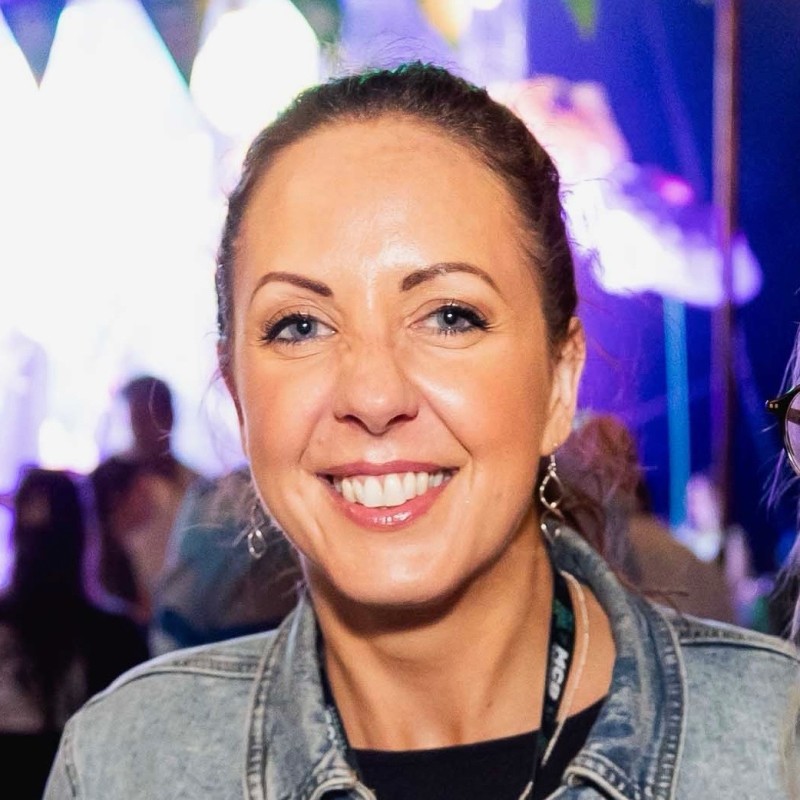
With over 20 years of recruitment experience in the Microsoft ecosystem, Sarah helps professionals futureproof their careers and confidently step into new opportunities. Specialising in the Dynamics and Power Platform space, she offers 1-to-1 career coaching focused on career strategy, personal brand visibility, and transitioning into freelancing.
Active in the Microsoft community, Sarah sits on several organising committees and hosts a women-focused tech podcast that amplifies diverse voices and explores career growth with honesty and energy.
Sarah and Franco recently launched a freelancing course designed to help people take control of their careers, get ahead of the big tech layoff curve and get away from the 9-5.