Overcoming Imposter Syndrome with AI as Your Ally
Dan Barber


Overcoming Imposter Syndrome with AI as Your Ally
Get featured on the show by leaving us a Voice Mail: https://bit.ly/MIPVM
Discover practical strategies with Dan Barber for overcoming imposter syndrome, building resilient tech teams, and leveraging AI as an ally. Learn how consulting skills, clear goals, and supportive cultures drive success in technology and AI-driven environments.
👉 Full Show Notes
https://www.microsoftinnovationpodcast.com/790
🎙️ What you’ll learn
- Apply actionable tools to overcome imposter syndrome
- Build and retain high-performing technology teams
- Use AI to boost confidence and productivity
- Strengthen consulting skills for business impact
- Foster cultures of trust, feedback, and continuous improvement
✅ Highlights
- “AI can help you with a blank canvas and turn a blank canvas into a starter for 10th, and get you moving, get you motivating, break that blank page sort of fear and anxiety that gets built up.”
- “Brag list is something I do myself and I also encourage others to do.”
- “You develop this network where you don’t have to be the font of all knowledge.”
- “Having that sensible conversation, I think we are losing that.”
- “You’re not just a developer. You are a consultant.”
- “If you don’t feel, if you feel like you’re just being managed, again, that just becomes you being a number again.”
- “Build the right culture, you have that mentality from everyone.”
- “If you have them all, it’s not going to make you motivated. It’s just going to bring you to break even, if you like.”
- “You’ve got to look at some of these other variables and they are, they’re so important, you know, and yes, they take time.”
- “Let’s rebuild your vision. Let’s realign to your vision.”
🧰 Mentioned
- Microsoft Power Platform: https://www.microsoft.com/en-us/power-platform
- Azure: https://azure.microsoft.com/en-us
- Dynamics: https://azure.microsoft.com/en-us
- Business Central: https://www.microsoft.com/en-us/dynamics-365/products/business-central
- Copilot: https://copilot.microsoft.com/
✅Keywords
ai, imposter syndrome, consulting skills, tech teams, power platform, business central, azure, dynamics, copilot, culture, feedback, continuous improvement
Microsoft 365 Copilot Adoption is a Microsoft Press book for leaders and consultants. It shows how to identify high-value use cases, set guardrails, enable champions, and measure impact, so Copilot sticks. Practical frameworks, checklists, and metrics you can use this month. Get the book: https://bit.ly/CopilotAdoption
I’m Mark Smith - nz365guy - Helping people reach their full potential.
I have been a Microsoft Applications MVP for over 14 years. I am passionate about helping people reach their full potential, through training, coaching and mentorship.
Accelerate your Microsoft career with the 90 Day Mentoring Challenge (https://www.90daymc.com/)
Support the show (https://www.buymeacoffee.com/nz365guy)
If you want to get in touch with me, you can message me here on LinkedIn (https://www.linkedin.com/in/nz365guy).
Thanks for listening 🚀 - Mark Smith
00:01 - The Power of Fractional Expertise: Breaking Growth Barriers
06:46 - Confronting Imposter Syndrome: Tools for Tech Professionals
10:39 - Building Your Brag List: A Practical Confidence Booster
12:04 - The Power of Networks: Leveraging Superhero Skills
13:52 - AI as an Ally: Turning Technology into a Confidence Tool
17:26 - Rediscovering Consulting Skills: Beyond Technical Prowess
25:35 - The Secret Sauce for Retention: Culture, Purpose, and Leadership
00:00:01 Mark Smith
Welcome to the Power Platform Show. Thanks for joining me today. I hope today's guest inspires and educates you on the possibilities of the Microsoft Power Platform. Now, let's get on with the show. Welcome back to the Power Platform Show. Today's guest is a legend from the United Kingdom. Dan is the founder and principal consultant at Strathos. Welcome, Dan.
00:00:34 Dan Barber
Thanks for having me. Pleasure to be here.
00:00:36 Mark Smith
Good to have you on, mate, and for you to tell your story. I'm quite excited. First of all, it was interesting. Just this morning, I did another podcast with Franco and Sarah, and you're referenced on their new course on their site, which is so cool to see. there's a testimonial there from you. But before we get started, food, family, and fun, where are you in the UK? What do you get up to for non-work activity?
00:01:04 Dan Barber
No, non-work activity. So I'm down Bristol, southwest of England, in between Bristol and Bath. Lovely, lovely part of the world. I've been there about six-ish years, or maybe even 7 now. So, live down there with my family, so I'm married to Katia and my lovely little eight-year-old daughter Sophia, who is just an absolute bundle of joy. She's just a legend. I love spending time with her. So there's some of my family and fun mixed together. But I think probably my biggest bit is probably the love of cooking, like you want fun and food coming together. You know, for me, you know, Getting in the kitchen, I could spend like 6 hours in the kitchen just putting a meal together. Absolutely. I love that.Whether it's fresh pasta or Asian food from scratch, you know, just I love tinkering around and doing stuff that it relaxes me, you know. And yeah, normally it works all right, but I have had a few dishes that I had to throw away. But mostly it's good fun. So yeah, other than that, I think, you know, community stuff is part of a hobby and part of fun for me. But outside of that, I've always been a bit of a gamer as well. So my latest toy has been a Meta Quest VR headset. So I've been getting into that for the past six months and that is a lot of fun.
00:02:25 Mark Smith
Wicked, wicked, okay. I feel like it's been so long since I've gamed. I've got another computer next to me here that I switched between my work computer and my gaming computer. But I don't even have any games on it at the moment. That's how long it is since I've games. And it's my gaming computer. So crazy.
00:02:46 Dan Barber
See, we're a gaming household now, so.
00:02:48 Mark Smith
Nice, I've got to decide when I start my two youngsters on games and get them into it. I kind of try to keep them off screens for until they're begging to be on screens type thing, just to get them out in nature.
00:03:02 Dan Barber
Fair enough, fair enough.
00:03:04 Mark Smith
Tell me about Strathos and particularly, what have you been doing? What's top of mind for you in the last couple of months? What moves have you made? What are you shaking up? What are you up to in that respect?
00:03:19 Dan Barber
Yeah, I mean, it's been really, really busy for me. So beginning of, what, October time, I decided after sort of 20 years of running practices around the UK, I decided that I was going to set up this company, Strathos. So the sort of etymology is all about strategy and ethos. So the integrity, the credibility, the trust, that kind of thing bowled together. And the idea was that I have worked at some phenomenal names within the industry in the UK. And I've seen from GSI all the way down to startups, the different growth barriers that you hit at various different stages. and how inaccessible, very sort of knowledgeable, experienced, or years of experience, personnel resources are out there. And they're very expensive as well, for smaller partners and medium-sized partners. So what I thought was I was going to go into that space and deliver a service where on a fractional basis, whereby I can work, a day a week, two days a week, helping people with strategy, helping partners and businesses punch through those growth barriers that I see time and time again. Some of the issues are fairly common, you know, just like our customers, we think of scenarios and our organizations are unique, but quite often there's some commonality between some of the growth barriers that people hit. So having seen a wide span, wide variety of it, I wanted to sort of pass that knowledge and experience onto other partners and businesses really to help them. So that's kind of the basis of Strathos. And over the past couple of months, really, I've just been building up what that might look like for partners, the different services and offerings. As you know yourself, you know, you've started many a company very successfully, so you know There's a lot that goes on behind the scenes when you're trying to build a brand, build your products and services, and raise awareness. So a lot of work going on behind the scenes at the moment and looking to start with a rocket in 2026.
00:05:32 Mark Smith
I love it. I love it. One of the things that, and so good to see you taking that step. And so just let me summarize if I feel I got this right. So you're working with other partners in a fractional role to give this 20 years of experience and running practices and implementing this tech all over the UK for various companies, you're allowing them to buy it at a fractional cost from you, right?
00:05:57 Dan Barber
Yeah, absolutely, absolutely. Because otherwise it can be very inaccessible.
00:06:03 Mark Smith
That's amazing. And so needed, particularly there's a lot of companies wanting to start in that space.
00:06:08 Dan Barber
Yeah, there's huge, huge potential there. And it's it's fairly technology agnostic as well, if you think about it. building these practices, whether it's managed services, professional services, whether it's Azure, whether it's Dynamics, whether it's Business Central, Power Platform, Copilot, whatever practices that you're growing, they're going to surface some of the same problems as you grow.
00:06:34 Dan Barber
I've grown practices from like 5 people up to 100 people in very, very short spans of time. You don't go through that without earning some scars.
00:06:46 Mark Smith
Yeah, One of the things that we've talked about before, Dan, is the concept of imposter syndrome and how professionals can overcome it. And I know you got a lot of views on this.
00:07:02 Dan Barber
Yeah, a lot of views here. It's something I'm really quite passionate about. It's It's something if I'm honest with you, when I speak about it, I'm honest with the audience, it's something I battle with on a daily basis. I feel 20 years on, I've got a much better handle on it, but it has certainly given me... a lot of respect for what it is and what people go through when they're feeling it, whether it's a permanent thing or whether it's a moment, a scenario-based version of it. You know, you get a promotion or something like that and you feel that imposter syndrome, but it's something I've done a lot of reading and a lot of work on and again wanted to pass that knowledge and experience on to others so that we could not only raise awareness of it, but also share some tools and techniques that I found useful. through the years so that hopefully other people can take those on board as well and hopefully help them out.
00:08:01 Mark Smith
You talked about you get a job promotion as a trigger. What are the other triggers that either you've seen yourself or you've seen in staff that have worked for you as part of your teams where this imposter syndrome is kind of kicked in or exposed or comes to the surface?
00:08:19 Dan Barber
So a lot of it, I mean, it's centered around self-doubt, right? The fear of being a fraud. So there's lots of triggers. So like the scenario-based one, like I told you there about getting a new job is the fact that, you know, it's a new job, requires new skills, maybe interacting with new people, and that exposes that kind of fraud feeling, that self-doubt feeling. But that self-doubt feeling can come in all sorts of different scenarios. So it could be when you're walking into, I mean, I remember going to the original You remember the extreme CRM events in Europe? Yep. I used to attend those. And honestly, I'm fairly introverted. And those were a nightmare for me because I was going along to see all these amazing heroes within the community who knew so much. And I felt like I knew so little, you know, and I was walking into there and feeling incredibly intimidated. And yeah, it just kind of drains you. So there's There's lots of different scenarios. It could be, a project, you've moved on to a project and you feel it's using a technology maybe that is not in your comfort zone, and you feel that fear. So there's all sorts of scenarios where this can sort of rear its head. So it's just about being aware of it and understanding what those kind of characteristics are that sort of are the alarm bells to say, you know, hang on, use your tool set.
00:09:42 Mark Smith
Great, great lead there. So what is the tool set? in this type of scenario, what is the strategies that you've developed over time or seen even others develop over time that have really enabled them to not freeze up and move beyond the, and being able to represent themselves in their truth?
00:10:05 Dan Barber
Yeah, I mean, there's two ways to talk about all of them. So I'll pick out some of the key ones. So, you know, I talked about self-doubt. That's one of the, one of the, overarching characteristics of imposter syndrome. So for self-doubt, what I tend to advise people is to create, there's lots of different names for it, but I've heard people use it, refer to it as something called a brag list. You know, I find that human beings, we've got a very short memory span and typically we only remember about like the last three months and anything that happened beyond that has just gone into an archive somewhere never to be remembered. So I kind of coach people to write things down of importance. So great feedback, great experiences, good things that have happened, that kind of thing to make sure that from a confidence point of view, you can go back and look back at your year or look back at your last six months and go, you know, if I'm feeling low or feeling intimidated and go, actually, look at what I've achieved. Look at what I've done. You know, because we're very good at forgetting all the good stuff and focusing on the bad. And this is kind of like a little sort of a memory marker, if you like. So brag list is something I do myself and I also encourage others to do. The second one, I think, would probably be network. This is something that I wax lyrical about. And I think, you know, when I first saw you speaking, you talked about tribes. And I think sort of similar kind of thing there. Whereas When you're feeling like an imposter, you feel like nothing and everyone else knows so much more. So one of the biggest tools that I talk to people about is making sure that you have a really strong network. So it not only allows you to focus on your superhero skills, but then it allows you to draw on other people's superhero skills in your network. So I could be an expert on contact center, but then I don't need to be an expert on Fabric because I can go and speak to Laura about that. I don't need to be an expert on Power Pages because I can go and speak to Franco. You know, you develop this network where you don't have to be the font of all knowledge, you know, because that's very, very difficult to do. But it also means that, you can tap into that knowledge whenever you like. So you don't feel like an imposter because people are also coming to you. You're part of their trust network, and they come to you for your superhero skills, which I think is mutually beneficial. And it really helps people to I think deal with sort of information overload as well, which is another key characteristic with imposter syndrome, just that constant barrage of information that you feel you need to know. And this is a good technique for compartmentalizing and saying, right, this is me, this is my area of super skills, and that's what I'm going to hone. because I know that Franco's going to be all over the Power Pages stuff and Laura's going to be all over the Fabric stuff. So I don't need to go deep on that. I can tap into that whenever I want.
00:13:13 Mark Smith
I love that. Very cool. Anything else?
00:13:18 Dan Barber
The other thing I'd probably draw on, this is a latest development, it's probably resonate with you, is around the use of the AI tool set. Now, when I first started talking about imposter syndrome, this wasn't really, it wasn't a tool set that was available. You know, it wasn't out there, it certainly wasn't democratized the way it is today. But I've recently done a talk around using AI as an ally to overcome imposter syndrome.
00:13:42 Mark Smith
Oh, I love this.
00:13:42 Dan Barber
Because on one side, AI can be like yet another new technology that is huge and ever-changing and growing and sort of become a barrier because there's so much information to learn. And then I took a step back and had a think. And I'm sure your podcast and other people's have got me, got my internal brain whirring. And I thought, well, hang on. This could actually be sort of a tool for good, if you like. And this could actually, it's not a barrier. It's actually, it could be a tool to assist and to help. So recently I've been talking about how you can actually use, you know, procrastination, for example, is a really big characteristic. You know, the just not starting something because, you know, you don't know how to start or it's too overwhelming. Well, guess what? AI can help you with a blank canvas and turn a blank canvas into a starter for 10th, and get you moving, get you motivating, break that blank page sort of fear and anxiety that gets built up. So, you know, there's lots of ways you can use AI to actually overcome a lot of these characteristics, summarizing information, changing how your narrative and your language is conveyed to different persona types. You know, if I'm speaking to a sales director and I'm speaking to a CFO, You're going to use different language. You're going to want to highlight different facts, different figures, because you want it to resonate with their profiles. And AI can really help with that, rather than you pouring hours into writing a three-paragraph e-mail and then finding it doesn't hit the mark. So there's so much that can be used there. So it is a power for good, I think, for imposter syndrome, rather than just another technology to learn and add to the pile of information.
00:15:28 Mark Smith
I like that. AI ally. It has a nice ring to it, and it's definitely not a lens that I've thought about. And I think that's a powerful concept and a very powerful way of using the tool to help overcome things that would potentially cause you to freeze up in situations.Another thing we discussed was around consulting skills. And But when I think of consulting skills, I'm not meaning the tech skills you bring to bear in projects, but actual consulting skills, are we at risk of losing those? Or have you seen a decline in those in the tech-driven world that we're in? And I say this because consultants are often driven to get qualifications, right? They pass exams and they prove their technical prowess, but Technical prowess is not necessary consulting skills. And so is there a risk that the emphasis is so much on the tech, and look, I have this deep technical knowledge, and missing the communication, the thought leadership, the challenging of ideas and assumptions. Is there a risk or does it not really matter where things are going?
00:16:52 Dan Barber
I personally think it's a huge risk. It's actually something that I've started talking about a little bit more overtly. It could be seen as a bit of a controversial topic, but I do feel that, you know, over the years we have focused because technology is moving so fast and there is so, like you say, there's so much pressure on not only just certification, but the sheer magnitude of what we need learn. I started with CRM version three. I mean, I could tell you how many characters a Stringfield would allow you to put in. I knew it to that level of detail. Now I'm like, right, well, I specialize in this bit, this bit, and this bit, and I know a little bit about these bits surrounding it. You can't know the product as a whole. And now every implementation doesn't just, it's not just CRM and planned platform, it's Azure, it's, you know, other third-party applications, other data platform. I mean, it's like every implementation is huge. So, you know, you've got that constant demand for technology excellent, which is where that network comes in really handily. But we focus on that. And then I feel we forget or not forget, we've just taken the focus off some of the basic consulting skills that really, that's where the value as consultants we really offer. You know, we're there to go in to speak to a client and they're going to tell you what they want. But our job is to challenge back and tell them what they need, which isn't necessarily what they want. You know, there's got to be that sort of friendly, professional, knowledgeable, trusted advisor where you can have a sensible to and fro conversation and go, I know you think you want this Fabric implementation, but actually for your needs, we need to do this. Or you wanted a CRM system, but actually what's going to be more cost efficient is a model driven app. to deliver your basic needs right now. having that sensible conversation, I think we are losing that. And I think with that comes, critical thinking, conflict management, having those difficult conversations and knowing how to have them, negotiating. It's not about you're right and you're wrong. It's just about making sure that you can have a professional, constructive, discussion where, you may not agree on things, but you do it in a way where, you justify your answers, they're justifying theirs, and we come to some sort of resolution. But I don't feel those discussions are happening enough. I'm not seeing them happen as frequently as I used to say, you know, 10 years ago.
00:19:31 Mark Smith
Yeah, What I've noticed is that there's often not a pushback. The client said, I want this. And the consultant goes, yep, cool, we can do it. Without, it's actually probably not the best thing to do in this scenario, right? Or there's an alternative way of doing it. Or what's the implications of what you're asking for? You know, I've seen requests for every form field to be, you know, on a single pane of glass type thing, where 90% of them were only used once in a blue moon, but, you know, let's make them compulsory, that they've got to be filled out. And so people then put dirty data into the system. And purely because a consultant never said, this is not the best thing to do here, right? And I remember hearing recently somewhere, and when people buy, let's just say it's the power platform or an application to be built on the power platform, well, let's say it's Dynamics 365 sales or customer service or, you know, the contact center, where If you've been consulting for a long time in this game, you've built up experience over multiple projects. And the buyer, though, this might be their first rodeo of this type of project. Let's say they've done one or two in their entire career where your career might be, this is all you've done your entire career. They're really expecting you to bring that to bear, not to just go, yes, we will do whatever you ask, because it's billable time or we can charge it up or something like that. And so I definitely think there needs to be, I think of a more recent project that I was on in that the customer, and it was around a contact center for a power utility company, and they had a list of requirements that I would expect to get in an RFX, I don't know, maybe 10 years ago. And I was like, hey, this is their level of understanding where the technology's at. And so I, we were in orals, so we had done the pitch. We went to orals, and then I, in the orals, we presented to them everything that they had asked for. And then I said, I want to take one final segment to show you what you've requested, but actually what you should be doing. And I riffed and demoed and showed, you know, the art of the possibly beyond what they realized. It totally switched the conversation. The project took a total different journey, but that was because of years of experience in this and also knowing where the technology was, but not just accepting, yes, we're going to fill, do only what you ask for in your RFX.
00:22:07 Dan Barber
Yeah, absolutely. And I think technology certainly has a part to play in that process as well now, because I mean, the way I see it, rapid prototyping is so much more accessible nowadays than it was 10 years ago as well. So, whereas before we, you'd be riffing and prototyping, so that prototype might take you a week to mock up and do a proof of concept to prove a certain change or shift in direction. Now, you know, hypothetically, you might be able to do that in hours rather than a week, you know, just to show the art of the possible and go, actually, you're right. Actually, we should pivot. And actually, I think, you're right to go in that direction. So technology definitely has a hand in there, but I think we just need to get back to our grassroots and consult. Earn that consulting title. You know, you're not just a developer. You know, you are a consultant. That is part of your title, it's part of your job role, and it needs to become part of your character again.
00:23:05 Mark Smith
I like that. One of the other observations I've made in the market is that a lot of consultants seem to hop from company to company in a two-year cycle. And particularly, I noticed this in Australia. In Australia, this hop would happen because for every hop you did, you'd instantly bump yourself 10K, right? You'd get a 10K bump on your salary. And you would even get very junior consultants that cottoned onto this and be doing these jumps. And I'm not opposed to not being loyal. to a particular company, because at the end of the day, across my career, I've noticed that a company is never loyal to an individual. No matter how good that individual is, a company is ultimately never loyal to them. If the company falls on hard times and need to cut staff, they'll do it in a heartbeat, and loyalty goes out the window. How then does a leader build a team environment infrastructure that holds and retains the the individual for more than this two-year bump cycle. And therefore, and it's hard to just say money.
00:24:16 Dan Barber
You want the secret sauce?
00:24:19 Mark Smith
Yeah, because money's not just it. Like I've worked with, the one company I was working with, we're doing 800 million a year in revenue. And it wasn't just Dynamics. So we had a whole big consulting division. It was a 30-year-old company. And the fact is, When they prepared this company for sale, which was like a five-year process, they didn't pay anybody bonuses, incentives, or did salary increases. I mean, I remember being in the department where the entire salary increase was $5,000 to be split across 70 people. Like, so money's not going to be the lever. How do you get around this?
00:25:01 Dan Barber
Yeah. So if you don't, if you take money out of the equation, what's, What's the Velcro? What's the Velcro that makes people stick longer than two years? So I think to your point, I think first we've got to address getting to the two-year point, right? Because that is industry typical, but some people leave before then. So I think for me, have you come across Maslow's hierarchy of needs?
00:25:29 Mark Smith
Oh man, I've just done a massive bit of research on it this week.
00:25:34 Dan Barber
So I came across this when I was doing my university business studies course. And it's one of those things that's just sort of burnt into my brain. And it was that hygiene factors was the bottom layer. It's what is the basic. It's not going to improve things, you know, but it's what I expect in my mindset, what I expect there to be. So for your actual job, you know, you need a sensible work-life balance. You need, psychological safety. So you need a place where you're recognized for what you do. You feel that you trust people. these kind of things are your kind of, your toilet roll of your working life. You have to have these things. They are mandatory. But they are not, if you have them all, it's not going to make you motivated. It's just going to bring you to break even, if you like. And then moving on from there, you obviously have certain other things that will sort of motivate you, but I won't go into the whole model. But what I mean is that for the first two years, to reach that milestone, you've got to at least have those basics there. But in addition to that, what I would probably say you need is fundamentally clear goals and purpose. A lot of people use the phrase, I'm just a number. I've turned into just a number. And for me, I think that's a two-way St. right? One is, do you have the right leadership there who are conveying a solid vision with clearly articulated goals, which are, you know, have got clarity on what they actually are? Are they, you know, I always brag on about smart goals, you know, specific, measurable, et cetera, you know, but do you actually know where the business is going? Do you know what we're trying to achieve? You know, that's one side of the equation. The other side of the equation is, do you care as an employer, as that consultant? Are you bought into it? You know, are you bought into what those goals are? Are you clear on what they are? And does that help motivate you towards what you want? And if you are aligned, that can be a real sticky plaster. Yeah, it's not sticky plaster, sorry. Use the other phrase, the Velcro. You know, that is a clear North Star for you to be guided to. So Other things that I think are important to me is, you know, you've got to be part of a team where things like coaching and mentoring is just baked into the culture, as is things like continuous improvement. You know, if you don't feel, if you feel like you're just being managed, again, that just becomes you being a number again. But if you're being led, and I don't, you know, leadership is something that everyone does. Every single person with an organization leads just in different ways for different reasons. so if you're not part of a culture where leadership is actually part and parcel of that culture and that, you are every day you're clearly going to make some mistakes, but you're in a psychological safe place to do so, you're then giving constructive feedback to get over those mistakes and improve them and generally improve as an organization. You feel like you're working as a team. You know, you're one cohesive unit that supports each other and makes sure that when someone falls, they're picked up. When you fall, you're picked up, and you've got that trust there. And, you've got a team who's striving not to make the same mistake twice. so some of these things I think are, the hidden glue, if you like, that really bonds A-team together. And if you're taking money out of the equation, that's not a variable that you can change, which unfortunately is so often the case. You've got to look at some of these other variables and they are, they're so important, you know, and yes, they take time. don't underestimate how much effort it takes to build these cultures. You don't click your fingers, you know, write a charter and suddenly you've got a great culture. It's something you need to work on every minute of every day, you know, with your teams. But not just the manager. It's everyone in that team's responsibility. But again, you build the right culture, you have that mentality from everyone. Does that make sense?
00:29:43 Mark Smith
I find, yeah. Very hard, like as you're talking there, what jumped to mind was so many people are put into management positions and don't understand the difference between management and leadership. And then, and that really creates this feeling of just a number. And then you have this where the board and the executive of the business are so spreadsheet driven, meaning they're just driven by financials. Let's say they're gearing up for an acquisition or they're, or at the end of the day, they really do see people just as resources are an ends to their mean. It's very hard to maintain a culture where the very senior leadership don't believe in it. You know, they're very good at espousing, you know, talking about how they have vision and leadership and everything. And you know, It's, monkey see, monkey do. They're just doing what the next capitalist is asking them to do in a way and really, yeah.
00:30:49 Dan Barber
I see that time and time again where, organizations have fantastic visions and missions and goals, but then over the years, they kind of drift and their clarity slips away. And then you've just, all you've got left is some financial metrics, really. or not even financial metrics, just some hard number metrics that you're tracking. And that mistakenly gets badged as your vision and your goals when it's like, no, that's a metric. You know, actually what you need to do and what I've done with some partners is go back to grassroots and actually gone, right, okay, so what is it you do? Why do you do what you do? Yeah. and then figuring out from there is like, right, let's rebuild your vision. Let's realign to your vision. Let's come up with some goals that actually pivot towards that vision of what you're doing. because again, that stacks up, it's a foundational thing. If you don't have a vision or a clear understanding of what you're doing as a business and why you're doing it, how can salespeople sell what your service is and your products? How can marketeers rant and rave about what you do? How can your customers be satisfied? You know, because they're not quite clear what they're getting from you anymore. So I think it's really important just to take a moment for introspection as an organization and go, is our vision still clear?
00:32:14 Mark Smith
Yeah.
00:32:14 Dan Barber
Do we still, do we still, are we still on the right path? I think that's really, really important.
00:32:19 Mark Smith
Yeah. Totally agree. Hey mate, it's been so good chatting with you. I feel like we could chat for hours on a range of topics. You know, there's so much I want to explore around how AI is changing the way we do even consulting. And I'm not talking about, that there's an AI editor in the tool I'm using, but more how do we use AI broadly as consultants to be more efficient and better. But I don't think we've got time for that. Thank you so much for coming on the podcast. Really appreciate it. And I think we should do another episode before too long.
00:32:57 Dan Barber
I would love that. It's been absolutely fantastic. And yeah, thanks ever so much for having me.
00:33:02 Mark Smith
Hey, thanks for listening. I'm your host, Business Application MVP Mark Smith, otherwise known as the nz365guy. If there's a guest you'd like to see on the show, please message me on LinkedIn. If you want to be a supporter of the show, please check out buymeacoffee.com forward slash nz365guy. Stay safe out there and shoot for the starts.
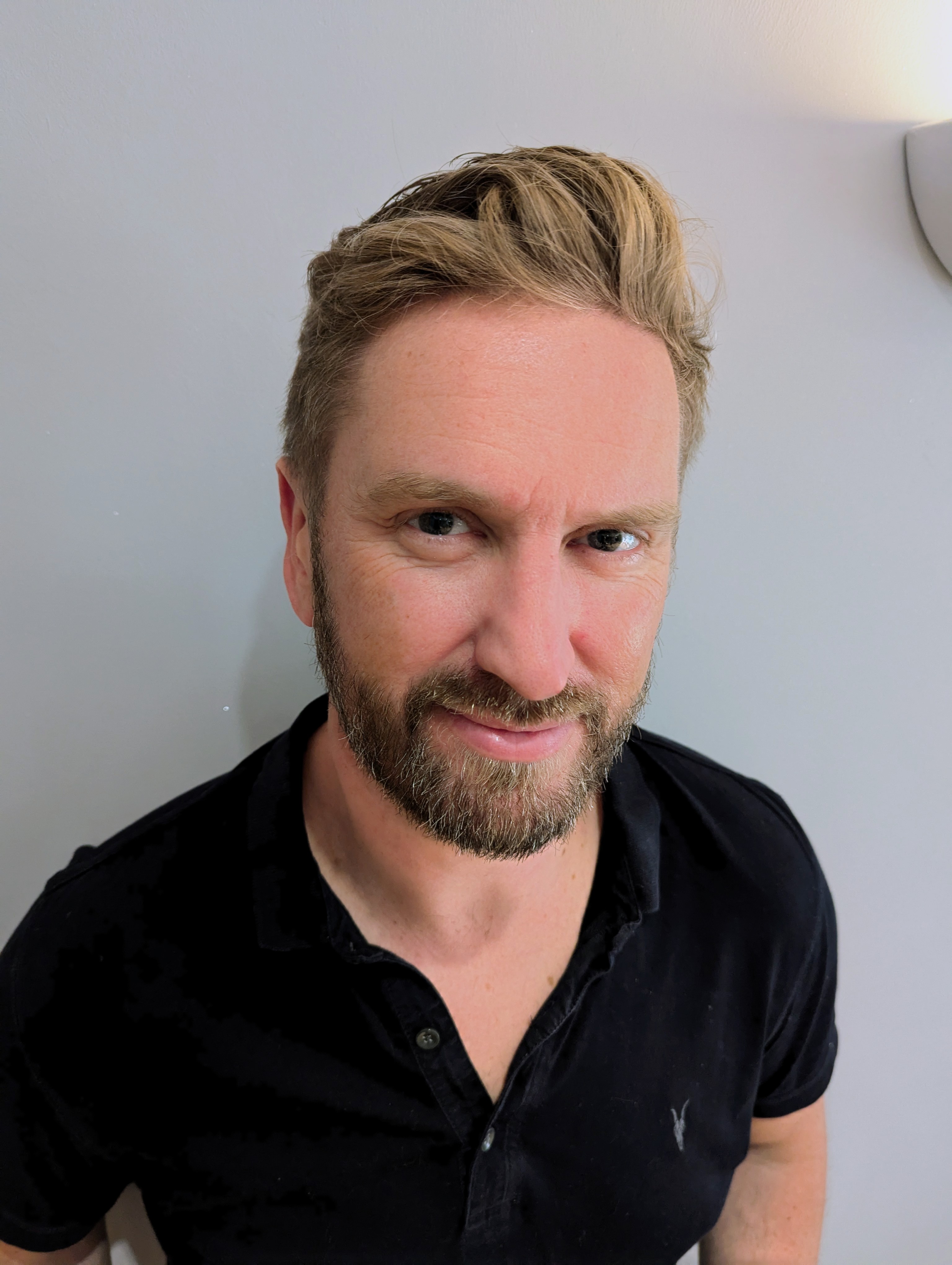
Dan Barber is the strategic mind behind Strathos, a fractional, technology, strategic leadership & advisory business—driven by technology, innovation, and the power of people. He is a Microsoft MVP in Business Applications with over 20 years’ experience helping businesses, partners and individuals embrace digital transformation, scale effectively and develop with confidence. He blends sharp business insight with deep technical expertise to solve complex challenges and unlock growth, empowering leadership to creating strategies that deliver real results while nurturing teams to thrive. Passionate about collaboration and community, he loves mentoring future leaders, speaking and sparking ideas that make a lasting impact.