Unlocking Teams Culture for AI Success Z
Merethe Stave
Microsoft MVP







Unlocking Teams Culture for AI Success Z
Get featured on the show by leaving us a Voice Mail: https://bit.ly/MIPVM
Explore how Merethe Stave demonstrates that building a strong Teams culture is essential for successful AI and Copilot adoption in business. This episode unpacks practical strategies for overcoming resistance, integrating AI into daily workflows, and fostering trust and transparency. Gain actionable insights to help your organisation thrive in the evolving digital landscape.
🎙️ Full Show Notes
https://www.microsoftinnovationpodcast.com/776
👉 What you’ll learn
- How to create a collaborative Teams culture for AI success
- Steps to overcome resistance and guide teams through change
- Practical ways to integrate Copilot and AI into daily work
- The importance of trust and transparency in digital transformation
- How to use data and feedback to drive adoption and improvement
✅ Highlights
- “You need a Teams culture before you can succeed with Copilot.”
- “It is a skill that we need to gain and we need to mature in that skill.”
- “AI is helping you to get quicker from nothing to something.”
- “You have to put your voice on top of that.”
- “We go into Microsoft 365 and check how are they working.”
- “There’s nothing wrong or right in where you are. This is where you are right now.”
- “You have to listen to people and understand what the fear is about.”
- “Moving from private chat in Teams and email into channels and Teams, it challenged the power structure in our organisation.”
- “It’s about building trust and a culture of, yes, we are building each other good.”
- “If you have that in the ground, it’s not a problem with AI.”
- “You need to get order of your stuff, get your stuff in order to work well with Copilot.”
- “You have to start somewhere and then make a roadmap to what’s next.”
🧰 Mentioned
- Microsoft 365 Copilot - https://www.microsoft.com/en-us/microsoft-365-copilot
- Copilot in Teams - https://adoption.microsoft.com/en-us/copilot-in-teams/
- Copilot Studio - https://www.microsoft.com/en-us/microsoft-365-copilot/microsoft-copilot-studio/
- Microsoft MVP YouTube Series - How to Become a Microsoft MVP - https://www.youtube.com/playlist?list=PLzf0yupPbVkqdRJDPVE4PtTlm6quDhiu7
✅ Keywords
teams culture, ai adoption, copilot, digital transformation, microsoft 365, organisational change, trust, transparency, resistance, collaboration, viva insights, sharepoint
Microsoft 365 Copilot Adoption is a Microsoft Press book for leaders and consultants. It shows how to identify high-value use cases, set guardrails, enable champions, and measure impact, so Copilot sticks. Practical frameworks, checklists, and metrics you can use this month. Get the book: https://bit.ly/CopilotAdoption
If you want to get in touch with me, you can message me here on Linkedin.
Thanks for listening 🚀 - Mark Smith
00:06 - Welcome & Inspiration: Becoming an MVP
08:40 - The AI Inflection Point: How AI Has Changed Everything
09:46 - From Hype to Habit: Integrating AI into Daily Workflows
16:42 - Overcoming Resistance: The Human Side of AI Adoption
19:00 - The Prerequisite for AI Success: Building a Teams Culture
20:27 - Practical Roadmaps: Turning AI Insights into Action
00:00:06 Mark Smith
Welcome to the MVP show. My intention is that you listen to the stories of these MVP guests and are inspired to become an MVP and bring value to the world through your skills. If you have not checked it out already, I do a YouTube series called How to Become an MVP. The link is in the show notes. With that, Let's get on with the show. Welcome back to the MVP Show. Today's guest is from Norway. Miretha, welcome to the show.
00:00:41 Merethe Stave
Thank you so much, Mark, and thank you for having me. It's always exciting to talk with other peers in this realm of Microsoft and technology.
00:00:52 Mark Smith
It's so good. It's so good. I've been to Norway a few times. I love it. Be a beautiful country. I had some great food there as well. And in fact, you know, I've had my best Japanese in Norway.
00:01:07 Merethe Stave
Really? Nice, yeah.
00:01:11 Mark Smith
Very different, very different. And I'll tell you my key takeaway from there. We had a friend that was working at Google in Norway. My wife also used to work for Google, and that's why we had gone to visit her there. And she was from Australia. And you know skin creams in Australia and New Zealand are water-based. But because it gets so cold, you can't have water-based skin creams because you'll freeze on your face. And so they're more an oil-based, in my understanding, so that it doesn't freeze to your face when you're out in the cold. So that was my interesting learnings from there.
00:01:58 Merethe Stave
Yeah, well, it's true. In wintertime, or actually this time onwards, we have to start using cold creams, as we call them. They are like very fat creams, because otherwise, you know, yeah, it can be harsh, especially like where I live in Norway, because I live on the West Coast. We kind of, the Atlantic comes straight in right here, so out on the tip of Norway. Yeah, there we go.
00:02:24 Mark Smith
Marethe, tell me a bit about food, family, and fun. What do they mean to you?
00:02:28 Merethe Stave
Nice keywords, food. The funny thing is, you know, during the pandemic, I moved back to, 'cause I used to live in Oslo, so maybe even have met if you've been on SharePoint Saturday. But then in the pandemic, I went back as regular, we used every summer to go back on where my grandparents had a small farm previously. And in the pandemic, I was here in the summer and I was thinking, my goodness, in Oslo, I can't go anywhere. So let's stay for a few more weeks. So until this passes, that took a couple of years before the pandemic passes. But what I did figure out was that a year or two before, they have built out the fiber net in this area. So it was super smooth to work from home. And then it is a farm. I owned the place. And it's nature, so I moved back home. And what I do, now I have a lot of land, well, small farm, but more than just a regular garden. And then I say, okay, back to food, then I'm very fond of clean food, so not to over-process food. So as close as nature is possible, it's like I'd rather eat. pure meat, chicken, fish, or whatever, instead of the mix that you get. And here I started growing my own vegetables, so I'm trying that out, being a hobby farmer. So bringing the food directly and it really tastes so nicely, whatever you can pick out from your own garden. It's completely different from the shop.
00:03:59 Mark Smith
We're at the other ends of the world, and yet we are very similar because it's just come in springtime where we are, And I've just planted all my gardens with all my spring vegetables coming into early summer. My potatoes are down. I've planted potatoes, yams, broccoli, carrots, peas. A spinach, all in the ground, yeah. And tomatoes is the other one, yes.
00:04:30 Merethe Stave
Oh, that's awesome. I mean, you probably have maybe nicer rather than we have, so then you can have all of these. Do you have like a greenhouse where you can have the tomatoes or do it?
00:04:38 Mark Smith
I have a greenhouse as well, yes. So I've been doing, I start all my vegetables in there before I move them out when it's, and then I've just got into bees as well. I've got about an acre and a half, so I'm doing the same thing. I'm 40 minutes from my closest town and I'm I'm loving the distance between my garden and my plate, right? And I control the chemicals, I control the fertilizers, so therefore I'm moving more and more. I found after three years getting to the point where there's not as many bugs in the garden anymore. It's kind of like it's settled down and the balance has come and it's really starting to thrive. I've got a little worm farm that I produce a lot of worm castings for the garden just to keep it really healthy. And of course, all my scraps go back that way as well. So it's cool.
00:05:28 Merethe Stave
I do the same. So it's funny that we do exactly the same thing. And also, because before we have like a garden, every time you have to lawn it all the time, but now I kept it, let it run free. So we have more flowers to make sure we get the butterflies, to get the insects, to get and build the insect hotels and all of that. So yeah, and I think it's also part of, I think many people are getting more aware of these things now. And the funny thing is you just put a few seeds in the ground and it's abundance what's coming out there. I mean, it's not only for, so you can give to your neighbors, you can, yeah, so I think a lot of people moving back to that. But of course, what they also learn is that it doesn't happen by itself like anything else. You have to tend to it. The same as we do in the digital world, we need to have adoption. You need to have somebody cleaning things up.
00:06:19 Mark Smith
But it's a nice break from the digital world, isn't it? To be able to get out there and it's just a nice contrast, I find.
00:06:25 Merethe Stave
Yeah. Thinking the soil, it's good therapy. It is definitely.
00:06:32 Mark Smith
So true.
00:06:33 Merethe Stave
And over to family, I share actually the house and the farm with my brother and a dog and two cats, so we share these animals. So it is nice when I travel, then he takes care of the animals and vice versa. So that is good, combination. Yeah, that's good. Yeah, I love my family. Yeah, fun. Oh, that's a lot of fun. And, you know, apart, you know, we are lucky. I feel privileged. We have this work that we do. And then we have the community around it, which is also the fun. But of course, When you are engaging community in tech, you tend to also get engaging communities in your local areas. That's what also happened to me when I moved back. So then I start getting into, we have club, because it's all on the West Coast. There's a lot of surfers, there's a lot of outside activities, especially because we have oceans on three sides. So quite important for safety and security when it comes to that. So there's a new club that we have But it has started several years back, but then it will kind of divide, dwindle down a bit. But now we have a new board and a new team that is ready to put more energy into it. So then we are running a kids club every summer where the kids between 8 to 16, they have surf and safety at sea training during the summer.
00:07:55 Merethe Stave
So kids from 8 to 16 years of age, and we want to expand this to create our own, you know, Bondi Beach a la stat on the West Coast of Norway type. So in the mini format. So that's what we are dreaming too, because, you know, things happen and we need to be aware of, you know, what to do if there's a stream in the ocean, how to save each other if you fall out. It's super important to be safe and secure around the ocean, so. So that is what we do. So that is one of the things I do in my spare time. And as I move back home, it is nature all over, lots of nice places to go for hiking. And it's also good to get outside away from the PC and get fresh air and get some exercise. Yeah.
00:08:40 Mark Smith
So good. Such a good lifestyle. Tell me how AI has changed your world in the last three years.
00:08:46 Merethe Stave
Oh. That's the key word. Yeah. You know, as we are MVPs, right? So we are kind of dimension that way. If there is anything new, we need to figure this out and have a taste. Okay, what does this mean for our peers, for ourselves, for our customers? And also in Cloudway, we are a small team. We are eight of us in Cloudway. So we are also very engaged. We're very forward when it comes to new tech. We need to really, if there's something new, we need to test this and taste it. and make it make sense for everyone that we are collaborating with and working with. So we were quickly onboard to see what this is. And it is amazing. But on the other side, it is just a tool as well. So you need to kind of kill some of these myths around it that it's not dangerous, it's not going to, yeah. So you need to make sense of this and put it into a context for people to see where
00:09:46 Merethe Stave
where does this fit in my work life? Because we see there are a lot of courses out there, but bits and pieces of the technology and the function. But then the first, it's like you have a new relationship, you fall in love and, you have pink clouds and, oh, this is so wonderful and all of that. And then reality hits, does this relationship gonna continue or not? And that's the same thing that happens, you know, with this dive and excitement goes over, then, oh, made a prompt and it didn't work or I didn't get what I wanted or something else was working better. So that's where you need to see where does this fit into your regular life. And that's what we have kind of broken the code in this. So we talk a lot about Teams culture, which has been our mantra since Teams started basically. But we see also is missing quite a lot in organization. I put that into the context of Teams collaboration, working transparent in channels and team, the working out loud principle. And then we help build co-pilot especially into this. And you know, it's hard to say what this is going to be, how the effect of co-pilot or AI in general. I mean, you also have physical AI. It's not only the Teslas. You know, you have so much else going on when it comes to AI in general. and it will affect our lives. And what we see is this is not like a Micro 365 tool or a new tech tool. It is a skill that we need to gain and we need to mature in that skill. So it's like a new language, it's a new, and we don't know the effect of it, but we need to train speaking with our data, speaking with, ourself, basically. And that's what we do. We speak a lot with ourself when we converse with Copilot or other AI. I changed my life a lot because I can quickly create models. It helps me a lot when I create training material. I want to have a structure. I use it all the time. It's been like become like a natural hammer I use for everything, basically. Yeah. So it is life-changing in that regard and also helps me help more in a shorter time. But of course, also it helps create better quality of your work. And a lot say, Oh, we need to be more effective. Yes, but does that mean that you need to let people off because you can do more with what you got? Kind of, yes, but that's not the point with it because it is too...
00:12:31 Merethe Stave
help you automate maybe some of the tedious things or help you do the dirty work to collect information, to structure information. But then you have to put your voice on top of that. Then you have to work with that. But what we see that using AI is helping you to get quicker from nothing to something. And then you have to work on that and continue working with that and then go back to Copilot or other AI and say, okay, but I want a different angle or I want a different tone of voice. But it is perfect because you have your personal assistant 24/7 and they never get tired. They might hallucinate. So you need to quality check because in the end of the day, it's your brain and your knowledge that is important. And maybe another part of that, what in your other expertise becomes even more important because you can't be lazy anymore. Because you can't just create a report in Copilot and send it to your manager and say, This is it, or to your colleagues. You have to work through it and chew on it yourself. And then it becomes really valuable.
00:13:43 Mark Smith
I speak English only. I don't have two languages. I take it you're bilingual at least, right? Yeah. My question for you is, are these... These models that my understanding are they're predominantly, and I'm going back to foundation models, right, that support things like Copilot and what we use, are predominantly trained on English content. And do you notice a difference from when you're doing prompting in Norwegian as opposed to prompting in English. Is there any difference in the quality of outputs, the hallucination, or even the perhaps not having referenceable data in your native language? Do you notice anything?
00:14:32 Merethe Stave
Well, now it has improved a lot, though. I mean, because in the beginning, it didn't have that much in Norwegian, of course, because that's my mother language. However, now it has changed a lot. And also with the researcher, it is remembering everything I'm doing. For example, in Norway, we have two languages. We have like the official Norwegian language and then we have a kind of an older language. They're very similar, so you can understand both, but the writing and some wording are a bit different. And I was writing an article in that other, the older language in Norwegian. Is that Viking? No, it's not that old. It is still Norwegian, but it's slightly different kind of way. And in school, you know, we always have to learn both and kids are like, Oh, I hate that one. I don't want to learn that. But yeah, you know how that goes. But in any case, so I was writing this article in this other Norwegian and I came back later on to do something else in Copilot and still in Norwegian, but then it started to to suggesting, but I can also write this in that older Norwegian. And so it's really amazing the memory and the researchers because it all learns how or what I'm doing and what I have done. So now there's not much different, especially when it comes to Norwegian compared to English. It is hardly any notice anything because but it is yeah, it's learning and it's amazingly how fast just like the last half year how that has changed.
00:16:08 Mark Smith
Yeah. With the people that you've worked with over time, have you come across any resistance to using AI? And my second part of that question, how do you deal with that and how do you take people on a journey from the resistance is often, I expect is born out of fear. How do you move them from that, you know, being anti the technology to a point of maybe embracing it?
00:16:37 Merethe Stave
Yeah, this is what we were working on. I mean, since I started with SharePoint like in 2008. So it's, and that's the thing that doesn't change. It is basically it's the same thing, but it's just a new tool to consider. But of course, what we see now is many times when people are contacting us is they have already implemented Copilot. They have gone through the pink clouds and falling in love with Copilot. And now it kind of goes into that dip, you know, that in the Gartner. thingy. Yeah. So, and then we come in because the thing what they've done so far is mainly focus on prompting or bits and pieces and not putting this into a context. So when they see it, they see the point behind it and say, this is super cool. However, it's hard to translate it back to their regular work life. So that's what we see. You need to put these things into a context of how they're working. So what we do, we follow when we go into our customers, we go in and check. We take a few steps back, basically. We go into the Microsoft 365 and check how are they working. So we get the facts straight because that's the most important thing. What are the numbers telling us? So we go into the Microsoft 365 user interface and then we look at, okay, how much internal emails do we do, how much we communicate in channels? How much responses are there to these communications in channels? And how much do we communicate in private chat in Teams? Because that is, because during the pandemic, of course, people moved from email to Teams, they say, but did they really move to Teams or do they just move the way they talk in email into Teams? So that is what we see all the time that you have, you
00:18:26 Merethe Stave
Yes, you have moved from email, maybe partly, and then you have a lot of private groups chats in teams, but you haven't changed the way you work. And that is squeezing something like a circle into a square because then it doesn't work with you. So you need a team's culture before you can succeed with Copilot. It's actually a prerequisite to succeed with Copilot. So what we usually do is to look at, okay, this is what we see and then Then we start at the starting point and also we get, we also create a survey that we send out to every user or a part of the user depending on what the customer want to do. And then we compare that with the facts that we get from Microsoft 365 and also Viva Insights, which is now part of Copilot, which shows you the trends in the organization. How much are people working outside normative work hours? How many meetings do you run? All of these are very important to get the full picture of where are we today. And there's nothing wrong or right in where we are, where you are. This is where you are right now. And then we have to look at where do you want to go. And then we go through this different typical scenarios, for example, co-piloting meetings. That is a very low-hanging fruit. Just get the transcriptions going, summarize that, put that.
00:19:53 Merethe Stave
Then what? What have you done? What should you do after you've done your transcript from a meeting? Well, then what? You don't put it into the loose air, do you? No, you have to put it somewhere, for example, in a meeting channel, and you have a post about that meeting, and then you paste in the summarized meeting, minutes of meeting into that post, and then you put the activities in planner. So this is the ecosystem of how you collaborate and then put it into a a natural context, like meetings and then project activities, for example. And then we look at the memory and research part to help people see the new possibilities and what does this mean. And then we look at agents, because many times you focus so much on agent, but you don't do the groundwork, then it won't work. That's what happens. So that's, yeah, so maybe that was a bit of a roundabout of what you're asking me about. How do we work against against resistance. And I mean, first of all, we need to understand where the resistance is coming from. Is it towards, do they have internal reorganizations? Because sometimes new projects tend to get blamed for problems they already have from before, or other activities going on in the background, or they don't have resources enough, or it could be other things. Or it is because they have seen or Or guess what AI can mean for them? And maybe they're not sure how this, and it's overwhelming. Where do you start? Where do you start? This is so much. And then they realize, oh, Don, we haven't done proper educational for people when it comes to digital competency. We haven't cleaned up our mess, you know? So it's overwhelming what they need to do to, you need to get order of your stuff, get your stuff in order to work well with Copilot because if you hide your stuff in your file server or in somewhere else and you insist on working in e-mail because you have full control, my Copilot won't see that. But if you work in Teams channels, my Copilot will see that. And if you have lots of content in your SharePoint site and on OneDrive and you haven't cleaned it up or you haven't defined where should this agent go and find stuff, then it will find everything that is there. And there are very good technology. I mean, you have Purview, you have a lot of good technology in Microsoft now to help clean these things up. So it doesn't have to become that overwhelming. And what we can do is help, what we do is help them actually start somewhere and then make a roadmap to what's next. So yeah. And you have to, and I think you have to listen to people and understand what the fear is about and then take it from there.
00:22:51 Mark Smith
What's the most out there fear that you've come across or resistance? And like, have you been in situations where people are say, I am not going, as in those organizations, just so sorry, I'm not, I'm not going to use the AI at all.
00:23:06 Merethe Stave
Well, of course, they are there because people, they pay attention to what happens in the world and some people get scared or this is dangerous and this is, oh, I don't think I don't want to do this. But then you have to talk with management, number one, in an organization. They have to tell why we are doing this. And it's not about you losing your job or... Yeah, you have to build that trust in their organization. This is just another tool, basically, and you have to show them how, and you have to start piece by piece. But it's not that much of the fear of AI, but for example, the fear of actually moving from Outlook and private chat and Teams to Teams channel, that is something of the most difficult things you can do. And I've been sometimes flabbergasted, why? Because for me, it's so obvious that I will never go back. My stress level goes up if I'm forced to collaborate in e-mail. I find nothing. But what we see is when you go into an organization, and I even heard not too long ago that when I was suggesting a Teams for a project, and so then the person said, I'm not going to go into Teams, forget it. It's just not some work. And then you have to think, okay, why is it like that? And what I've seen is that moving from private chat in Teams and e-mail into channels and Teams, it challenged the power structure in our organization. Because if I'm being a little queen, making sure I decide who can read these emails and who do I put in that private chat group, I have control. But if I work openly in Teams, It's visible what I'm doing, that some people are afraid to be stupid or show that they cannot do or whatever fears they might have, then others can lose that power. And that's kind of interesting thing. But then it's so important that management are doing this right, that they create a logical structures in the channels and purpose-built workrooms. I many times compare it to garage. This is where you're going to work on this car. You have a desk for those who are fixing the engine. You have a desk for the furnitures in the car, et cetera. And that's the channels. You have to organize it like that. And whoever is in there, they should be allowed to work on that car. Anyone else having an opinion on the color of the car and not having an active role, they shouldn't be there. they should be somewhere else. So, and these are, and then you have, if somebody posting something in a channel, you have to make sure it's responded to and encouraged. And it's about building trust and a culture of, yes, we are building each other good. I'm not going to attack you for doing something wrong if you write something in that channel. And it's these little simple things. I mean, that you human beings, you have to be seen and heard and feeling that this is a safe environment for us to work in. And if you have that in the ground, it's not a problem with AI. It's not a problem with whatever you bring to the table.
00:26:23 Mark Smith
This is so good. Look, the time's flowing. We're almost 10 minutes over.
00:26:28 Merethe Stave
There you go.
00:26:29 Mark Smith
It's so interesting talking to you like that's some, you know, you've got some really powerful insights. I hope the audience has found this a great episode. Thank you so much for coming on and sharing your insights.
00:26:42 Merethe Stave
Thank you so much, Morg. It's great talking to you as well. So see you again sometime.
00:26:51 Mark Smith
Hey, thanks for listening.I'm your host, Business Application MVP, Mark Smith, otherwise known as the nz365guy. If you like the show and want to be a supporter, Check out buymeacoffee.com/nz365guy. Thanks again, and see you next time.
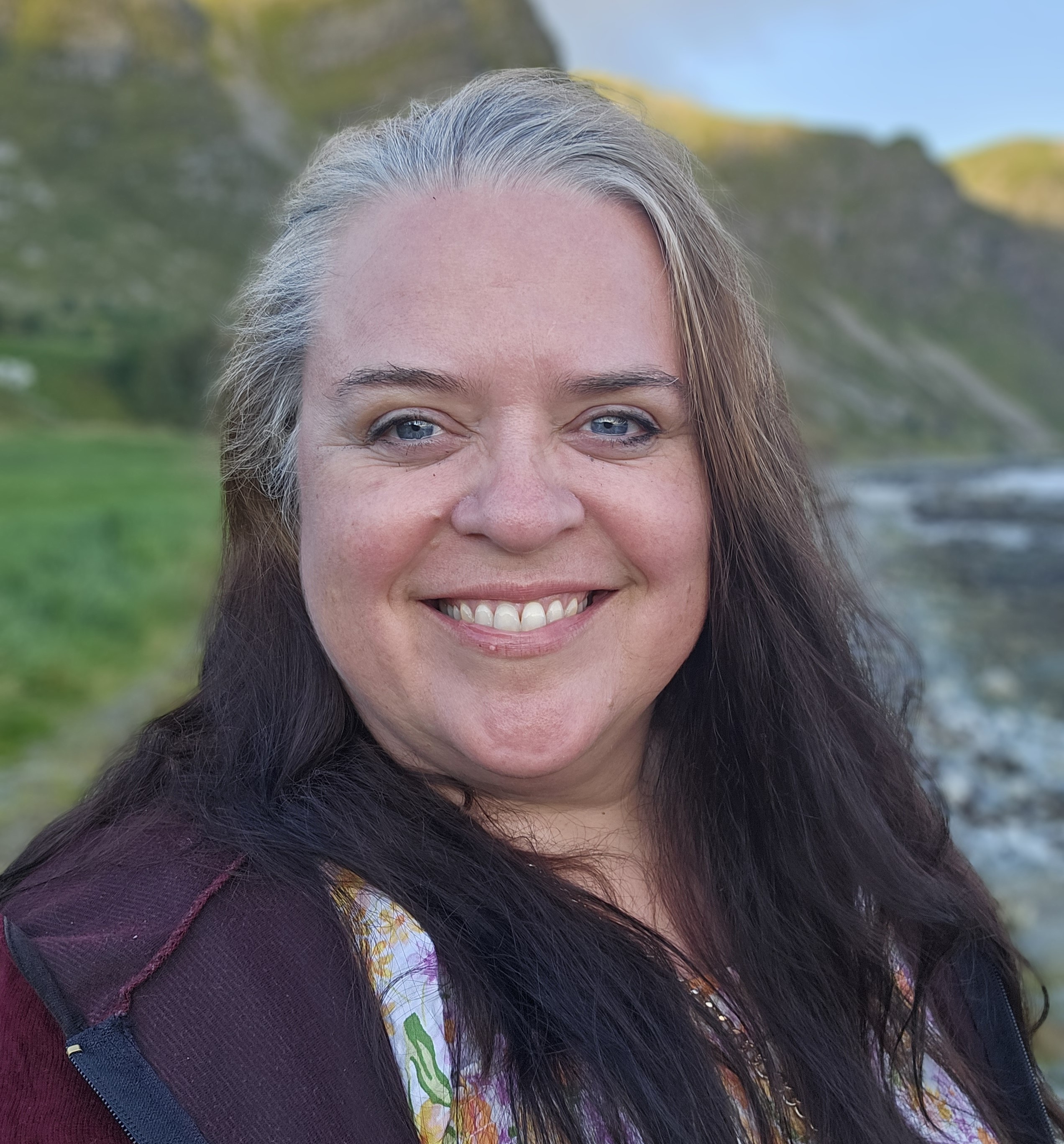
Merethe Stave is Chief Customer Officer and Senior Cloud Architect at CloudWay, a Microsoft MVP, and board member of both the Norwegian Microsoft 365 Community and IT Forum Vest. She helps lead the Women in Microsoft 365 Community and the Employee Experience Community, and actively works to inspire more girls to pursue careers in tech.
Merethe is passionate about building a resilient workforce through knowledge sharing, structured competency development, and a strong sharing culture. With over a decade of experience in Microsoft 365 and user adoption, she is a frequent international speaker known for her pragmatic, people-centered approach to digital transformation.