
AI Agents: Are We Ready for Fully Automated Workflows?
Kurt Rolland







AI Agents: Are We Ready for Fully Automated Workflows?
Get featured on the show by leaving us a Voice Mail: https://bit.ly/MIPVM
Kurt Rolland shares practical strategies and philosophical insights at the intersection of technology, sustainability, and AI adoption. This episode explores how business and tech professionals can optimise energy use, leverage Copilot and agentic AI, and make ethical decisions in a rapidly evolving digital landscape.
🎙️ Full Show Notes
https://www.microsoftinnovationpodcast.com/773
🔑 What you’ll learn
- Reduce operational costs with sustainable energy solutions
- Evaluate the impact of AI agents on business productivity
- Build resilience in tech projects through local adaptation
- Balance automation with privacy and ethical considerations
- Apply practical frameworks for optimising personal and team workflows
👉 Highlights
- “We’re actually able to generate about 100% of our electricity.”
- “We dropped our energy about 60% annually just going to geothermal.”
- “Copilot used to be one thing. Now there’s many copilots.”
- “It still requires a heck of a lot of effort to get an agent tuned enough to my needs.”
- “We’re data radiators now as human beings.”
- “For every convenience, you’re giving up some level of freedom.”
- “Is that what we want? Can we, but should we?”
- “Human bodies thrive on some level of resistance or friction.”
- “Surveillance is… it seems like we don’t talk about it enough.”
- “We’ve got a facade of Brave New World, but the background behind it is 1984.”
🧰 Mentioned
- Copilot: https://copilot.microsoft.com/
- SharePoint: https://www.microsoft.com/en-us/microsoft-365/sharepoint/collaboration
- Office 365: https://www.office.com/
- M365 Copilot: https://www.microsoft.com/en-us/microsoft-365-copilot
- Copilot Studio: https://www.microsoft.com/en-us/microsoft-365-copilot/microsoft-copilot-studio/
- Personal Agent Builder: https://learn.microsoft.com/en-us/microsoft-365-copilot/extensibility/agent-builder-build-agents
- Microsoft MVP YouTube Series: https://www.youtube.com/playlist?list=PLzf0yupPbVkqdRJDPVE4PtTlm6quDhiu7
✅Keywords
ai, copilot, agents, automation, sustainability, energy independence, privacy, surveillance, workflow, geothermal, office 365, ethical technology
Microsoft 365 Copilot Adoption is a Microsoft Press book for leaders and consultants. It shows how to identify high-value use cases, set guardrails, enable champions, and measure impact, so Copilot sticks. Practical frameworks, checklists, and metrics you can use this month. Get the book: https://bit.ly/CopilotAdoption
I’m Mark Smith - nz365guy - Helping people reach their full potential.
I have been a Microsoft Applications MVP for over 14 years. I am passionate about helping people reach their full potential, through training, coaching and mentorship.
Accelerate your Microsoft career with the 90 Day Mentoring Challenge (https://www.90daymc.com/)
Support the show (https://www.buymeacoffee.com/nz365guy)
If you want to get in touch with me, you can message me here on LinkedIn (https://www.linkedin.com/in/nz365guy).
Thanks for listening 🚀 - Mark Smith
00:00 - Welcome & Purpose
00:15 - Sustainable Living & Energy Independence
05:07 - The Evolution of Copilot & Agentic AI
08:09 - Philosophies of Power and Non-Power
11:14 - Local Adaptation & Landrace Innovation
15:07 - AI Agents: Automation vs. Human Optimisation
20:58 - Privacy, Surveillance & The Illusion of Control
00:00:06 Mark Smith
Welcome to the MVP show. My intention is that you listen to the stories of these MVP guests and are inspired to become an MVP and bring value to the world through your skills. If you have not checked it out already, I do a YouTube series called How to Become an MVP. The link is in the show notes. With that, Let's get on with the show. We're back with the MVP show. Today's guest is from Missouri in the United States. Kurt, welcome.
00:00:41 Kurt Rolland
Thank you. Good to be here.
00:00:43 Mark Smith
I always like to start with food, family, and fun. Get to know you a bit outside of your technical roles and skill sets. So food, family, and fun, what do they mean to you?
00:00:55 Kurt Rolland
Yeah, great, great questions. Well, you know, the thing that comes to mind with food, I recently spoke at the Memphis Community Days here just this last weekend, and barbecue comes to mind, Memphis barbecue. Now, of course, Memphis, they're gonna have their own view of what barbecue is, and I tasted it and it was awesome. We had a dry rub barbecue there in Memphis, right across the street from the Peabody. which was awesome. If anybody knows about the Peabody ducks, they're in Memphis. That was a neat thing. In St. Louis, you know, we have our own style of ribs here as well. And so, yeah, I'll have to say ribs.
00:01:34 Mark Smith
Nice. I love it. I love it.
00:01:36 Kurt Rolland
Yeah. Fun. Gosh, I believe it or not, I'm out on a small gentleman's farm out here in Western Missouri. I'm near the Missouri River and we... We raise some of our own food. In addition to technology, I'm kind of a high-tech, high-touch person. We got chickens, we got ducks. We grow our own vegetables and everything. We've got a beautiful view out here. We're on about 25 acres. I also am into music, Celtic specifically. I'm a bagpiper, so I play bagpipes and small pipes, which is a lot of fun. And then family, it's my wife and myself, we're empty nesters. We have three sons. They live not too far away from us. We get to see them. We have about 13 grandchildren, so family's important for us too.
00:02:29 Mark Smith
Amazing, amazing. I just want to put a pin and actually let's discuss a little bit your homestead and lifestyle there, because my wife and I, we have a website called Hi-Tech Hippies. And we, we are also very much into tech, but we also very much live off the land. We've got a big veggie garden. I'm in the process of building a syntropic forest across my acre and a half, a syntropic food forest. So basically turning what was farmland back into a food producing a forest. And then, you know, I've just placed an order for a full solar system to be put in off-grid with regards to water, the internet starlink from day one that it was available. So I'm 40 minutes from my closest city. And just so I'm keen to hear kind of any lessons you've learned from that.
00:03:32 Kurt Rolland
Oh, yeah. Oh, yeah. Well, so we're on a well. Well, so let me let me just sort of set the context here. Right. So we moved out here from from St. Louis, from St. Louis City about seven years ago. Right. So we lived in the city. We were we were in, you know, 1896 Victorian home right in the city. Right. Beautiful. But, you know, it's city life. Right. And we decided, you know, we'd always wanted to. And I'm actually from Southern California. My wife's from Arizona, so we're actually West Coasters that got transplanted here in Missouri. But we've always wanted to either have a cabin or a small farm or something like that. It was our opportunity. So we took it. We moved out here. And so we're on our own. Well, so, I mean, you know, imagine, you know, coming from, say, Southern California, having like free water is is like a miracle, right? Which we have free water because we have a well, we have solar. And I mean, we have some quite some big panels, actually. So we're actually able to generate Probably half the year we're able to generate about 100% of our electricity. And then we're also on a geothermal system. So we pivoted to geothermal first because what we wanted to do was we wanted to reduce our demand footprint, right? And so what geothermal did, you know, we went from a traditional air conditioning, heating, central heating, right, to geothermal, which does both heating and cooling for us. We dropped our energy about 60%.
00:05:05 Mark Smith
Wow.
00:05:06 Kurt Rolland
Okay, annually, just going to geothermal. And then I decided to pivot and deal with the supply side, right, which is the solar panels, right? So the idea of supply now is to be able to generate more of my electricity, right, and use it in a lower demand situation. So we're not off-grid, but we're definitely angling towards that.
00:05:30 Mark Smith
Yeah, I'm staying grid tied. In New Zealand, we call it grid tied, where you still have the grid, even though I think the scale of my system means that I'll use about 46% of what I produce and the rest will go back to the grid and then they pay you for that. Yep, same here. So I should be, yeah. And then it'll only be in winter time. I think I've got about a six week period that I potentially, based on my modeling, might need power from the grid, but it's only might. And then I've also purchased a generator that would, it's built into the system that'll allow me to charge my batteries as well. So theoretically, I could just about be fully off-grid, although I don't want to go fully off-grid because at the moment, The way our market is, it allows me to make actually some good money from supplying back to the grid. Yeah.
00:06:26 Kurt Rolland
Nice, nice. Ours is not quite as supportive of that. I mean, really, for me, it's more just a cost wash than me generating significant income, let's say, off of the energy I'm generating. But my sense is New Zealand's. a lot more green forward-looking, let's say, than the US is.
00:06:46 Mark Smith
Well, you know, in the US, I think I saw it recently, there's the 90 gigawatts short of the power need. And so I would've thought in the US it'd be a massive incentive to get people putting panels up just to, you know, that's, they reckon that's 90 nuclear power stations just to, because of the AI demand that's coming, you know.
00:07:10 Kurt Rolland
That's right. That's right. Well, you know, the sad fact is it's not fact based, but it's politics based or politically based. Right. And so if anything, you know, what's happened with this administration as they've begun to cut subsidies for green energy. So anyway, not that that would necessarily make make an impact for me, because I think I mean, while subsidies are nice, I think doing the right thing is the right thing, if that makes sense.
00:07:39 Mark Smith
Yeah, sustainability is one of the hot topics for me and my wife in that we don't want to point to everybody else and what are you doing? We want to go, what are we doing ourselves around, you know, garden to plate? How short can we make that distance so there's no... you know, shipping, trucking, anything like that. And so I want to get to the point that, I don't know, 80 to 90% of my food consumption's coming off my land and it's sustainable, you know?
00:08:08 Kurt Rolland
That's awesome. Which brings up the idea of a philosophically non-power. Are you familiar with the idea of non-power?
00:08:15 Mark Smith
No, I've never heard of it.
00:08:17 Kurt Rolland
Yeah. Have you heard of a political writer, philosopher named Jacques Ellul? Mm-hmm. So, he lived in the 20th century, was born in the late 20s, early 30s, lived through World War II, was part of the French Resistance. But he wrote a really popular book called The Technological Society in the 50s. And his point was there's this idea called la technique, which pretty much drives Western society. It's a mindset, and the mindset goes something like this. Whenever I'm posed with a challenge or problem, I always look at it from the perspective of how can I do it faster, cheaper, better? In other words, it's a very utilitarian mentality around addressing something, right? And his point is that that is a philosophically weak and empty way of dealing with issues and problems. It's all about pragmatism, right? So anyway, in this whole discussion, and he gets into political systems a lot, is this idea of power, no power, and non-power, right? So I think power and no power are probably pretty clear. We can think of people who have lots and lots and lots of power, right? They have money, wealth, control, et cetera. We have people in our society that have no power, right?
00:09:40 Kurt Rolland
But there's a number of people like ourselves that do have some element of power, okay? And the question is, how are we going to use our power, right? And so the idea of non-power is to not use our power in ways that disadvantage other people in order to advantage ourselves. You see, right? So I... I can use the power, right? I can do whatever I want to do. But unfortunately, in our individualistic societies, right, people tend to be more that way about self-serving, right? As opposed to what decisions can I make that benefit my neighbor or my fellow man or the environment, right? Right? More so than myself.
00:10:26 Mark Smith
I'm like, I'm going to get that book because it really speaks to me. Like when I do what I do, I'm not thinking about just looking after myself, I am thinking that my neighbors, they already do, like they come to me for resource, but I want to make sure that my resource pool is bigger to support my surrounding area and not just myself. And I'm finding the more I get back to nature, just the massive amount of abundance nature produces. Like, you know, seeds just blow my mind how many seeds a plant produces and how much you can replicate with that. And it is just phenomenal, something I've never noticed in my life until I started growing produce and, you know, trees and things like that.
00:11:14 Kurt Rolland
Right. Which brings up the idea of landrace. Are you familiar with landrace?
00:11:20 Mark Smith
No, no.
00:11:21 Kurt Rolland
Yeah. So, And landrace applies not just to plants, but to animals as well. So, you know, it used to be before we were so globalized as we are now, right? A hundred years ago, 200 years ago. You know, what you'd find is you'd go to an area, let's just say New Zealand, for example, and you'd find particular flora and species that were unique to that area and you couldn't find them anywhere else, right? Same thing with animals. Now, I'm not just talking about you know, let's say you may have a particular species of animal that only exists there in New Zealand, but I'm actually talking about, how can I say, genetic types of a particular species, right? So, let's say cows, you know, may exist in a particular valley in Germany, right, 200 years ago, right? Well, because of globalization and because of hybridization of what we've done, this is a pragmatic society again, right? We've begun to remove these, they call them heirloom breeds, right? whether it's heirloom plants, plant seeds, these kinds of things, or animals. Right. So here in the United States, it's all about, let's say, the Angus breed, right? Beef. It's all about Angus. Everything's going to be Angus, right? Well, these other land race breeds just end up deteriorating and almost disappearing. Right. And so And so talk about, how can I say, taking our society and and diminishing it. Right. We really have because we're focusing on all of these main breed lines, if you will, that more more often than not are bred because of for pragmatic purposes. Right. So I'd be interested to hear what you're finding, because you're you're probably going more towards the land race idea and what you're doing, right.
00:13:17 Mark Smith
Totally, because even with seeds, right, it's not till you have a plant go to seed, you use that seed again, and it goes to seed. I'll be doing some study there. I reckon it's about the fifth or sixth time that that plant now, that vegetable, let's say it's tomatoes as an example, is now really, it's part of your environment. It's... It's genetically growing into your environment. It's, and what I noticed with gardening over the first three years of setting up a garden, it was constantly destroyed by bugs. Like, it was like I'd created a big salad bowl for them in the farmland, you know, surrounding me. and they ate everything.
00:13:56 Mark Smith
But now, year four and five, the garden's really maturing.
00:14:01 Kurt Rolland
That's right. That's right. Because the particular, I guess, hybrid attributes, if you will, the attributes that are becoming land race, attributes that are unique to your area now, have built up in such a way to be able to withstand that, right? And actually, and actually blossom more so in your environment, right?
00:14:20 Mark Smith
Yeah. It's been awesome. Like I've just added bees into the mix, you know?
00:14:24 Kurt Rolland
Oh, me too. I've got bees. Yeah.
00:14:27 Mark Smith
Yeah. This season I hope to produce my first lot of honey. And once again, just going to that whole, for me, in my mind, it's always, okay, I never have to shop for that again. I never have to buy that again. And one of my reasons even for solar power is that it eliminates a monthly cost. out of my lifestyle, right? Which is paying for power. And I've done it systematically, always looking at how can I eliminate a monthly, like an operational expense, an OpEx, by spending a CapEx once and then getting, you know, yield year after year after year. So it's a different way of looking at it, but I do love it. But in the last minutes of this podcast, let's just talk about copilot. What are you doing in the copilot space?
00:15:15 Kurt Rolland
Okay, great. Yeah, let's actually get to business, right? Yeah, funny, funny. Well, you know, interestingly, I am an MVP for Copilot and SharePoint. I've been working with Copilot really since the pre-release days. You know, I worked for Microsoft Partner and we were involved in the early partner adoption program for Copilot. We were among the first partners to actually help begin to launch and walk out. Copilot were part of the first programs and so forth. So, you know, I mean, Copilot used to be a one thing. And now, of course, we all say there's not just one copilot. There's many copilots. Right. And in fact, what's funny is talking about agents, for example, Agents used to be called Copilots. I don't know if you remember that or not, right? Back when the idea kind of first began to be spawned, they were called Copilots. Well, now, of course, they're called agents. So yeah, I mean, definitely seeing the transition from what was product focused around Office 365 and the M365 Copilot product and adding AI capabilities into the Office products like Word and Excel and PowerPoint and so forth, right? to now really moving fast forward, if you will, it seems to be accelerating right into the agentic realm, right around, you know, things like Copilot Studio and Personal Agent Builder. And then, of course, a lot of what's happening then on the on the Azure side as well, building declarative agents and those kinds of things. So, yeah, it's been I mean, guys, what is that, three years, something like that? Yeah, it's been, it feels like 30 years kind of compressed in three years, but yeah.
00:17:00 Mark Smith
It is crazy the speed of it. I mean, I've been an MVP for some time and always focused on the low code. So, you know, Copilot Studio came from Power Virtual Agents, you know, tooling that we had there for some time. And it's been interesting and I've I've moved away from the whole low-code arena as dedicated, and I've just, this just went live yesterday, which is from my wife and I, a labor of love this year, we've spent on the adoption side of things and of copilot. But it's, when you talk about agents, at the moment, my perception is this with agents, it still requires a heck of a lot of effort to get an agent to be tuned enough to my needs. And I'm wondering if a day is coming where, you know, we could have something like an RPA running on our computers that just, let's say it just was, and you could switch it to monitor mode about everything that you do in a day. And at the end of the day, you could do like a reconciliation with AI and say, Hey, What could you take off my plate? What could you go? Hey, you know what? I can do that. I have the skills to do that. And do you want me to automate that? How would you like my chicken to be around it? Do you want to go fully autonomous or do you want to me to flag something to you? Like, do you think we're there within 18 months or what's your thoughts?
00:18:33 Kurt Rolland
Well, you know, I would say from a vector trajectory, we're definitely moving in that direction. I mean, we've already been doing it, right? I mean, everything from what we buy to what we view, you know, we're data radiators now as human beings, right? We're essentially radiating data for good and for bad, right? I mean, you got to understand that for every convenience, you're giving up some level of freedom in a sense, right? And so, you know, The question is, well, let's just take Alexa, for example, right? So, you know, so you're talking and you're saying all kinds of stuff to Alexa. Well, who's monitoring that information, right? And what are they doing with it, you see? So, you know, what you're describing here with regards to a, you know, record my day kind of system that would capture the information and then essentially generate or create an agent or a butler or whatever we're going to call it, right, to do this. Oh, yeah, absolutely. But, you know, kind of going back to the technological, technological society, right? The question perhaps should be asked, is that what we want? You see, so, so, so, you know, at some point, you know, and we're kind of going back to we're kind of going to Brave New World here, right? Aldous Huxley, did you read the book? OK, so and actually, I was just on an earlier call talking to somebody about Wall-E, I was doing an interview, remember the movie Wall-E, right? So what do these people look like after hundreds of years of ESM saying, right? How do their bodies get transformed and their minds turn to mush, you know? So it kind of goes back to the, well, can we, but should we question?
00:20:19 Mark Smith
It's so valid, it's so valid, I'm just hoping that on the... that AI will help us to become optimized versions of ourselves as well, rather than the most, you know, like you take Wall-E as an example and they're all, you know, nobody walks, everyone gets floated around and a life of luxury and all become, you know, very unhealthy in the process. That balance stays, you know, in place that we stay our optimized selves, not just devolve to Much.
00:20:54 Kurt Rolland
Well, if we think of if we think of the the environment and even human bodies, right? Human bodies, I think, thrive on some level of resistance or friction, right? Let's just take let's just take muscles, right? Muscles atrophy if you don't do anything with them, right? They they get built up right when you tear them down in a sense, right? If we're moving more and more to a frictionless society, is that a society that we want?
00:21:23 Mark Smith
It's so valid. Yep. It's definitely food for thought. It's kind of like, where do you draw the line, right? And it's interesting what you say about Alexa, Google Home, those type of things, is that, yeah, who is listening? What's the outcome of it? And that I was in China a few years ago and on the Great Wall of China, my wife and I took a hundred mile trip out of town with a private guide to take us to an intrepid part of the wall rather than the tourism part of the wall.
00:21:58 Mark Smith
So we're way out, you know, from everything. And it was interesting talking to our Chinese guide and him talk about the concept of privacy in the West. and the privacy that they have. And he said something interesting. He said, In the West, you have an illusion of privacy. In China, we know that we don't have privacy. That's the way we were brought up. It's clear to us there's no kind of other type of world. But he goes, In the West, you guys live under an illusion of privacy. And you make a big deal about it, but you're less, you're probably way less private, you know, that your freedoms of privacy are probably way less than what you realize.
00:22:43 Kurt Rolland
Yeah, no, I think that is so, so true. And I think that on their side, they're probably a lot more, how can I say, determinant with regards to, because they know that they're not in a private society, they're gonna be much more careful about what they say and do, right? Whereas with us living under the illusion, right, of having privacy, we just simply don't care in a sense, right? Which is a huge problem because, you know, surveillance is, I don't know, it seems like we don't talk about it enough. And maybe it's because it just feels like Big Brother and these kinds of things, but if you remember, there were two alternative forms of dystopia, right? at least there was 1984 with George Orwell, and then there was Brave New World with Aldous Huxley. Right. And I think that what we've got is we've got a strange combination of both, although the 1984 is not harsh, it's soft. And what we've got is we've got a facade of Brave New World, but the background behind it is 1984. You see that? You see what I'm saying? So it doesn't feel like there's somebody over us, so to speak, with a thumb, 'cause we're not seeing it evidently around us, but it's happening through surveillance.
00:24:15 Mark Smith
So true. We're out of time, Kurt. You've given me so much food for thought and stuff and more books to read. I love reading, so thank you so much. It's been a pleasure. I'll make sure I tag you in this when we go live.
00:24:29 Kurt Rolland
Sounds good, Mark. Thank you so much. Appreciate your time. Good luck with your garden.
00:24:37 Mark Smith
Hey, thanks for listening. I'm your host, Business Application MVP Mark Smith, otherwise known as the nz365guy. If you like the show and want to be a supporter, check out buymeacoffee.com/nz365guy. Thanks again and see you next time.
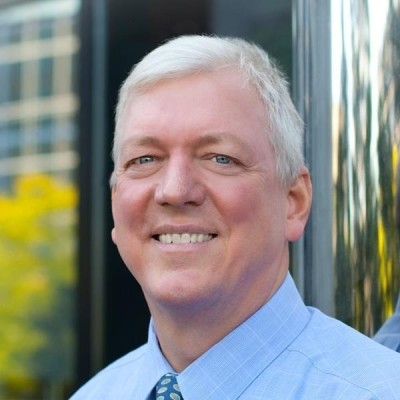
Principal Architect and MVP
As a Microsoft MVP and Principal Architect, I lead a transformative wave, where I evangelize AI and Low-Code solutions to help organizations achieve high-value business transformation. With over 19 years of experience in this role, I have successfully designed and implemented integrated enterprise solutions that leverage AI/Copilot, Power Platform, Dataverse, Microsoft 365, SharePoint, and Azure technologies.
My passion is to support business visionaries in achieving significant and sustainable results, by applying my expertise in Artificial Intelligence, Adoption and Change Management, Enterprise Architecture, Cloud Services, and Low-Code Solutions. I also enjoy giving back to the community, as an organizer of the St. Louis SharePoint User Group and SharePoint Saturday events since 2004. I hold multiple awards/certifications, including Microsoft MVP, Microsoft Certified Trainer (MCT). Project Management Professional, Advanced Project Management, Microsoft Certified Professional, and OPM3 Assessor.