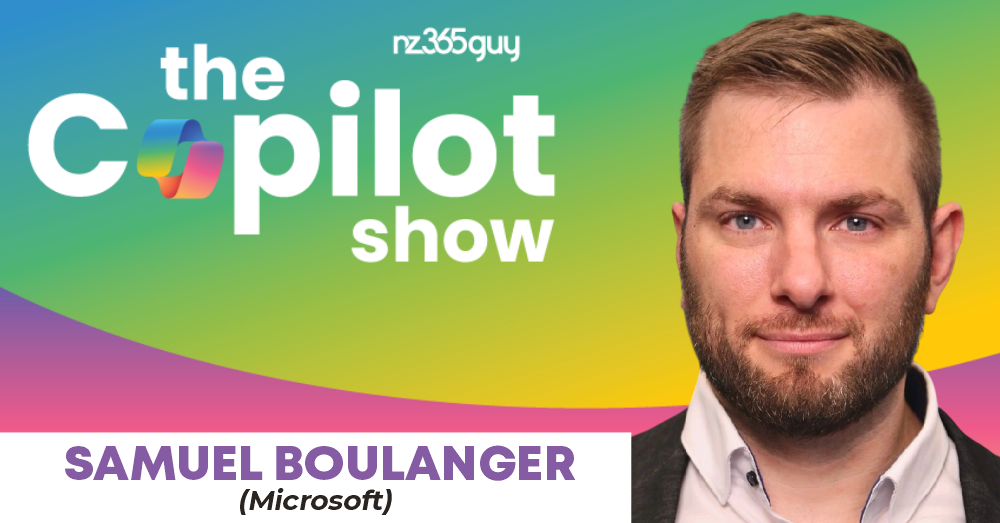
Stop Bolting On AI and Redesign Processes for 4× ROI
Samuel Boulanger







Stop Bolting On AI and Redesign Processes for 4× ROI
Get featured on the show by leaving us a Voice Mail: https://bit.ly/MIPVM
How frontier firms rethink processes with AI, not bolt it on. Samuel Boulanger shares practical ways to drive Copilot adoption: educate, empower champions, and start from scratch to redesign workflows. He shows how agents and workflow automation unlock meaningful ROI, and why applied, hands‑on skill beats theory. Clear guidance for tech pros: use it everywhere, iterate fast, and let the people closest to the work surface the highest‑impact use cases.
🎙️ Full Show Notes
https://www.microsoftinnovationpodcast.com/781
👉 What you’ll learn
- Identify and prioritise AI use cases by empowering teams closest to the work
- Structure prompt‑a‑thons to accelerate applied skill and adoption
- Redesign processes for agents and automation rather than “bolting on” AI
- Build bottom‑up Copilot champions and top‑down executive support
- Integrate Copilot across daily workflows to lift quality, speed, and ROI
✅ Highlights
- “You need to really put your hands on it and understand how it works.”
- “The biggest blocker right now to adoption is education.”
- “Being a frontier firm is applying to any kind of organisation.”
- “Start from scratch and say, what’s your goal? Now let’s do it with AI.”
- “Agents can collaborate with your team as well.”
- “Let your people envision it… they know the bottlenecks.”
- “Use it everywhere you can and add new releases to your workflow.”
- “You won’t lose your job to an AI. You will lose your job to somebody using an AI.”
- “Workflow agent for M365 Copilot is very impressive.”
- “I built an architecture document… in less than a day using this method.”
🧰 Mentioned
- Microsoft: https://www.microsoft.com
- Copilot Studio: https://www.microsoft.com/microsoft-copilot-studio
- Agent 365: https://www.microsoft.com/microsoft-365/blog/
- Samuel’s Personal Blog: https://samuelboulanger.com
- Samuel’s YouTube Channel: https://www.youtube.com/@samuelboulangerAI
- Samuel’s Spotify: https://open.spotify.com/show/0rKyALcqjbAIwN17eKzgtT?si=6AnQdAryR6uOLxllVlGOzg
- Samuel’s Apple podcast: https://podcasts.apple.com/us/podcast/mastering-ai-with-the-experts/id1782919291
✅ Keywords
copilot, copilot studio, agents, prompt‑a‑thon, frontier firms, adoption, governance, purview, entra, m365, power automate, power platform
Microsoft 365 Copilot Adoption is a Microsoft Press book for leaders and consultants. It shows how to identify high-value use cases, set guardrails, enable champions, and measure impact, so Copilot sticks. Practical frameworks, checklists, and metrics you can use this month. Get the book: https://bit.ly/CopilotAdoption
I’m Mark Smith - nz365guy - Helping people reach their full potential.
I have been a Microsoft Applications MVP for over 14 years. I am passionate about helping people reach their full potential, through training, coaching and mentorship.
Accelerate your Microsoft career with the 90 Day Mentoring Challenge (https://www.90daymc.com/)
Support the show (https://www.buymeacoffee.com/nz365guy)
If you want to get in touch with me, you can message me here on LinkedIn (https://www.linkedin.com/in/nz365guy).
Thanks for listening 🚀 - Mark Smith
00:00 - From Quebec to Microsoft: Samuel’s Path into AI
04:30 - The Real Blocker to AI Adoption
06:50 - Frontier Firms: Reinventing, Not “Bolting On” AI
08:40 - Agents, Automation, and ROI: The Use Cases That Change Everything
14:50 - Tech Pros in Transition: How to Stay Relevant
18:44 - What Makes Copilot “Stick” in an Organisation
28:14 - Samuel’s Personal AI Stack: How He Uses Copilot Daily
00:00:01 Mark Smith
Welcome to the copilot Show, where I interview Microsoft staff innovating with AI. I hope you will find this podcast educational and inspire you to do more with this great technology. Now, let's get on with the show. Welcome back to the copilot Show. Today's guest is from Quebec, Canada. He is a senior AI workforce engineer at Microsoft. Samuel, great to have you on the show.
00:00:28 Samuel Boulanger
Thanks for having me, Mark. Very happy to be here today.
00:00:30 Mark Smith
I'm excited to have a fellow podcaster on the show, and I want to drill into understanding your podcast and what you do on it. But before we go there, I always like to start with food, family, and fun. What do they mean to you?
00:00:43 Samuel Boulanger
Yeah, so, okay, let's talk about food. I'm from Quebec, and we have our, like, national recipe, which is called poutine. You might have heard about it, which is basically french fries and brown sauce and squeaky cheese. I don't eat it so often. It's not very healthy, but it's very, very good.
00:01:03 Mark Smith
Very tasty, I bet.
00:01:04 Samuel Boulanger
Yeah, it is. Actually, I traveled to the Netherlands last year and I bring all the different ingredients to, hosted by some people there, and I bring all the ingredients with me so you can taste the poutine as well.
00:01:16 Mark Smith
Nice.
00:01:17 Samuel Boulanger
As for family, so I'm proud father of two kids. My son is 11 years old, Nathan, and my daughter is 8 years old, Melody. I'm married. I've been with my wife for 16 years. So very happy and lucky to have a very loving family. And for fun, I do a lot of things. But right now, I'm into skiing because it's winter here in Quebec. During summer, I'm more into mountain biking. I was a climber. I had a pretty bad accident three years ago, so I just stopped and I told my wife because she didn't want me to go back on the wall again. I ripped my foot totally and I told her, that's okay. I will do something a bit less dangerous. So I've been into mountain bike.
00:01:55 Mark Smith
So when you say back on the wall, are you talking about indoor rock climbing or are you talking about cliff face?
00:02:02 Samuel Boulanger
So I was doing both, but when I fall, it was indoor. I was using an auto wind and sure, basically, I was misclipped. That's what we thought. And I just fall from the top of the wall, 30 feet.
00:02:14 Mark Smith
Wow.
00:02:14 Samuel Boulanger
Yeah.
00:02:15 Mark Smith
I don't know if you saw the guy at Yosemite earlier this year. Yosemite, you know, that's national park in the US. And he was almost at the top and climbing alone, unattached and fell. He didn't survive. Yeah, like one of the famous type of wall climbers out there. And a guy way back was videoing. He like it's on YouTube because he used to video the wall all the time to watch the climbers and he was not a climber himself. And then he saw the guy and he just like he filmed the whole like the whole drop. And yeah, just.
00:02:49 Samuel Boulanger
Oh, that's terrible. Yeah, it's called solo climbing. I've been following the field for some time, but honestly, I will never do it. Yeah, it's something else. Just doing Yosemite, it's called a captain to the biggest wall on Yosemite. Just doing this wall. with ropes is just crazy. Like, so I just can't imagine without being attached at all.
00:03:09 Mark Smith
I mean, the guy that filmed it, he just was bawling his eyes out type thing. Like, because he knew who the climber was. Famous. It's quite tragic. Horrible thing to happen. For me, I just, I'm not a heights person, so not my game at all.
00:03:23 Samuel Boulanger
You need to love like strong emotions.
00:03:26 Mark Smith
Yeah. Hey, so tell me what's top of mind for you right now. You're deep in the AI space with Microsoft. What does it mean for you and what's your kind of day job involved?
00:03:38 Samuel Boulanger
So I'm a solution engineer, which honestly, that's a fancy title to say I'm a pre-sales. I'm also part of what we call ACE, so advanced cloud expert, where I will be pulled in bigger deal, like more critical deals around America. It's kind of like of GBB, if you've heard of GBB. I'm part of the engagement.
00:03:57 Mark Smith
Are you in the Cross Solutions team?
00:03:58 Samuel Boulanger
No, I'm not actually. ACE is very new. It's part of the mid-segment. So I'm part of the mid-segment, like there's SMENC, which I'm part of, and there's enterprise for biggest customer.
00:04:09 Mark Smith
Gotcha.
00:04:10 Samuel Boulanger
And yeah, ACE is kind of the equivalent of GBB, but on the mid-market.
00:04:13 Mark Smith
You know, I didn't know that because all my work in the last two years have been with GBBs, ATS and ATUs, and they have been more on that enterprise scale. And I didn't know there was another naming convention. for the SMC space of a GBB equivalent.
00:04:29 Samuel Boulanger
Yeah, it's new to this year, actually. So SMENC didn't have GBB because it's attached to enterprise customers. So they decided to start this program, so we'll have the equivalent. So it's still new, very fun, very interesting. I'm learning a lot because, so we're working alongside GBBs and product team. So it's very interesting. The goal is being a level 400, so being very deep technical about our product. Personally, I'm really specialized in Copilot and Copilot Studio. Even if I'm part of AI workforce, which encompass everything in 365, like my strong suit is very like Copilot Studio and Copilot.
00:05:06 Mark Smith
So when you say level 400 in Copilot, almost in my mind an oxymoron. But are you talking about like when you're engaged with customers, are you talking like taking very much a security lens? So you're going to talk about Purview and Entra and you know, DLP, et cetera, and the policy side and control of data? Or is it more broader than that when you think of enterprise rollout of Copilot?
00:05:35 Samuel Boulanger
It's more broader. It's the, you know, broader deployment, but it's also adoption, training, education, because I found that the biggest blogger right now to adoption is education. People just don't know what they don't know or, most people don't know how to prompt properly yet. The thing is, people are used to using tools like ChatGPT and Gemini to ask like mundane questions, which doesn't require a lot of prompting, right? Doesn't require a lot of context, but People need to understand how to use tools like Copa. So a big part of my job is being an educator. I'm doing a lot, a lot of speaking engagement in different events around Canada, mostly Toronto and Montreal.
00:06:19 Mark Smith
Yeah.
00:06:19 Samuel Boulanger
But yeah, that's part of my role. So yes, I have those conversations around governance and security. Like Purview is more on the security side. We have specialists for Purview. It's like a beast in itself.
00:06:29 Mark Smith
Totally.
00:06:30 Samuel Boulanger
I understand it, but I don't. I'm not a Purview expert. So And with Agent 365 that we just announced, it's changed to discussion again, totally. It's going so fast. Honestly, I was jokingly saying last week, like I was level 400 and then Ignite happened and now I'm level 100.
00:06:47 Mark Smith
That's funny. Yeah. It just shows, yeah, the speed of change, but I sometimes find with being in it, it's not changing quick enough for me, particularly the agents landscape. I noticed that you did a podcast recently on frontier firms. And Microsoft put a white paper out about frontier firms. And I want some clarification from you. Do you see frontier firms and Microsoft's white paper on this more aimed at the enterprise? With you being an SMC, do you still see it applying?
00:07:19 Samuel Boulanger
I'm still seeing it applying. I think being a frontier firm is applying to any kind of organization, even smaller organization, because the goal of being a frontier firm is trying to use AI everywhere. Like if you summarize it at a very high level, it's giving every employee an AI tool they can work on, a personal assistant. And the second stage is letting everyone and the organization itself starting working with agent and having them as co-worker. So I think even smaller organization will get even more benefit than bigger organization. Because when you're a small organization, you lack the budget, you lack the time, you lack a bunch of stuff where AI can really help you make a difference. So I think that this concept of frontier firm really apply to everyone.
00:08:06 Mark Smith
It's a real leveler in a way, right? Is that you can get incredible technology at a super affordable price. And if you're a company of 1, or a company of five, those numbers are not high investment costs compared to with the potential ROI on your investment if your staff are trained well, if you're really exploring kind of how would we reinvent our business with an AI lens? Because one of the things I've noticed is that a lot of companies are looking, how do we bolt AI onto our processes rather than how do we reinvent ourselves with an AI mindset?
00:08:43 Samuel Boulanger
And that's part of the frontier firm. So thanks for bringing that on because it's reinventing your organization with AI. You can't do the same thing you were doing for the last 20 years with AI. You want to really optimize your process and rethinking the whole thing. And you can use AI to help you with the brainstorming and finding new ways and new processes. Where I see organization having the more success is starting from scratch and saying, okay, what's your goal? What are you trying to achieve? Now let's do it with AI. Like forget about the old processes. Something that was taking, I don't know, 50 steps might take five steps using AI because now you have agents that can work together, can collaborate with your team as well. So it's a total change of paradigm. And I think it's hard for people to First, it's going very fast. So it's hard for people to understand what's the vision and where they can leverage it exactly.
00:09:40 Mark Smith
Yeah. I'm always interested in exploring what are the unique situations that companies are applying AI and using. And I came up with one recently, which I've told a lot of people about. It's a large law firm in the US. and they had a legal process or a matter that they did. It was bread and butter business to them. It was in the business arena and it cost around $25,000 a time for them to bill their staff out to do this piece of work. It was, not too much creativity was needed. It was a standard thing that they did for businesses all over the US. $25,000 was taking around 40 hours of labor to do it. They were able to reduce the labor down to about 1/4 and produce the same quality output as what 40 hours was taking. And so you can imagine the law firms, right? They don't want to drop their billing. They don't want to drop their rate. But do you know what they did? They halved the price of the billings. So they halved the cost of that in market. So brought it down to around 12 and a half thousand dollars that they charged. But the same consultant could do four of them in the same time that they used to do one.
00:11:01 Samuel Boulanger
Oh, that's brilliant. Yeah.
00:11:02 Mark Smith
Now see, the customer wins. They get it half the price, same quality. The company wins because they're doing four times what was taking them one. So they're well beyond, you know, the return with the amount of money. And I'm just like, man, that's a great example of everybody winning in the AI process. The customer, the company, the individual. I just, yeah, it's a great example. Have you got any stories like that, like where companies are going, particularly with Copilot, going way beyond Microsoft Teams and summarization and then perhaps using the web interface and of course, researcher is just a champion application in its own right and what you can do. And are you seeing companies that are really starting to push the envelope or really have people that are massively moving the dial on what they can achieve with the tool set.
00:11:58 Samuel Boulanger
Yeah, and honestly, that's something I run a lot, what we call a prompt-a-thon in Canada right now, where so for people not knowing what a prompt-a-thon is, it's like a full day event where we're gathering different customers from different organization and we teach the basic, like how to prompt properly, an art of the possible session, like what can the tool do, and then we let people work in team. and try to solve a business challenge they might have or a business scenario using the tool. So it can be like M365 Copilot Chat, it can be researcher, analyst, like the new workflow agent. And I'm seeing so many people coming with such inventive way of solving a bunch of issues. It can go from, you know, HR to marketing to legal to... So I think that the user, the people doing the processes are the one that are the best to find innovative way of using the tools. Now, where I've seen the biggest change is with agent, honestly, compared to, so I've heard super cool use cases where either organization were empowering their users with agent, I'll give you an example in customer service where the organization I worked with where I hired people all around the world and English is not their first language. So there was kind of a challenge in communication with their customer. Now they built an agent, it's connected on the knowledge base and it's crafting the e-mail for them. So it's not replacing them at all. It's I'm empowering them. Or I have this other organization that was spending, I think it was 50 hours a week only going in the ERP to change. So they're selling they assemble products that depends on different parts that come from different vendors. And as soon as one vendor has changed the date of the delivery, it will affect the whole chain. And every time they add one of those chains, which happens like literally every day, they had to go in the ERP and change everything manually, was taking hour. And then they just created an agent. where you will give the order number, you will change the date, and we'll do it in cascade like automatically for you. So that's a super simple use case that's saving tremendous hours of work. I'll add to that that it's hours that you save that people don't necessarily want to do. I mean, I don't think nobody is passionate about dating ERP.
00:14:22 Mark Smith
I used to do a lot of work with SAP when I was at IBM, and that use case was a massive one where to get into SAP to do that one little thing was just a time suck and nobody loved doing it. And so in Microsoft Teams, to be able to put an agent in there that would allow that reach back and do the update, even to older asset management systems where we did this as well, which massive click, click, click, click, you know, through a old application and being able to front end it with an agent. Yeah, absolutely phenomenal. When you're dealing with tech people, in their tech careers. And I see particularly, you'll be familiar with the low-code power platform dynamics. They're all low-code tooling. And there's been a lot of consultants in that space. And I see many of them in a way fearful of AI, like what's the implication? You know, Microsoft even at their most recent events like the Power Platform Community Conference in Vegas and then Ignite in San Francisco in the last month. There's this move to, intelligent apps, enterprise vibe coding, and people are, is low-code going away? In fact, Charles Laman had low-coders dead on the slide in Vegas. How do tech pros get up to speed in the AI-driven world from your perspective?
00:15:45 Samuel Boulanger
If you find out, please let me know, because even I, even us, It's hard to follow the pace because specifically if you're a tech expert and you're working with multiple technologies, it's going fast for everyone. I'll say, use it. That's my top trick. I'm using it everywhere I can. And as soon as I heard something new is released, I'll try to add it to my workflow.
00:16:11 Mark Smith
Yeah.
00:16:12 Samuel Boulanger
But other than that, I'll be honest, it's like, This morning, a customer was asking me, can you send me documentation on how to use Copilot? I said, yes, I can bury you in documentation. I don't think it will be helpful. You need to really put your hands on it and understand how it works and add it to your daily workflow. But I found that so many people are so busy that they just don't want to do that. and they continue working like they've been working in the last decade because they feel they don't have time to learn those new skills. But this is a big mistake. I mean, you need to spend, if you have to block a whole day to get up to speed and start finding new ways of adding this to your workflow, like do it because the more we go forward, the more complicated it gets. So yeah. And prompt-a-thon, like The event I was mentioning earlier is there for that. Like you're taking a one full day to understand what it can do and try to envision how you can use it to improve your work.
00:17:18 Mark Smith
Yeah, I totally believe we're in a day of its skill. Applied skill is more important than knowledge. You can't be a theorist or an academic about AI. You have to be hands-on, on it, et cetera, if you're going to personally, you know, get that value. In the work that you're doing in adoption in organizations, what do you see as the probably the key contributors to Copilot sticking and like getting that from knowing to doing? You know, if you were to summarize the ingredients of AI adoption success in a enterprise or in a company that's perhaps just bought Copilot licenses, they're not on Copilot Studio yet, they've moved beyond the Copilot chat, They got the licenses. What are the tellers for you that you know when they come to renewal, it's going to be a no-brainer for them to sign the renewal.
00:18:12 Samuel Boulanger
So I think you need to a strong push from top to bottom, but bottom up as well. So let me explain what I mean by that is that you need to have full support from the executive in the vision and telling people that's the way we're going for X reason. Like, mostly to improve productivity and to make sure that your workforce will be prepared for the future. So, I mean, from my perspective as a leader of an organization, you're making a gift to your employees by making sure they know how to use those tools. Because you've seen it pretty much everywhere, like the saying that You won't lose your job to an AI. You will lose your job to somebody using an AI. And I honestly think it's true because this person will accomplish 2, three, four times more than you do.
00:19:02 Mark Smith
Yeah.
00:19:03 Samuel Boulanger
Or be more creative because they can brainstorm with AI because they will have more time on end to think of new ways of working. And as a leader, I think you need to set up the vision and make it clear and, you know, assess if your people are using AI the proper way. There's different tools for you to see what's usage, how people are using it. So that's first. Second thing is bottom up. You want to find your champion in your organization. You want to find who are the enthusiasts that will share the good news with the other people in the organization. At Microsoft, we call it copilot champ. So it's basically a group of people from different part of the organization, from legal, from marketing, from sales. that regroup monthly and will share best practices, will share how to use it in their daily work, will craft new prompts that will be shared with the organization. So it's really evangelist inside of the organization that will make sure that everybody knows what's out there and share their passion.
00:20:06 Mark Smith
I like that. I want to spitball 2 ideas with you. One is around Power Automate and the other one is around Copilot Studio. My feeling, and I could totally be wrong, is that I feel that Copilot Studio is kind of like an interim solution. It's A bridging tool that ultimately won't be needed. In other words, we should be able to take, you know, if you take Satya's, the UI for AI, which I think a lot of people don't understand how powerful that concept is. In other words, that you can have a single UI. Now, it might be accessible in Teams, it might be accessible in applications you use, or it might be accessible in the web interface. But that it doesn't care where your data lies inside your organization. A single UI could allow you to access the resources, et cetera. And therefore, why I think Power Automate, let's say we need to engineer something new or create agents, et cetera. I feel it will be the potential of the future to prompt that from that interface into Azure AI Foundry and build any level of sophistication without the need for me to point to the data sources that I'm going to use, like manually click through. Do I have the right DLP policies in place? Why can't I just speak it all into reality, right? That's why I wonder, is Copilot Studio a bridging tool for now that, of course, came from Power Virtual Agents was a bridging tool, and it's a bridging tool to take almost low-code folks or analysts into the world of building solutions. And then the other one is Power Automate. Massively powerful tool. But why do we need a Power Automate interface in the next three years? The tool would still be there, but I don't see the necessary need for us to look at how the flow is working, et cetera. Could we not just, as in the AI potentially, be just smart enough to go, hey, I do need a flow here. I need a synchronous or an asynchronous flow. I'm going to need to connect to these. I'm going to create these triggers. I need these APIs. and the agent that we work with will potentially be able to stitch all that glorious stuff together and build solutions.
00:22:17 Samuel Boulanger
Yeah, we're not there yet. Cobalt Studio is built on the Power Platform, so it adds all the layers for governance, for security, with the connector, et cetera. I don't see, that's a good question and I need to think about my answer. But at the state of the technology right now, I don't see Other than simple workflow, like, we've just released the workflow agent for M365 co-pod. Honestly, it's very impressive. But it worked with a specific set of connectors. As soon as it started becoming very complex, you'll still need to, you know, run some JSON in your part MH, run some loops, et cetera. And I don't think we're there yet in letting an AI build all those flows.
00:23:00 Mark Smith
Totally.
00:23:01 Samuel Boulanger
It will come at some point. And I can't wait to be there, but we're not there yet. I think we have this disconnect right now between the vision and what's really feasible. And I'm trying to be really transparent with my customers. Well, when you're going in a conference like Ignite, our marketing team does a super great job at showcasing it like it's plug and play, which is true in some use case. But let's be honest, most use case still require a lot of work. It needs to have clean data, it needs to think the whole flow clearly because there's always this human factor. AI is good at creating exactly what we ask it for. It's good to help us brainstorm. But at the end, there's always a human factor that will try to go in a way that we haven't thought about, but that a human will probably think that, oh, my user will try that. I built a super complicated agent for my prompt-a-thon to help people. envision which business use case they can try to solve.
00:24:02 Mark Smith
Yeah.
00:24:02 Samuel Boulanger
And I'm pretty advanced and it took me like 40 something hours to build this agent and I was using a lot of topic. Honestly, it was not generative orchestration at all.
00:24:12 Mark Smith
Yeah.
00:24:12 Samuel Boulanger
Because it didn't fit the bill. So for that reason, I don't think in the next year at least, and in three years, it's going too fast for me to tell you in three years it will look.
00:24:23 Mark Smith
100%.
00:24:24 Samuel Boulanger
But for now, I don't see it happening. That might change very fast though.
00:24:28 Mark Smith
You mentioned use cases there and uncovering use cases. A new company, how do you get as quickly as possible to the use case that is going to create impact? And you know, if we use like the three elements, you know, from design thinking that have been around for some time, is it feasible? In other words, can we finance this? Is it technically viable? Like, can the technology do it? And is it going to impact people that people want it? And if we look at those three elements, how do you as quickly as possible, when you go into a new company, scratch round almost to find that use case that is going to create the emotional particular buy-in? Because generally it's always technically feasible and financially viable, but it's the one that emotionally gets the hearts of people to go, you know what? This, like all of a sudden,
00:25:22 Mark Smith
And that's why I'll do like Ignite and things like what marketing do because they open people's minds to the art of the possible. And they can start going, if they can do that, imagine what we could do. And maybe the tech's not there yet, but it's setting a vision or a hope of where people can go. And I think that's inspiring and does by nature create the future. As I say, going to a new company, how do you get to that value use case that's unique to that company?
00:25:50 Samuel Boulanger
Let your people envision it. I'll go back again to Promptaton or Hackathon agent in the day. Let your people who's on the field tell you what's the best use case. Because yes, there's the ROI side of it, but there's also, you know, people knows what are their weaknesses. People knows what are the bottleneck in their processes. Yes, And where I've seen the most successful use cases is when people, like when organization, again, from top to bottom are sharing the vision and let their people do the work and come up with those use cases. I can tell you something, people are very proud of finding new ways of using AI. I never seen myself as a creative person, honestly. I don't play any instrument. I'm not a, you know, I don't do painting or drawing, that kind of stuff. But I found myself being very creative when it comes to using AI. And I know there's a lot of people out there like that.
00:26:51 Mark Smith
Yeah.
00:26:52 Samuel Boulanger
So I'll say let your people come up with the use cases because we've said it earlier, you don't want to do what you've been doing for the last decade. You want to find new ways. And if you're trying again to apply this new technology, which is very different from everything we've known so far, to an old problem, you'll end up in the same place. If you let your people being creative and find ways to improve their own process, I can tell you, you'll be amazed.
00:27:21 Mark Smith
I want to wrap up with this final thing. If I was to condense your last four to six weeks, How are you using AI? What are the different scenarios that you personally, are you using AI either in your personal life or in your professional life? What are all the different ways you use it?
00:27:41 Samuel Boulanger
So I think my number one tip, what I'm using pretty half the time is asking the AI to ask me the questions to come up with the idea. And I realize a lot of, most people don't do that. So for instance, if I'm building a presentation, And I need to start from scratch. I'll give a bit of context. I'll tell Copilot, hey, Copilot, I'm doing a talk on, I don't know, prompting best practices. My audience is C-level executive. Ask me enough questions until you understand enough of what I need to help me build this presentation. Then it will come up with, I don't know, 10, 15 questions. And it's a very good question. It really forced me to think of things I didn't even talk about it. So it's kind of a brainstorming with the AI. And then what it does, it will build a structure for me. And then the magic happens. It's like, honestly, it's 100% of the time, I'm amazed by the result. So instead of going the other way around and trying to think of everything, I should tell Copilot so it generates something meaningful, I do the other way around. I say, like, what do you need to know? And I'm amazed. I built an architecture document, which was previously taking me a week and less than a day using this method. Yeah. I was just letting Copa ask me question and then it was filling the gap. Second thing, using voice is very powerful. It's very powerful. And it was very hard for me to get that as a, like to make it the daily habit of using voice. It's so counterintuitive because I've been learning on typing for almost since I was a kid. So. It's very powerful to just brainstorm while you're transiting. Obviously, if you're in the metro, in the subway, might sound a bit weird, but you know, if you're driving in a car, I'm often listening to podcasts. Now I don't know something. I put it in voice mode. I'm asking a question. That's how I'm ramping up on some concept around AI very quickly. So using voice mode is very, very powerful. Sometimes I'm just using it like as a note taker. I'm just take talking to it and we'll save it in my conversation history and then like that's the way I'm taking notes.
00:29:53 Mark Smith
That last one is the one I haven't done. I've done it in the car, definitely use it heaps. If I know I'm going and tripping, particularly got no passengers, my family's not with me, I will just explore a whole new topic with voice, backers and forths, talking to it. Just, it's amazing.
00:30:09 Samuel Boulanger
It is.
00:30:10 Mark Smith
And I can learn so much just while cruising along and you know, because obviously It gives its feedback and you then, that roughs a new idea for me. But I love that note-taking idea right there that you just had is using it as a way to take down your notes so you can follow up on them. That's very cool.
00:30:29 Samuel Boulanger
Sometime I'm practicing some of my presentation with Copa. So I'm just delivering it and then I ask for feedback. So yeah.
00:30:35 Mark Smith
I love it. I love it. Samuel, thank you so much for coming on the show. Before you go, how can people, one, listen to your podcast and how can they reach out to you if they want to.
00:30:47 Samuel Boulanger
Yeah, sure. So it's everything is available on my website, samuelboulanger.com. You'll have to put it in the show note because.
00:30:53 Mark Smith
We'll put it in the show note.
00:30:55 Samuel Boulanger
But the podcast is available on Spotify, Apple, and YouTube, obviously. So the main channel is YouTube and it's called Mastering AI with the Experts. I'm mainly hosting Microsoft employees and partners to talk about anything AI related. I have very interesting people coming on the podcast. I feel very lucky to have access to their knowledge.
00:31:16 Mark Smith
Hey, thanks for listening. I'm your host, Mark Smith, otherwise known as the nz365guy. Is there a guest you would like to see on the show from Microsoft? Please message me on LinkedIn and I'll see what I can do. Final question for you. How will you create with Copilot today? Kakite.
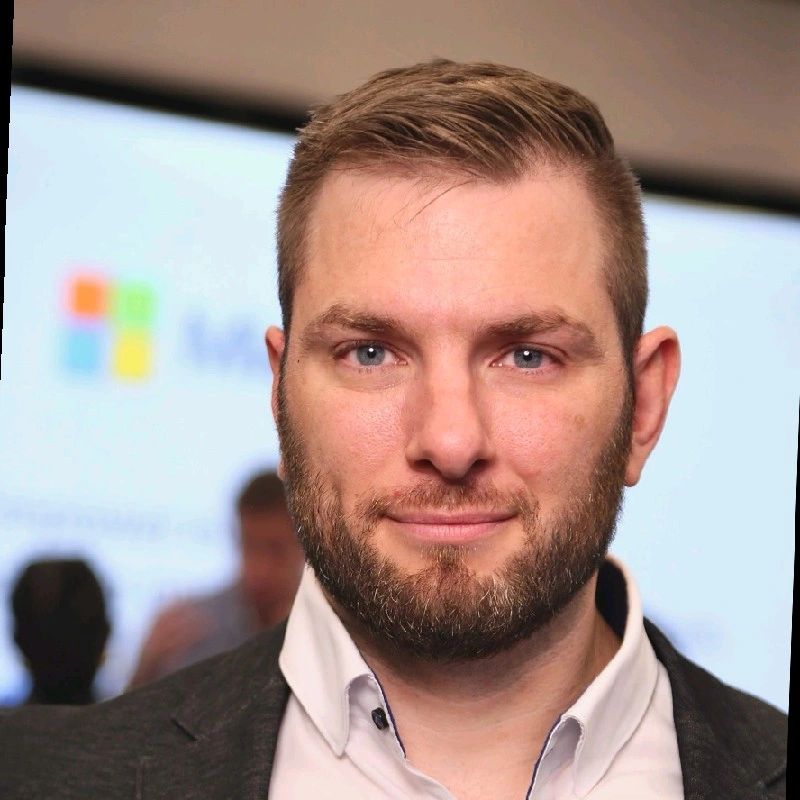
Samuel Boulanger is a Technical Specialist at Microsoft, focusing on Copilot and Modern Workplace. With over 13 years of experience in technology and business applications, Samuel has a deep passion for leveraging AI to enhance productivity and improve people's lives. Prior to his current role, he was a solution architect for business applications at a consultancy firm, and a consultant for nearly a decade.
At Microsoft, Samuel specializes in summarizing complex technological topics, teaching, and creatively applying AI to find new ways to optimize productivity. He is also a Co-Pilot Champ and holds over 15 certifications in Microsoft’s business applications.
Outside of his career, Samuel is an avid sports enthusiast, enjoying skiing, mountain biking, and weightlifting. Health and well-being are key priorities in his life, and he focuses on maintaining a balanced lifestyle. Above all, Samuel is deeply committed to his family and values his two children as the center of his world.