AI Adoption That Actually Works
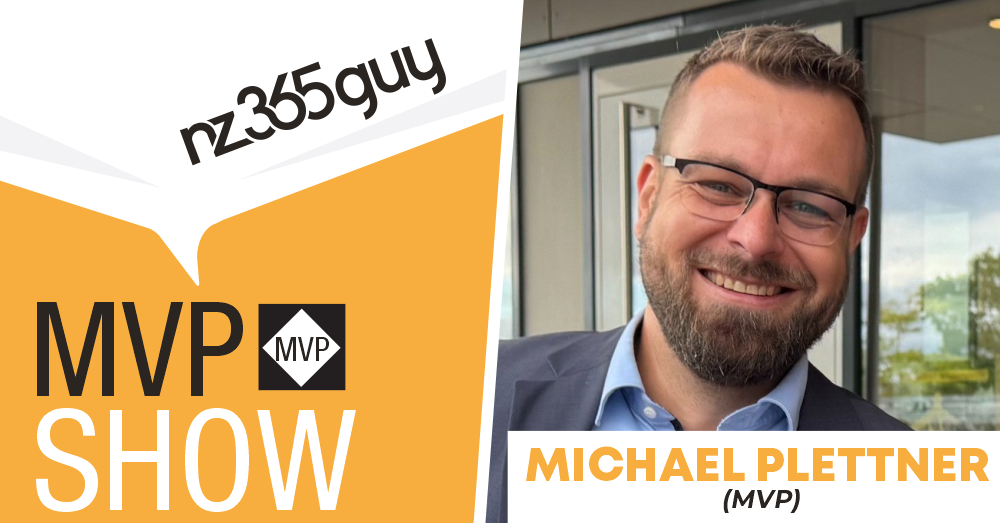
Michael Plettner







AI Adoption That Actually Works
Get featured on the show by leaving us a Voice Mail: https://bit.ly/MIPVM
This episode with Michael Plettner explores how organisations move from AI curiosity to practical, business focused implementation. You will learn why user adoption and leadership support matter, how teams shift from generic Copilot use to targeted process improvement, and how the EU AI Act is pushing companies toward more mature and responsible AI practices.
👉 Full Show Notes
https://www.microsoftinnovationpodcast.com/793
🎙️What you’ll learn
- How to evaluate AI opportunities based on real business value
- How to move from Copilot centric thinking to case driven AI strategy
- How leadership buy in affects adoption and trust
- How to align AI projects with the EU AI Act
- How agents and agent communication can streamline work
✅ Highlights
- “User adoption is not training.”
- “There is often a lack of trust in the business.”
- “Get off the AI hype and talk about what is really good for the business.”
- “Sometimes an expectation from customers where they think they understood which tool is the best.”
- “If someone is not convinced then it is not working.”
- “We have some railguards to protect how we want to use AI for better good.”
- “Now we have a more mature thinking about AI.”
- “Agents are the future from my point of view.”
- “They can really solve some steps in your daily work.”
- “The technology in this area is on light speed.”
🧰 Mentioned
- Microsoft 365: https://www.microsoft.com/en-us/microsoft-365
- Microsoft Teams: https://www.microsoft.com/en-us/microsoft-teams/download-app
- SharePoint: https://www.microsoft.com/en-us/microsoft-365/sharepoint/collaboration
- Power Platform: https://www.microsoft.com/en-us/power-platform
- Microsoft MVP YouTube Series - How to Become a Microsoft MVP - https://www.youtube.com/playlist?list=PLzf0yupPbVkqdRJDPVE4PtTlm6quDhiu7
✅ Keywords
ai, copilot, user adoption, business processes, microsoft 365, teams, sharepoint, power platform, dynamics, eu ai act, agents, change management
Microsoft 365 Copilot Adoption is a Microsoft Press book for leaders and consultants. It shows how to identify high-value use cases, set guardrails, enable champions, and measure impact, so Copilot sticks. Practical frameworks, checklists, and metrics you can use this month. Get the book: https://bit.ly/CopilotAdoption
I’m Mark Smith - nz365guy - Helping people reach their full potential.
I have been a Microsoft Business Applications MVP for over 14 years. I am passionate about helping people reach their full potential, through training, coaching and mentorship.
Accelerate your Microsoft career with the 90 Day Mentoring Challenge (https://www.90daymc.com/)
Support the show (https://www.buymeacoffee.com/nz365guy)
If you want to get in touch with me, you can message me here on LinkedIn (https://www.linkedin.com/in/nz365guy).
Thanks for listening 🚀 - Mark Smith
00:00 - The Shift From Tech Projects to AI‑Driven Transformation
04:34 - Building a Modern AI‑Ready Services Business
09:15 - Moving Beyond Copilot: Choosing the Right AI for the Job
12:03 - The Make‑or‑Break Factor: Leadership Buy‑In for AI Adoption
15:06 - The EU AI Act & ISO Standards: AI Maturity Gets Serious
17:16 - Becoming an AI‑Forward Company: New Skills, New Processes
20:15 - Why Agentic AI Is the Future of Work
00:00:06 Mark Smith
Welcome to the MVP show. My intention is that you listen to the stories of these MVP guests and are inspired to become an MVP and bring value to the world through your skills. If you have not checked it out already, I do a YouTube series called How to Become an MVP. The link is in the show notes. With that, Let's get on with the show. We're back with the MVP show. Today's guest is from Belveria, Germany. Welcome, Michael.
00:00:41 Michael Plettner
Thank you, Mark. Thank you for having me.
00:00:44 Mark Smith
Belveria, we've got a whole line of pubs in New Zealand. The Belverian Beer Cafe, or yeah, that's pretty much what they go by and exposed us to all different types of very tasty beers.
00:01:02 Michael Plettner
Yeah, I think Bavaria is claiming it's a source, it's the roots of good beer, actually. So I can relate that. It's something where Bavarians are very proud of.
00:01:18 Mark Smith
I bet, I bet. So, talking about, well, drink, but food, food, family, and fun, what do they mean for you?
00:01:27 Michael Plettner
Well, I would say a lot in a short sentence. I love food. So if you want to make it to my heart, then let's go outside and let's go in a good restaurant, have a good meal. Family is the highest priority. So we are busy the whole day. So I try to bring the family as good as possible into all day and fun. Well, that's actually not tech related, sometimes tech related, but fun is mostly something which is outside of what you do on a regular basis. It's what you live for, actually.
00:02:22 Mark Smith
Awesome. Awesome. And where does that take you?
00:02:27 Michael Plettner
In a short way, sports, actually, sports and gaming. You may remember this time in your life about when you are 20 or 20 something plus. You can do whatever you want. You can eat whatever you want, and you are still slim, you are fit, you are the best shape you ever had. And then you become 30 and it does not work the same way anymore. It is actually what happened to me. And then I realized I don't want to just be old and fat and lazy. And then I realized that maybe I can start with some runs. And then I was out for running. I died after one kilometer and after some time I died after two kilometers. And so it continued, it got better and better. And then I had some 10 kilometer runs and half marathons. And then I got bored. Unfortunately, it was just running and yeah, I got bored. I decided, OK, now we may have to look into something different. I started triathlon. Triathlon is definitely another beast. I love cycling. I love swimming. Actually, I hate running. So it's funny that I come from running to triathlon, but that's how it is. And yeah.
00:04:14 Mark Smith
Very good, very good. A lot of triathletes come to New Zealand, and we've got a coast-to-coast triathlon that's pretty famous and special. Tell me about your business. What business are you in?
00:04:34 Michael Plettner
As I said, tech, actually. It's about, I founded the company about 10 years ago, together with a colleague. There was something going on in our old company and we decided maybe we can do it better. And therefore we started the company. We had different approaches. He's more in project management and I'm in Microsoft technology since more than 25 years. Sounds like a lot. And then we decided, okay, maybe we have to bring it together because all the tech projects need someone who understands also the project parts, the project management part. And sometimes even in, especially in our projects, we need someone from the project management side who also understands at least a little bit of technology. So we started together and after, yeah, some one or two years, just two of us, we got some colleagues and we grew a little time after time with now we are 12 people and still doing the same. Microsoft technology, of course, AI nowadays. And on the other hand, project management was the typical question about what kind of method you want to use, what kind of technology you can, the method you can use for your project. And we are also into user adoption, which is pretty important for AI. And the first time that we did not strip, did not, it's the first time that In projects, user adoption was not cut off right away during the proposal. So usually what we got was Teams or other products. If there's something like, I don't know, user adoption in a project, that's something we can do better internally. We have done training for the last 20 years. You smile. That shows me you understand user adoption is not training. But yeah, this is something that's usually cut it off. But with AI and Copilot, the management understands they need user adoption. They need to train the users to work better with these tools.
00:07:31 Mark Smith
Yeah. Critically important, critically important. And it's funny why I'm agreeing so much with you is that, you know, you're describing the last 10 years of the era I specialized in Microsoft, which is the Power Platform and Dynamics. I've been over 20 years in that space, just on, you know, starting in Dynamics. And that was always the hardest sell was the change management story. And And I find it interesting what you said there about the company goes, we can do that better ourselves because what I've noticed with copilot adoption now or AI adoption, there is often a lack of trust in the business because the culture in the business knows how adoption's been done on other projects and nobody has ever been happy with it. And so they're like, when they're like, We're gonna do change, they're like, Oh, yeah, we know what you mean by change, you know, from the last 10, 15 years of projects where change has always been an afterthought, you know, train the trainer and very little else, you know, no, no ongoing rigor. It's interesting that Saatchi has even said himself that this technology requires change management. There's a specific quote that I've used back a bit. And because it is, it's a fundamental change in the way we're even working and how AI is used by organizations.
00:08:55 Michael Plettner
Absolutely.
00:08:57 Mark Smith
When you're working with AI with customers, is it more on the Copilot side, the Azure AI Foundry, Copilot Studio? Are you technology led or are you more case, you know, use case led? How are your implementations happening?
00:09:15 Michael Plettner
It changed a lot over the last months, I have to say. I'm coming from Microsoft Teams, from Office and Microsoft 365. So in the first place, it was Copilot. And Copilot was the first approach also from the customers because they know there's a connection, what I've done previously, what I've done before, and Copilot. But we, in our projects, we realized there's sometimes an expectation from customers where they think they understood which tool is the best to work with. So, for example, they want to use Copilot because Copilot is what they need, what they think they need. And We realized that's actually not the biggest benefit in the company. So we switched over to... Yeah, it's good you're asking for some support and improvements with Copilot, but let's talk about the other things of AI. If you're a manufacturer, for example, Copilot can help in the back office, yes, but you make your money with something you produce. And so it maybe makes sense to invest AI into this specific area to improve business processes and improve also the way how you maybe get better results for whatever you produce. And it's actually there's a switch from the general. I want to use AI and copilot with my documents and get faster into some topics like summarizing some files or emails into some actual cases. So we are in the production in a more productive way. We analyze where's the revenue coming from and then we take a look what is the best AI technology to use for that. Or maybe not even AI, maybe just sometimes automization that helps A lot. But get off the AI hype and talk about what's really good for the business. So I think to answer your question, I think we moved, and especially I moved from the general copilot and use it and you are good to the case. Let's identify the use case scenarios for AI and then use the right technology for that.
00:12:03 Mark Smith
How important is senior leadership buy-in, the executive of the organization? How important is that to, I suppose, gaining the trust of their folks around rolling it out where the media often has a fair lens that it takes to this, but also getting them to, I suppose, adopt it as perhaps a new way of, or, you know, a new component of working rather than just, so what I'm saying is not, you know, often we bought technology in the past and it came along to help in a specific area of the business. where more and more companies are going, actually, if we took this business process and we went back to the basics and said, now we have this tool, AI, whatever it's going to be, how would we engineer this process now, if we were doing it from scratch, but using this tool set that we never had in the past, rather than taking, let's say, an existing business process and then doing a bit of AI on it, you know?
00:13:12 Michael Plettner
It's crucial. I see there's definitely a difference when you get support, senior leadership management for the change as usually in user adoption. And it's also what you describe or you described from the different angles they have. So for example, if someone is supportive, then they are willing to change the process. They are willing to at least start with discovering the process. Does it make sense to change the whole process instead of just adding a single step and replacing a single step with AI? On the other hand, if you are not in a situation where not get the support, That's also something we have got in projects. Then you cannot even convince someone to use Copilot to summarize emails. If someone is not using anything and even is talking badly about, is talking bad about the tool itself, saying, I don't trust it or is not convinced, or at least showing this to the other people, then it's not working. It's not coming into the organization.
00:14:46 Mark Smith
How much does the EU AI Act and the new ISO standards around AI, how much are they impacting what you're doing? How much are you-- it's part and parcel of now project delivery. How do you think about these new standards and acts that have come out?
00:15:06 Michael Plettner
I'm happy that we have some guidance, which is specified for everyone, not only for a company decides to do it this way or another way. We have some railguards to protect how we want to use AI for better good. And that's something I Personally, I like and what I feel really good about the EU AI Act. In the real world, that means we had a switch coming from, I want to play with AI and want to have some PUCs and discovering and do all this stuff with AI because it's AI and I have no idea what I want to do with it. And to a real focused, okay, let's talk about when we have to, when we improve our customer related services, for example, then we have to ensure how AI works with personal data. And now it's a more mature thinking about AI, I would say. And the EU AI Act is forcing the companies to really go a bit more in the direction to reevaluate how they want to use AI, not only for playing around and hope for some magic tricks from AI, but also using AI on a proper, mature way.
00:16:50 Mark Smith
You said that your business has come from an M365 background in Teams and projects like this. How much is your business transitioning in to be becoming much more an AI company than just the traditional software reseller implementation partner that Microsoft had in the past? Is it changing the way you're working?
00:17:16 Michael Plettner
Yeah, absolutely. not as fast as you may think when you talk with Microsoft people, but we definitely see a change because in the last five years, we had some implementation projects. So migrating telephony in Teams, moving data to SharePoint, building intranets, raise security bars, something like that. And now we have more requests about using AI to improve the businesses, work in processes, and we need some other skills from our internal perspective. So we need people who are able to understand real business processes, they are willing to analyze it instead of just looking into some architecture or maybe some cold flow and some log files. But also we need some people who understands data a lot more and maybe some person with development skills. So there's a huge change. As I said, it's not as fast as it feels sometimes. We still have the traditional projects, but we also have some new projects, not only Microsoft related. That's funny. A colleague of mine is using N8N for the processes stuff and connecting multiple AI technologies. And then He was absolutely in this topic and started the webinar. And now this is something I haven't had in the last, I would say, six or eight years. We get an actual request via LinkedIn about this new way to implement the processes. So there's a big change because it's still fast pacing from the AI perspective. The technology in this area is on light speed, I would say. It's fast. And on the other hand, the companies try to keep up and get more input about how can I move from a PUC perspective to a real productive and secure data protected way to work with AI?
00:20:04 Mark Smith
It's been so good talking to you. My final question is, what's your view on agents? Where are they at? Are you doing much in the agent and agentic space yet?
00:20:15 Michael Plettner
Yeah, yeah. That's my personal preferred way to implement something. We're coming to AI because I think AI is the future, yes, of course, but agents are the future from my point of view, especially since we got the agent to agent communication and you get tasks done by a single specialized agent, but the request is coming from another agent and this second agent is just pulling from different agents the information and combines everything together. And nowadays we can use agents also to do actually actual tasks so they can complete some actions and not only summarize something, hallucinate some new content, they can really solve some steps in your daily work and help you and support for your actual work. That's a way, from my perspective, to go.
00:21:30 Mark Smith
Totally agree. Michael, it's been so good talking to you. Thank you so much for coming on the show and sharing what you're doing at the moment and this whole space of AI. Thank you.
00:21:41 Michael Plettner
It was a pleasure. Thank you for having me, Mark.
00:21:48 Mark Smith
Hey, thanks for listening. I'm your host, Business Application MVP, Mark Smith, otherwise known as the nz365guy. If you like the show and want to be a supporter, check out buymeacoffee.com forward slash nz365guy. Thanks again and see you next time.
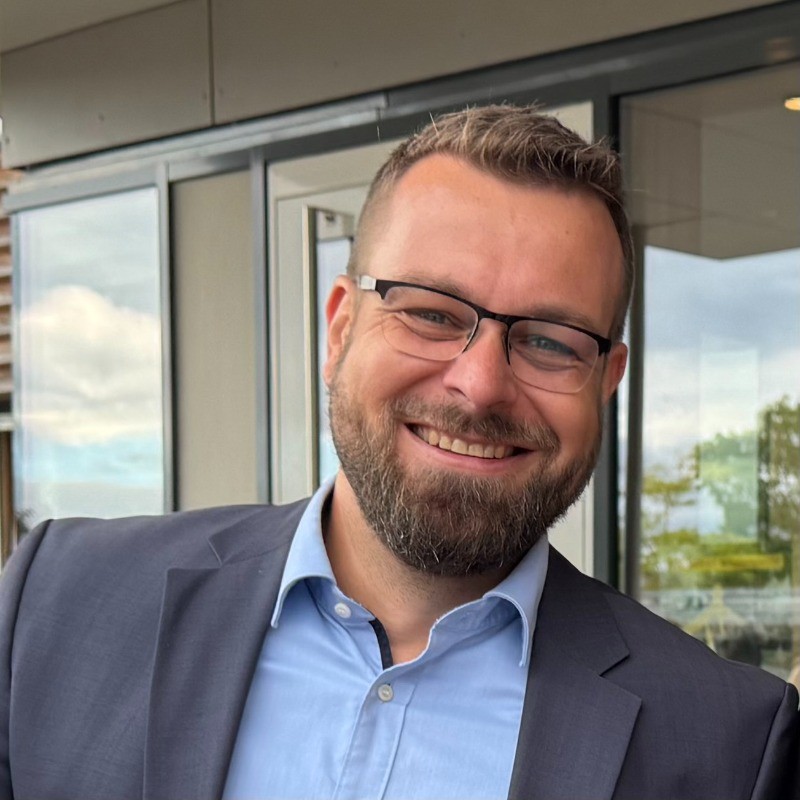
Michael Plettner brings 20+ years of customer experience and a deep-rooted history in Microsoft products to the table. As a CEO and Cloud Architect, he bridges the gap between technical implementation and strategic Change Management. Since 2022, he has been at the forefront of AI and collaboration, leading Microsoft Copilot and Foundry projects. A Microsoft MVP since 2021, Michael remains committed to empowering the tech community by sharing his long-standing expertise in M365 and Project Management.